Stock code: 601677
Stock code: 601677
In industries such as shipbuilding, automotive body panels, and pressure vessels, aluminum-magnesium alloys are the preferred choice due to their excellent corrosion resistance, weldability, and workability. Among these alloys, 5052 and 5754 aluminum coils are two of the most frequently considered grades. However, their similar properties can sometimes make it challenging to decide which one is best for your specific project.
This guide provides a detailed comparison between 5052 and 5754 aluminum coils, examining their chemical composition, mechanical properties, and applicable standards. Our goal is to give you the clear insights needed to make a confident and informed selection.
The fundamental differences in performance stem from their chemical makeup.
* 5052 Aluminum Coil: A classic grade under the American ASTM standard, its main alloying elements are Magnesium (Mg, approx. 2.2-2.8%) and a small amount of Chromium (Cr). This formulation achieves an outstanding balance between strength, formability, and corrosion resistance.
* 5754 Aluminum Coil: This grade is not only part of the ASTM standard but is also a prominent grade in the European EN standard system (EN AW-5754). Its key characteristic is a higher Magnesium (Mg) content, typically ranging from 2.6% to 3.6%.
Key Insight: The higher magnesium content directly gives 5754 aluminum coil greater strength than 5052. Furthermore, the choice between them is often dictated by the required standard system—5052 is common for ASTM projects, while 5754 is frequently specified for European or EN-regulated applications.
For a clear overview, here’s a comparison of their core properties:
|
Property |
5052 Aluminum Coil |
5754 Aluminum Coil |
Key Takeaway & Selection Tip |
|
Strength Level |
Medium strength, Tensile Strength ~170-240 MPa |
Higher Strength, Tensile Strength ~190-270 MPa |
5754 offers superior strength, making it better for load-bearing structures. |
|
Formability |
Excellent, particularly for deep drawing and complex stretching |
Good, but requires slightly more forming force due to higher strength |
5052 is the top choice for deep-drawn parts due to its lower work hardening rate. |
|
Corrosion Resistance |
Excellent, especially against seawater; a classic marine-grade alloy |
Excellent, also possesses strong resistance to marine environments |
Both perform exceptionally well, with minimal difference in most environments. |
|
Weldability |
Very Good, commonly used for welded structures |
Very Good, offers stable welded joint performance |
Both offer excellent weldability suitable for various techniques. |
|
Fatigue Performance |
Good |
Better, thanks to its higher strength, it resists fatigue more effectively |
For parts under dynamic or cyclic stress, 5754 is the more reliable option. |
Summary:
* 5052 is an “All-Rounder,” renowned for its superior formability and balanced properties.
* 5754 is a “Strength Specialist,” known for its higher strength and better fatigue performance.
Based on the performance comparison, we can define their ideal application areas.
* You need Deep Forming: For parts like electronic enclosures, chassis, lamp housings, or fuel tanks requiring complex stamping or drawing.
* Your project is in Architectural Decoration: For interior wall panels, ceiling panels, and trim where extreme strength is not the primary concern.
* Applications include Vehicle Interiors & Components: Such as truck body panels and interior trim.
* Cost-Effectiveness is key: 5052 often provides a cost advantage while meeting performance requirements.
* You are building High-Stress Structures: Like automotive body panels, truck trailer floors, or rail transit structures.
* Manufacturing Pressure Equipment: For chemical pressure vessels and tanks where higher strength is critical for safety.
* Applications demand Marine Structures: For key ship parts like hull decks and superstructures.
* Regulations & Standards dictate it: When products are for the European market or must comply with EN/DIN standards.
Whether your project calls for 5052 or 5754, partnering with a reliable supplier focused on primary manufacturing is crucial for ensuring consistent material performance and project success.
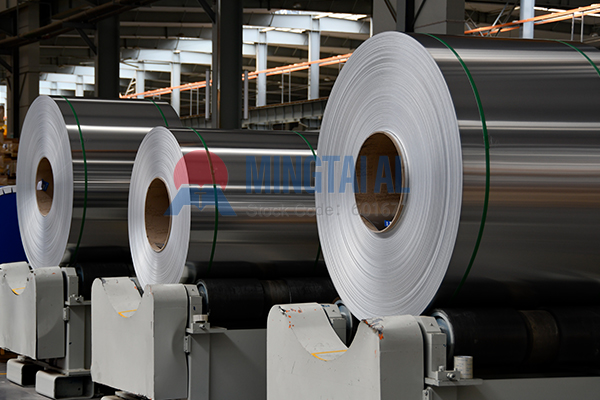
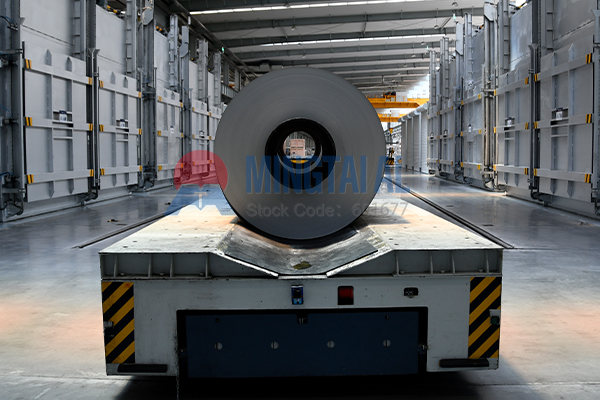
Henan Mingtai Aluminum (Mingtai Aluminum), a leading aluminum plate, sheet, and foil producer in China, provides global customers with top-tier 5052 and 5754 aluminum coils. Our value lies in our upstream quality control:
* Source Quality Assurance: We specialize in the rolling production of aluminum coils. From melting and casting with precise composition control to hot and cold rolling, we manage the entire process in-house. This guarantees that every coil of 5052 or 5754 delivers precise composition, stable performance, and consistent internal quality, providing a perfect foundation for your downstream processing.
* Comprehensive Specifications & Tempers: We offer a full range of tempers from O (Annealed) to various H tempers (H12, H14, H16, H18, H32, H34, etc.), available in a wide variety of thicknesses and widths to meet your diverse design and processing needs.
* Expert Technical Support: Our technical team has deep material expertise. We don’t just respond to quotes; we provide professional material selection advice and technical consultation to help you mitigate risks early in the project and optimize the balance between cost and performance.
If you are looking for a reliable partner for your 5052 VS 5754 Aluminum Coil needs, don’t hesitate to contact Mingtai Aluminum. Let our reliable source quality and professional service ensure the success of your products.