Stock code: 601677
Stock code: 601677
The debate of 6061 aluminum vs 6063 is a common one in industry, as both are widely used alloys from the aluminum-magnesium-silicon family. They may look similar, but their subtle differences in composition and properties are critical to a project’s performance, cost, and final outcome. This guide provides a detailed comparison to help you make the perfect choice.
For a fast decision, remember this core principle:
* Choose 6061 when your application prioritizes strength, machinability, and structural integrity. It’s often called the “Versatile Structural Champion.”
* Choose 6063 when your application demands excellent extrudability, complex shapes, and superior surface finish. It’s known as the “King of Extrusion and Surface Treatment.”
|
Property |
Key Takeaway |
||
|
Key Composition |
Higher magnesium & silicon content |
Lower magnesium & silicon content |
Basis for 6061’s higher strength |
|
Common Temper |
T6 (Solution heat-treated & aged) |
T5 (Cooled from hot working & aged) / T6 |
Temper defines final properties |
|
Tensile Strength |
≥290 MPa (T6) |
≥215 MPa (T6) |
6061 is significantly stronger |
|
Yield Strength |
≥240 MPa (T6) |
≥170 MPa (T6) |
6061 has higher load-bearing capacity |
|
Elongation |
~10% (T6) |
~12% (T6) |
6063 is slightly more ductile |
|
Extrudability |
Good |
Excellent |
6063 is better for thin, complex shapes |
|
Machinability |
Excellent, smooth finish |
Good |
6061 is superior for precision machining |
|
Weldability |
Excellent, common for welded structures |
Good |
Both are good, 6061 is more common |
|
Anodizing Quality |
Good |
Excellent, more uniform & brighter |
6063 is the top choice for decorative uses |
Due to its excellent strength, fatigue resistance, and machinability, 6061 is the benchmark for high-stress structural components.
* Transportation: Automotive chassis, boat decks, bicycle frames.
* Machinery: Robotic arms, equipment frames, mold plates, precision parts.
* Aerospace: Non-critical aircraft parts, drone frames.
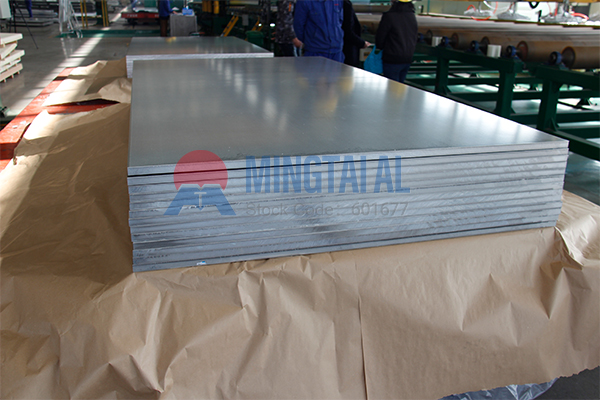
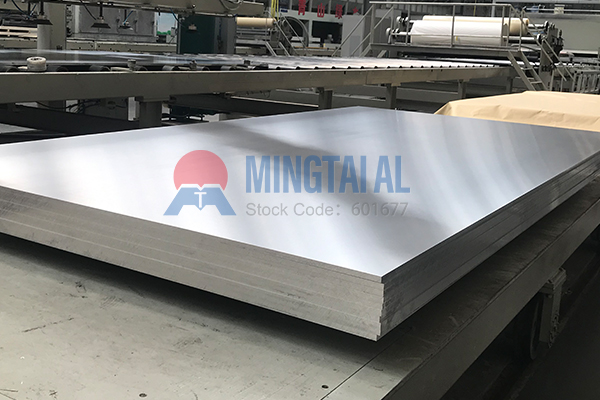
For applications demanding material homogeneity and high strength, Mingtai Aluminum‘s high-quality 6061 aluminum sheets and bars provide a reliable foundation with consistent mechanical properties.
6063 dominates architectural and complex profile fields thanks to its superb extrusion fluidity and perfect anodizing finish.
* Architecture: Window & door frames, curtain wall mullions, thermal break profiles.
* Furniture & Decor: Trim, edging, decorative rails, light fixtures.
* Heat Sinks: LED heat sinks, extruded radiator profiles.
* General Framing: Display structures, railings.
When designs call for smooth lines, complex hollow sections, or a mirror-like surface finish, Mingtai Aluminum’s 6063 aluminum profiles are the ideal choice, offering excellent extrusion quality to bring designs to life.
Ask yourself these questions:
For complex projects, consulting a reliable supplier like Mingtai Aluminum for detailed data sheets and material samples is always recommended. Understanding the core differences in 6061 aluminum vs 6063 is the first step to a successful project.
Whether your project demands the structural strength of 6061 or the exceptional formability of 6063, Mingtai Aluminum offers a full range of standard and custom products to ensure your success from the ground up.
Q1: Which is more expensive, 6061 or 6063 aluminum?
A: Typically, 6061 is slightly more expensive due to its higher alloy content and strength. Actual prices vary based on specifications and market conditions.
Q2: Can 6063 aluminum be used for load-bearing structures?
A: It can be used for secondary structures like window frames, but primary load-bearing applications require stronger alloys like 6061.
Q3: Is there a big difference in anodized appearance between the two?
A: Yes. 6063 typically yields a more uniform and glossy anodized finish due to its smoother extruded surface.
Q4: Can 6061 and 6063 be welded together?
A: Yes, they can be welded together. However, the joint strength will not exceed that of the weaker 6063 alloy.