Stock code: 601677
Stock code: 601677
In the fields of structural design and mechanical manufacturing, 6061 and 6082 aluminum alloys stand out as two of the most prominent stars. Both belong to the aluminum-magnesium-silicon series, offering a good balance of properties, but their subtle differences are often critical to a project’s success. As a professional aluminum supplier, Mingtai Aluminum has deep expertise in these materials. This guide will provide a detailed analysis of 6082 and 6061 to help you make the most informed choice.
6061 is one of the world’s most famous and widely used aluminum alloys. Known for its excellent overall performance—a perfect balance of strength, machinability, weldability, and corrosion resistance—it is virtually synonymous with “general-purpose aluminum alloy.”
>> [Click to learn about Mingtai Aluminum’s 6061 Aluminum Sheet Specifications]
6082 holds a position in European standards similar to 6061 and can be considered its “European counterpart” or “strength-enhanced version.” Through adjusted composition and heat treatment, it achieves higher static strength, making it a preferred choice for structural applications.
>> [Click to learn about Mingtai Aluminum’s 6082 Aluminum Sheet Specifications]
To choose correctly, we must dive into the details.
This is the core difference between the two. In the T6 temper, 6082 typically has slightly higher tensile and yield strength than 6061.
* Yield Strength is the point at which a material begins to deform plastically. For structural components, higher yield strength means better load-bearing capacity and safety.
* The Bottom Line: When your design has stringent requirements for static structural strength and resistance to deformation, 6082 is the superior choice.
|
Property |
6082-T6 |
6061-T6 |
Simple Analysis |
|
Tensile Strength |
High (≥310 MPa) |
Medium-High (≥290 MPa) |
6082 has greater load-bearing capacity |
|
Yield Strength |
High (≥260 MPa) |
Medium (≥240 MPa) |
6082 offers better resistance to deformation |
|
Fatigue Strength |
Good |
Good |
Comparable, 6082 has a slight edge |
|
Machinability |
Very Good |
Excellent |
6061 parameters are more universally known |
|
Weldability |
Very Good |
Excellent |
Both are ideal for welded structures |
|
Corrosion Resistance |
Good |
Good |
Both offer good resistance to atmospheric corrosion |
* Machinability: Both alloys offer excellent machinability, being easy to cut, drill, and mill. Due to its unparalleled popularity, machinists might be more familiar with 6061’s characteristics.
* Weldability: They are both considered “weldable alloys” with excellent weldability. Various welding methods can be used, resulting in sound, strong welds.
* 6061 Typical Uses: Aerospace components, bicycle frames, automotive chassis, marine structures, consumer electronics housings, and various general-purpose machinery parts. It’s the go-to choice when you need a versatile, reliable “safe bet.”
* 6082 Typical Uses: Bridges, crane structures, large transport tanks, marine superstructures, mining equipment, and other high-stress structural components. It’s the answer when “strength” is the top priority.
This simple decision tree can guide you:
* Choose 6082 if:
* Your primary design goal is maximizing structural strength and stiffness.
* Your project must adhere to European standards or specifications.
* It’s for heavy-duty, high-load frameworks and support structures.
* Choose 6061 if:
* You need a well-rounded, versatile material proven over decades of global use.
* The project involves complex machining and extensive welding.
* You are in the North American market or follow standards like ASTM.
* You prioritize material availability and fabricator familiarity.
Still unsure? Remember this rule of thumb: Choose 6082 for supreme strength, choose 6061 for all-around versatility.
Your final decision in the 6082 vs 6061 aluminum debate hinges on your project’s specific needs.
Whether your final choice is 6082 or 6061, Mingtai Aluminum is your reliable raw material partner. We provide not just products, but assurance.
* Stable Performance: We strictly adhere to international standards (like ASTM, EN) for production and quality control, ensuring consistent and reliable mechanical properties in every batch, giving you peace of mind for your designs.
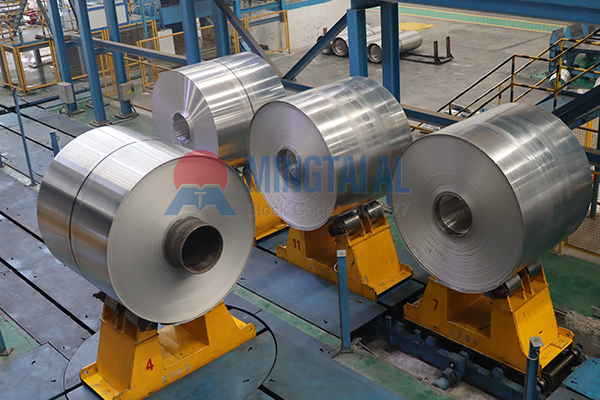
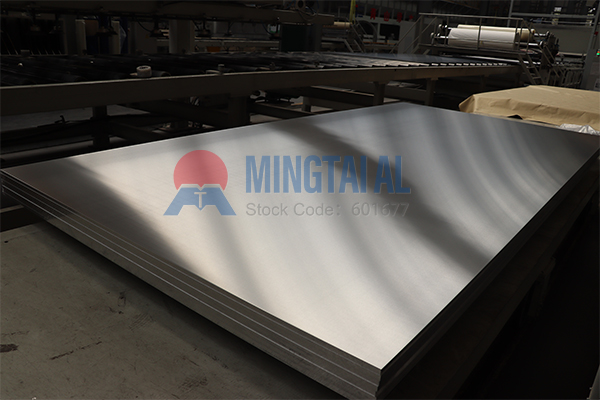
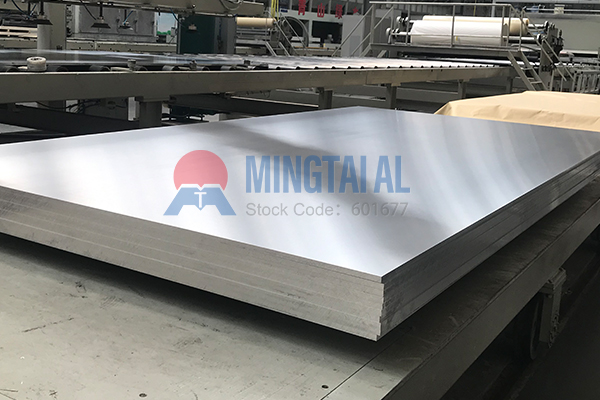
* Comprehensive Specifications: Mingtai Aluminum maintains a large stock of 6061 and 6082 aluminum sheets and coils in various common sizes and tempers, enabling quick response to your needs and supporting your project timeline.
* Expert Support: Our team provides professional technical consulting services, helping you select the most suitable and cost-effective material based on your specific application, drawings, and performance requirements.
> Don’t let material selection become a bottleneck for your project. Browse our 6082 Aluminum Sheet product page and 6061 Aluminum Sheet product page to view detailed specifications and stock information. For personalized advice, please feel free to contact us. Mingtai Aluminum’s technical sales team is ready to assist you and ensure your project’s success.