Stock code: 601677
Stock code: 601677
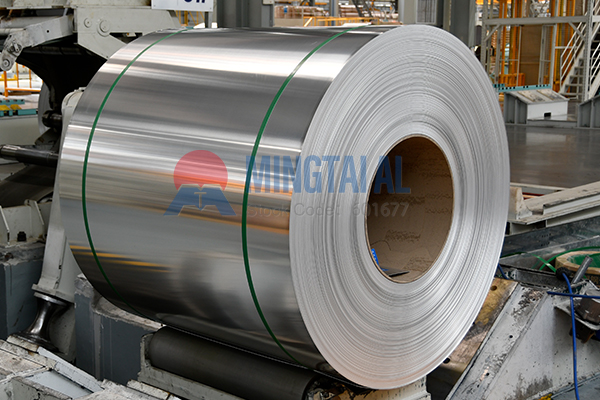
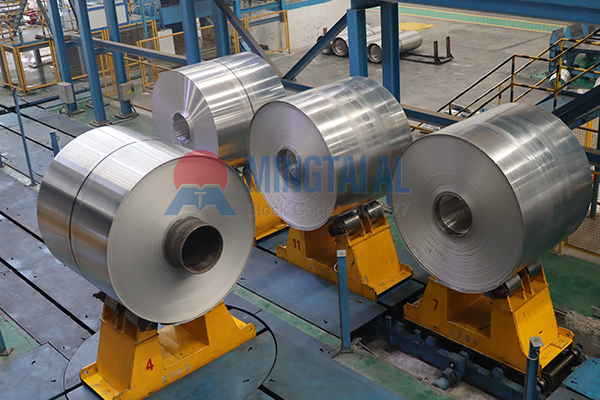
Behind every high-performance oven, refrigerator, or dishwasher lies a carefully selected material that ensures efficiency, durability, and safety. Aluminum coil for kitchen appliances serves as the foundational component in many critical parts, from heat distribution systems to structural panels. This guide provides appliance manufacturers with a comprehensive understanding of why aluminum is the material of choice and how to select the right alloy for your specific application.
The dominance of aluminum coil for kitchen appliances is no accident. It stems from a unique combination of properties that no other metal can match:
|
Property |
Benefit for Appliances |
Common Applications |
|
Excellent Thermal Conductivity |
Distributes heat quickly and evenly, reducing cooking times and improving energy efficiency |
Oven cavities, microwave waveguide covers, steam oven trays, refrigerator evaporators |
|
Lightweight with High Strength |
Reduces overall appliance weight for easier transport and installation while maintaining structural integrity |
Refrigerator liners, washing machine cabinets, range hood components |
|
Superior Corrosion Resistance |
Naturally forms a protective oxide layer that resists moisture, steam, and food acids |
Dishwasher tubs, refrigerator components, any food-contact surfaces |
|
Exceptional Formability |
Can be deep-drawn, stamped, and bent into complex shapes without cracking |
Parts requiring complex geometries, deep-drawn components |
|
Food-Grade Safety |
Non-toxic, odorless, and easy to clean; complies with FDA, LFGB, and other food contact standards |
All surfaces that contact food directly |
To select the right aluminum coil for kitchen appliances, manufacturers must understand the critical properties that affect both production efficiency and end-product performance:
1. Thermal Performance: The Efficiency Driver
Aluminum’s thermal conductivity is second only to silver and copper among common metals. For kitchen appliances, this translates directly into energy savings and performance. In ovens, aluminum components ensure even heat distribution, eliminating hot spots. In refrigerators, aluminum evaporators provide efficient heat exchange.
2. Formability and Workability
The ability to be shaped into complex geometries is essential for modern appliance design. High-quality aluminum coil for kitchen appliances offers excellent ductility, making it ideal for high-speed production processes including deep drawing, roll forming, and stamping. This ensures consistent results across millions of production cycles.
3. Surface Quality for Finishing
A pristine, uniform surface is non-negotiable for appliances that require painting, anodizing, or laminating. The aluminum coil must be free from oil stains, scratches, and surface irregularities to ensure strong coating adhesion and a flawless final appearance.
4. Mechanical Strength
Different appliance components require different strength levels. From the structural rigidity needed in washing machine cabinets to the controlled flexibility required in refrigerator liners, the aluminum alloy and temper must be precisely matched to the application.
Different applications within kitchen appliances require different alloy selections. Here are the most commonly used alloys for aluminum coil for kitchen appliances:
|
Alloy |
Key Characteristics |
Typical Applications |
|
1050/1060 |
High purity, excellent thermal conductivity, superior formability |
Heat exchangers, evaporators, decorative trim |
|
3003 |
Higher strength than 1xxx series, good corrosion resistance, excellent workability |
Oven liners, refrigerator panels, washing machine cabinets |
|
3105 |
Moderate strength, excellent deep-drawing properties |
Complex stamped parts, components requiring deep draws |
|
5052 |
High fatigue strength, excellent corrosion resistance |
Marine-grade applications, dishwasher components, harsh environments |
|
8011 |
Good strength, excellent for laminating |
Refrigerator liners, insulation components |
> For detailed specifications on specific alloys, explore our product pages: 1050 Aluminum Coil, 3003 Aluminum Coil, and 5052 Aluminum Sheet.
Choosing the optimal aluminum coil for kitchen appliances requires careful consideration of several factors:
1. Identify the Application Requirements
– Thermal requirements: Does the component need to conduct or insulate heat?
– Mechanical demands: What strength, hardness, and fatigue resistance are needed?
– Forming complexity: Will the part require deep drawing, bending, or stamping?
– Surface finish: Will the component be painted, anodized, or left as-is?
– Environmental exposure: Will it face moisture, heat, food acids, or cleaning chemicals?
2. Specify the Correct Temper
The temper of aluminum significantly affects its performance:
– O Temper (Annealed): Maximum formability for deep drawing complex shapes
– H Temper (Strain Hardened): Various levels of strength for structural applications
– T Temper (Heat Treated): For alloys requiring precipitation hardening
3. Verify Quality Standards
Ensure your supplier can provide:
– Consistent mechanical properties across all coils
– Tight dimensional tolerances for high-speed production
– Certified compliance with food safety standards (FDA, LFGB)
– Reliable surface quality for subsequent finishing operations
> Learn more about aluminum tempers in our guide: [Aluminum Temper Designations Explained].
For manufacturers producing high-volume kitchen appliances, material consistency is everything. When evaluating aluminum coil for kitchen appliances, consider these quality benchmarks:
|
Quality Parameter |
Why It Matters |
|
Dimensional Tolerance |
Prevents production line jams and ensures consistent part quality |
|
Mechanical Consistency |
Guarantees every stamped part meets specifications, reducing waste |
|
Surface Purity |
Ensures strong coating adhesion and flawless appearance after finishing |
|
Flatness |
Critical for automated handling and subsequent processing |
|
Edge Condition |
Prevents cracking during forming and ensures operator safety |
For appliance manufacturers, the choice of aluminum coil for kitchen appliances directly impacts production efficiency, product quality, and brand reputation. A reliable material partner provides:
– Consistent Quality: Batch-to-batch uniformity ensures stable production
– Technical Support: Expert guidance on alloy selection and processing optimization
– Reliable Supply: Consistent availability to support manufacturing schedules
– Certified Compliance: Documentation for regulatory and customer requirements
The humble aluminum coil for kitchen appliances may go unseen by end-users, but its role in product performance, durability, and efficiency is undeniable. By understanding the properties, alloys, and selection criteria outlined in this guide, appliance manufacturers can make informed decisions that lead to superior products and satisfied customers.
The foundation of every great appliance is the quality of its components. Choosing the right aluminum coil is the first and most critical step in that journey. Contact our technical sales team.