Stock code: 601677
Stock code: 601677
In today’s rapidly growing sectors of food delivery, prepared meals, and baking, finding safe, efficient, and eco-friendly packaging is key for brands to stand out. Food-grade aluminum foil, with its exceptional physical and chemical properties, has become the ideal core material for premium food containers and trays. This comprehensive guide explores the core advantages, selection criteria, and applications of aluminum foil for food trays.
Choosing aluminum foil as the base material offers irreplaceable benefits:
The performance and cost of a tray depend heavily on the aluminum alloy used.
* Bare Foil: The most economical and versatile, suitable for most dry or short-term food storage.
* Coated/Laminated Foil: An organic coating enhances resistance to grease and acidic foods (like tomato sauce, vinegar), making it the preferred choice for liquid or high-fat content items.
* 8011 Alloy: The most widely used alloy for food foil. It offers excellent deep-drawing formability, good strength, and high barrier properties, making it the primary material for deep-drawn containers and cake pans.
* 3004 Alloy: Offers a good balance of formability and strength, often used for lids or shallow trays requiring rigidity.
* 8006/8079 Alloys: Typically have a denser structure, providing superior moisture and leak resistance.
How do you choose the right foil for your product? Focus on these core parameters:
* Step 1: Define your food’s characteristics (acidity, oil/water content).
* Step 2: Determine the end-use scenario (freezing, oven reheating, delivery).
* Step 3: Share your tray design with your supplier for alloy and thickness recommendations.
* Step 4: Always request a authoritative Certificate of Compliance (food-grade) or SGS test report for the material, and obtain samples for practical production trials.
Food-grade aluminum foil is widely used for:
* Takeaway Containers: Maintains food temperature and texture, enhancing brand image.
* Baking Packaging: Tart shells, pie pans, bread boxes—offering great formability and even heat conduction.
* Prepared Meals & Central Kitchens: Can go directly from freezer to oven, streamlining cooking.
* Airline & Railway Catering: Meets high demands for lightweight, standardized, and safe packaging.
* Supermarket Chilled Foods: Premium packaging for salads, deli items, and ready-to-cook meals.
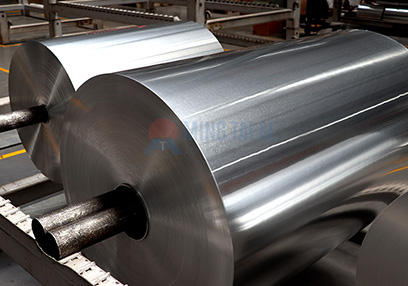
As a leading producer of high-quality aluminum foil, Mingtai Aluminum specializes in providing stable, safe, and customizable food-grade aluminum foil coil stock for packaging manufacturers. We offer a complete range of alloys like 8011 and 3003 across all standard thicknesses, with strict quality control ensuring every batch meets food contact standards. If you are seeking a reliable foil partner for your food container production, contact us for expert material selection advice and samples.
Q1: Can aluminum foil trays be used in a microwave oven?
A: Traditional single-material aluminum trays are not suitable for microwave heating. Metal reflects microwaves, causing uneven heating and potential sparks. However, they are perfectly safe for use in conventional ovens, air fryers, and other thermal convection/radiant heat appliances.
Q2: How can I verify if the aluminum foil is food-grade?
A: The most reliable method is to request a third-party test report from your supplier, specifically for the batch in question, proving compliance with relevant standards like GB 4806.1 or FDA CFR 21.
Q3: What makes aluminum foil trays eco-friendly?
A: Aluminum foil is 100% recyclable. Recycling it requires only about 5% of the energy needed to produce primary aluminum. Its high recycling rate makes it a highly sustainable packaging choice.
Q4: Can you customize the width and properties of the foil coil?
A: Yes. Reputable producers can customize slit width, coil diameter, and mechanical properties to match your specific container manufacturing equipment and process requirements.