Stock code: 601677
Stock code: 601677
In the pharmaceutical industry, the stability and efficacy of medicines are paramount. Moisture, oxygen, and light are three “invisible threats” to drug quality. Pharmaceutical packaging, especially common blister and strip packaging, serves as the critical barrier against these threats. At the heart of this barrier lies aluminum foil. However, the thickness of the aluminum foil is a decisive factor in its barrier effectiveness, production efficiency, and overall cost. An incorrect choice can lead to product failure within its shelf life or unnecessary cost overruns.
This comprehensive aluminum foil thickness guide for pharma aims to demystify the selection process. We will explore common thickness ranges, the key factors influencing your choice, and how to ensure your packaging reliably protects your products.
First, let’s clarify the common units used for aluminum foil thickness:
* Micrometer (μm): The most widely used international unit (1 mm = 1000 μm).
* Millimeter (mm): Typically used for thicker foils.
* Gauge: An industry term that can be ambiguous; referring to micrometers or millimeters is more precise.
Thickness must be consistently monitored using precision instruments to ensure uniformity across the entire roll. This consistency is a critical quality indicator, as it directly impacts the heat seal performance and yield in your packaging process.
The table below outlines the common thickness ranges for pharmaceutical aluminum foil and their typical uses, serving as a practical starting point for your selection.
|
Thickness Range |
Typical Application |
Key Characteristics & Considerations |
|
20μm – 25μm |
Lidding for Blister Packaging |
Characteristics: Excellent flexibility, easy to punch and form, cost-effective. Considerations: Relatively lower mechanical strength and barrier properties. Suitable for solid oral drugs with standard barrier requirements. |
|
30μm – 40μm |
Base Foil for Blister Packaging, Strip Packaging |
Characteristics: This is the most versatile and commonly used range. It offers the best balance of barrier properties, mechanical strength, and cost. Provides reliable protection against moisture, light, and oxygen. Considerations: Ideal for most tablets, capsules, and drugs sensitive to moisture. |
|
45μm – 60μm |
High-Barrier Packaging, Large or Irregularly Shaped Drugs |
Characteristics: High strength and superior barrier. Excellent puncture resistance, effectively protecting sharp or irregularly shaped drugs. Considerations: Used for moisture- and oxygen-sensitive drugs (e.g., biologics, certain antibiotics), irregular-shaped tablets, and suppositories. |
|
> 60μm |
Special Applications (e.g., liners for bulk API transport drums) |
Characteristics: Extreme mechanical strength and absolute barrier. Used for industrial packaging and special storage scenarios, not final sale units. Considerations: Higher cost, typically not used for direct primary packaging. |
Choosing based on thickness alone is not enough. A successful packaging solution requires a holistic view of these four factors:
* Moisture Sensitivity: Is the drug prone to moisture? This is the most critical factor. For highly hygroscopic drugs, a thicker foil (e.g., >40μm) with a higher barrier is essential.
* Light Sensitivity: While all aluminum foil is light-proof, a thicker gauge offers more absolute physical protection for extremely photosensitive drugs.
* Chemical Nature: Does the drug have acidic or alkaline properties? This demands a foil with high purity and stable chemical properties.
* Formability: High-speed blister machines have stringent requirements for the foil’s ductility and strength. Foil that is too thin may rupture during deep drawing, while foil that is too thick can hinder forming speed and quality.
* Sealability: The thickness uniformity of the foil is paramount for a consistent heat seal. Inconsistent thickness can lead to weak seals and localized leakage, resulting in packaging failure.
Packaging materials must comply with regional pharmacopoeia and regulations, such as the USP, EP, or ChP, and adhere to Good Manufacturing Practice (GMP) requirements.
“Thicker is not always better.” The goal is to select the most economical and rational thickness that reliably meets all protection, production, and regulatory requirements.
When choosing a partner, you need more than just a supplier; you need an expert who provides stable and safe foundational materials.
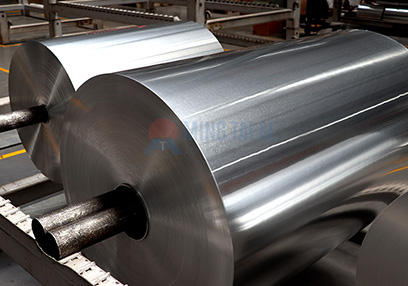
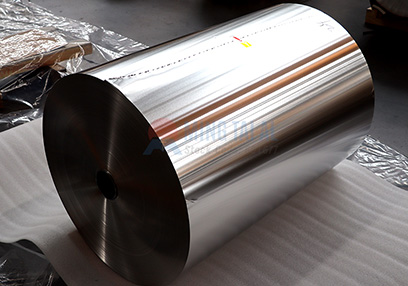
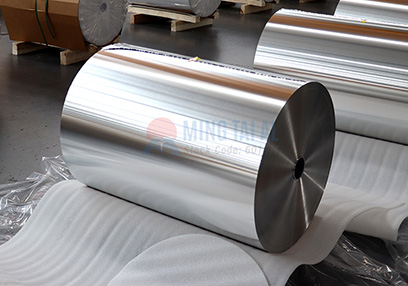
Mingtai Aluminum specializes in producing high-quality raw base material for pharmaceutical aluminum foil. We do not perform further processing like coating or printing. Instead, we are dedicated to providing the core, high-quality foil stock for downstream pharmaceutical packaging manufacturers.
* Superior Purity and Consistency: We use high-quality aluminum alloys (e.g., 8011, 8021) to ensure extremely low impurity levels, meeting safety requirements for direct drug contact.
* Exceptional Thickness Uniformity: This is our technical cornerstone. Our advanced rolling technology and automated control systems ensure minimal thickness tolerance, guaranteeing maximum stability for your high-speed production and reducing downtime caused by material issues.
* Clean Surface Performance: Our foil is produced with a clean, oil- and dust-free surface, providing an optimal foundation for subsequent coating and printing processes.
* Flexible Customization: We can provide foil in various widths, core diameters, and tempers to meet your specific needs.
Selecting the correct aluminum foil thickness for your drug is a strategic decision that blends science, engineering, and business acumen. The right choice is the cornerstone of ensuring patient safety, protecting your brand reputation, and controlling production costs.
We hope this aluminum foil thickness guide for pharma has been helpful. If you are seeking a reliable base material supplier for your innovative or existing product line, Mingtai Aluminum is your ideal partner.
Contact our specialist team today. Share your drug characteristics, packaging form, and machine information, and our technical experts will recommend the most suitable thickness and product solution for you.