Stock code: 601677
Stock code: 601677
Traditional steel cabinets come with three stubborn problems: heavy weight, poor heat dissipation, and rust.
Aluminum solves all three at once. Its density is about one‑third that of steel, it moves heat away faster, and it forms a natural protective oxide layer that resists corrosion even when scratched.
That is why aluminum sheet for electrical cabinets is now specified across so many applications – outdoor telecom enclosures, data center racks, industrial control boxes, high‑voltage power equipment, and more.
The weight savings lower shipping costs and make wall‑mounting easier. The thermal benefits help internal components run cooler and last longer.
Not every aluminum alloy behaves the same way. The wrong choice can cause cracking during bending, poor weld quality, or premature corrosion.
Here are the four most common grades and where they fit:
– 5052‑H32 – The standard for sheet‑metal enclosures. Excellent corrosion resistance, good formability, and moderate strength. Ideal for outdoor and coastal installations.
– 3003 – Good formability at a lower cost. Works well for indoor cabinets in dry environments.
– 6061 – Higher strength for frames and load‑bearing parts. Requires larger bend radii to avoid cracking.
– 5083 – High magnesium content delivers superior corrosion and fatigue resistance. Often used in high‑voltage switchgear and harsh conditions.
Outdoor or humid → 5052
Indoor general use → 3003
Structural supports → 6061
Severe or high‑voltage → 5083
Thickness directly affects stiffness, sealing, and cost.
What many overlook: stiffness increases with the cube of thickness. A small increase in thickness can dramatically reduce deflection.
Common thicknesses range from 1.0 to 3.0 mm.
For outdoor NEMA 4X enclosures, 5052‑H32 should be at least 3 mm.
If a door panel is wider than 700 mm, consider 4 mm or add internal stiffeners – otherwise the door may sag and break the seal.
Always specify thickness in millimeters on your drawings. Gauge numbers are confusing because 14‑gauge aluminum is not the same as 14‑gauge steel.
Yes. UL, NEMA, and IEC all permit aluminum enclosures, provided they meet the required strength and protection levels.
– UL 508A does not exclude aluminum.
– NEMA 250 explicitly recognizes aluminum housings.
– IEC 61439 sets general requirements for corrosion and heat resistance – and qualified aluminum sheets satisfy them.
The key is selecting the right alloy and thickness to pass impact and deflection tests. Compliance is not a problem when the material is specified correctly.
Experienced engineers often ask about these. They matter for long‑term reliability.
1. Grounding
Aluminum’s natural oxide layer is non‑conductive. At grounding points, you must remove that oxide (for example, by brushing) to create a low‑impedance path.
2. Galvanic corrosion
When aluminum touches copper or steel in damp conditions, galvanic corrosion can start. Use compatible fasteners or isolate dissimilar metals at joints.
3. EMI shielding
Aluminum offers good shielding, but only if seams and grounds are kept conductive. Poor connections can weaken shielding over time.
These are not deal‑breakers – they are design details that, when addressed correctly, do not reduce the material’s overall advantages.
A lighter cabinet is easier to lift and install, but the benefits go further.
Wall‑mounted units place less stress on brackets and walls. Mobile equipment becomes more practical.
Shipping costs also drop noticeably. For the same cabinet size, an aluminum enclosure weighs roughly 60% less than steel – a significant saving on freight, especially for long distances.
And aluminum is highly recyclable, which aligns with the growing sustainability focus in many markets.
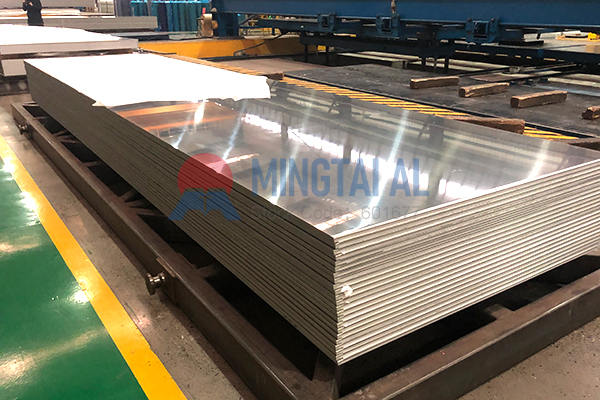
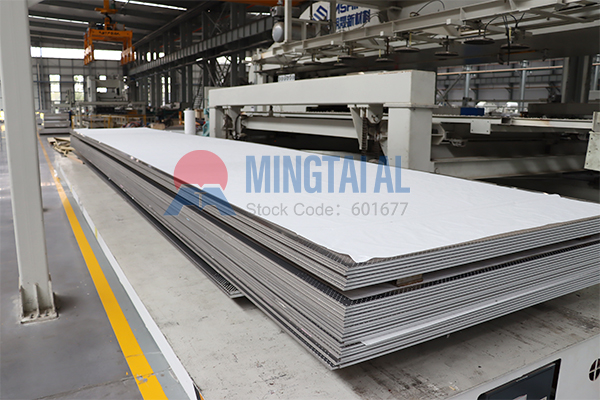
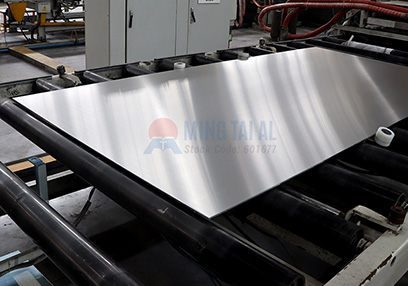
We supply bare aluminum sheet with good flatness, tight tolerances, and consistent internal quality.
We do not perform anodizing, painting, or powder coating. Those finishing steps can be done by the fabricator as needed – for instance, powder coating for outdoor UV resistance, or anodizing for extra abrasion protection.
Our role is to provide a solid foundation that is ready for your downstream processes.
For reliable supply of aluminum sheet for electrical cabinets – in 5052, 3003, 6061, and 5083 – Mingtai Aluminum offers a wide range of sizes with stable quality to back your project.
Q: Which aluminum alloy is most common for electrical cabinets?
A: 5052‑H32 – it balances corrosion resistance, formability, and strength.
Q: What thickness should I choose?
A: Typically 1.0–3.0 mm; outdoor cabinets need at least 3 mm.
Q: Does aluminum meet UL or NEMA requirements?
A: Yes, all major standards accept aluminum when performance criteria are met.
Q: How do I ground an aluminum enclosure?
A: Remove the oxide layer at the grounding point to get a low‑impedance connection.
Q: What about contact with other metals?
A: Isolate or use compatible fasteners to avoid galvanic corrosion.
Q: Do you offer surface finishing?
A: No, we supply bare sheet; finishing is handled by the fabricator.