Stock code: 601677
Stock code: 601677
The automotive industry is shifting materials for interior and exterior trim components, and embossed aluminum coil for automotive trim has become a popular choice due to its textured surface and lightweight benefits. Window moldings, body side moldings, door sill plates, and roof rail trims—these parts directly define a vehicle’s visual appeal and refinement. Aluminum coils with embossed patterns offer both functional and aesthetic advantages, making them a preferred option for OEMs and parts makers.
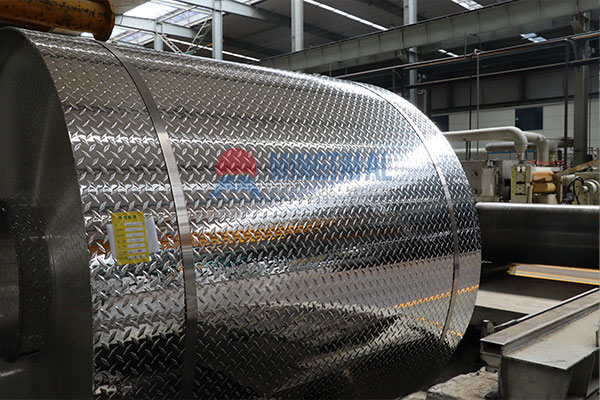
Simply put, it is produced by passing cold‑rolled aluminum through engraved rollers to create raised patterns mechanically. This cold‑working process does not alter the core mechanical properties. Common patterns include orange peel, diamond, and five‑bar—each serving different functional or decorative needs.
This is a frequent question among those specifying materials. Automotive bright trim demands four key attributes: high surface quality, good formability, excellent corrosion resistance, and a fine anodized finish. Here is how common alloys compare:
– 1060 pure aluminum – excellent surface finish, but low strength and a soft anodized layer
– 3003 aluminum – medium strength, but limited filiform corrosion resistance
– 5052 aluminum – balanced performance, no significant weakness
– 6061 aluminum – high strength, but prone to cracking during bending
5052 is an Al‑Mg alloy with about 2.2‑2.8% magnesium. Its tensile strength ranges 170‑215 MPa, yield strength ≥65 MPa, and elongation ≥16%—ensuring deformation resistance while supporting complex forming like rolling and bending without cracking. More importantly, 5052 offers superior filiform corrosion resistance over 1060 and 3003, especially in coastal or humid environments. It also produces a clear, uniform mirror‑like finish after anodizing—a must for exterior trim aesthetics.
Based on industry practices, manufacturers typically evaluate the following aspects:
– Alloy and temper – H32 (half‑hard) or H34 are most common for trim. Some non‑structural parts may use 3003, but 5052 wins on corrosion and anodizing.
– Surface quality – The final appearance depends directly on the base coil. High‑grade 5052 for bright trim requires:
– No scratches, oil stains, color differences, or visible defects
– Roughness Ra ≤ 0.2 μm
– Bright‑light inspection (over 5000 Lux) to ensure uniformity
– Dimensional precision – Trim strips are often slit into narrow widths (20‑100 mm), demanding excellent flatness. Professional grades must guarantee camber ≤0.8 mm/m and thickness tolerance ≤±0.01 mm.
– Embossing pattern – Different applications need different textures: orange peel for general decoration, five‑bar for anti‑slip, diamond for enhanced rigidity and three‑dimensional effect.
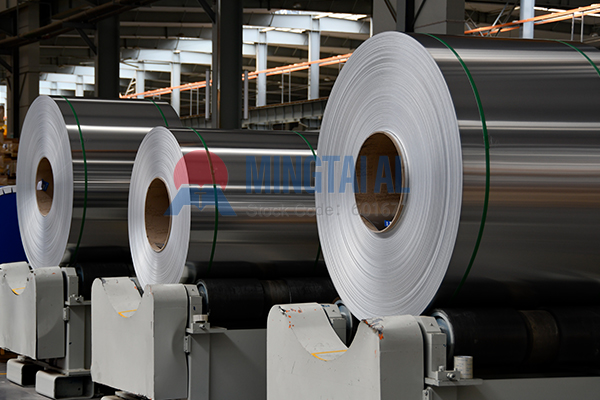
– Protective measures – High‑surface coils must be double‑sided PE‑film covered to prevent scratches and contamination during storage and transport.
For automotive trim manufacturers, selecting the right material ensures smooth production and consistent quality. Practical steps include:
As lightweighting and consumer expectations for premium finishes continue to drive the automotive sector, the role of embossed aluminum coil for automotive trim will only expand. A reliable supply of 5052 alloy, tight tolerances, and consistent surface quality are the pillars of successful trim production. Henan Mingtai Aluminum has built a solid reputation in 5052 coil manufacturing, with extensive experience serving automotive applications—offering dependable material solutions for your trim projects.
Q1: Why not use pure aluminum (e.g., 1060) for automotive trim embossed coil?
A: 5052 offers superior strength, corrosion resistance, and anodizing effect, meeting deformation and durability requirements better.
Q2: Does the embossing process affect the mechanical properties of the coil?
A: Embossing is a cold mechanical surface treatment that does not change the base material’s mechanical properties.
Q3: How to quickly check surface quality of 5052 embossed coil upon delivery?
A: Peel a corner of the protective film and observe a fluorescent tube reflection at 45° – a continuous straight line indicates acceptable surface.
Q4: What is the typical thickness range for automotive trim embossed coils?
A: Window moldings 0.3‑0.8 mm, body side moldings 0.6‑1.2 mm, door sill plates 0.8‑1.5 mm, roof rail trims 1.0‑2.0 mm.
Q5: What is the common temper for 5052 embossed coils for trim?
A: H32 (half‑hard) or H14, balancing strength and formability.