Stock code: 601677
Stock code: 601677
In both daily life and industrial production, aluminum foil is everywhere. From baking sheets in household kitchens to food container lids for takeout, and individual packaging for chocolates and yogurt, aluminum foil has become an indispensable material for food protection due to its excellent barrier properties, temperature resistance, and convenience. However, are you aware that the safety, quality, and compliance of aluminum foil used in direct contact with food are paramount? Choosing the wrong food grade aluminum foil supplier can not only lead to product defects but also pose significant food safety risks.
Therefore, selecting a professional and reliable partner is fundamental to ensuring your operational smoothness and brand reputation. This article will detail five key factors you must consider when choosing a supplier.
Food grade aluminum foil is not a vague concept; it refers to a set of stringent standards. Its most fundamental differences from ordinary industrial aluminum foil are:
* Pure Raw Materials and Alloy Selection: High-purity aluminum ingots must be used. We typically recommend the well-balanced 8011 alloy or the higher-purity 1235 alloy. These alloys have pure compositions, strictly control the migration of heavy metals like lead and cadmium, ensure no leaching of harmful substances, and offer good ductility and strength.
* Production Environment: Manufacturing must occur in clean, contamination-free workshops to prevent the foil from secondary pollution like oil stains or dust during rolling.
* Authoritative Certifications: It must pass authoritative international and domestic food contact material standards certifications, which serve as its safety “ID card.”
Quality is the top priority. A good supplier ensures their products offer:
* Surface Smoothness: A flat, uniform foil surface free from significant bright lines, streaks, pinholes, or oil stains.
* Mechanical Properties: Consistent thickness, and toughness and tensile strength that meet requirements, preventing easy tearing or breakage during use.
* Batch-to-Batch Consistency: High stability in quality and performance across different production batches, which is crucial for mass production.
Certifications are hard indicators of safety assurance. The supplier must provide complete certification documents, such as:
* US FDA Standards: Proof of compliance with U.S. Food and Drug Administration requirements.
* EU LFGB Standards: Meeting the stringent German and European Union regulations for food contact materials.
* Chinese GB Standards: Conformity with relevant national food safety standards.
These certifications are backed by rigorous test data and are your strong defense against customer concerns and market supervision.
The supplier’s overall strength determines the stability and flexibility of your supply chain.
* Stable Supply: Possession of large production lines and sufficient raw material reserves ensures long-term, stable, and timely delivery, avoiding production disruptions due to stockouts.
* Customization Services: Can they provide various thicknesses (e.g., common 9-15μm for household use, thicker for industrial use), widths, tempers (soft, hard), and slitting? Can they offer special treatments like printing or coating? Strong customization capability means the supplier can be a problem-solving partner, not just a seller.
An excellent supplier should act as a “solution provider.”
* Application Consulting: Ability to recommend the most suitable and cost-effective product specifications based on your specific application scenario (e.g., high-temperature baking, liquid packaging, wrapping acidic foods). For instance, for packaging requiring higher toughness, the 8011 alloy might be suggested, while the 1235 alloy is recommended for applications demanding extreme purity.
* Rapid Response: Ability to quickly address and provide effective solutions when technical or delivery issues arise.
Price is important but should not be the sole criterion. Consider the total cost, including product yield rates, production efficiency, and potential risks and losses caused by quality issues. A supplier with stable quality and professional service can help lower your overall operational costs.
After understanding these five key criteria, you’ll find that locating a partner that meets all requirements comprehensively is challenging. Mingtai Aluminum, with its profound industry expertise and exceptional product quality, has become the long-term choice for many renowned domestic and international companies.
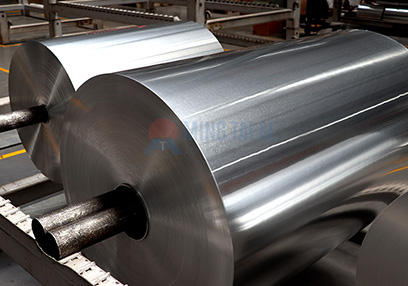
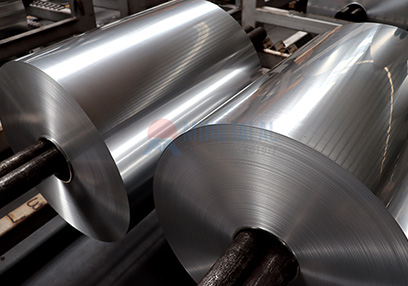
Mingtai’s food grade aluminum foil is widely used in baking, catering and takeout, candy and chocolate packaging, yogurt lid stock, pharmaceutical packaging, and many other areas, making it an ideal choice for your entire chain from kitchen to industrial production.
In today’s world where food safety is emphasized more than ever, choosing a reliable supplier for your aluminum foil needs holds far greater significance than a simple purchase. It concerns your product quality and your brand reputation.
Let our superior products and professional service demonstrate that choosing Mingtai Aluminum means choosing safety, reliability, and value. Visit our official website or call our customer service to learn more about our products and start a chapter of win-win cooperation.