Stock code: 601677
Stock code: 601677
In the world of boat building, the choice of materials is fundamental to a vessel’s performance, longevity, and safety. Among various options, aluminum stands out for its excellent strength-to-weight ratio, outstanding corrosion resistance, and superior weldability. Within the family of marine-grade aluminum alloys, two stars shine the brightest: 5052 and 5083. But how do you choose between them? This guide provides an authoritative and detailed comparison to help you navigate the decision of 5052 vs 5083 for boat building.
The marine environment is harsh, full of salt, moisture, and biological threats, so not all aluminum alloys are suitable. Marine-grade aluminum refers to alloys specifically formulated to resist seawater corrosion long-term while maintaining sufficient structural strength. As a professional aluminum supplier, Mingtai Aluminum is committed to providing 5052 and 5083 marine plates that meet the highest standards, ensuring material reliability for your project from the source.
To make the right choice, we need to dive deep into the properties of each alloy.
* Composition: 5052 is a non-heat-treatable aluminum-magnesium alloy. Magnesium is its primary alloying element, giving it excellent corrosion resistance, particularly against marine atmospheres.
* Key Advantages:
* Excellent Formability: It is one of the most formable marine alloys, ideal for bending, stamping, and other deep-drawing processes.
* Good Fatigue Strength: It performs well under repeated or fluctuating stresses.
* Cost-Effective: It is generally more budget-friendly compared to 5083.
* Typical Marine Applications: Due to its superb formability and good strength, it’s commonly used for superstructures, interior cabin walls and ceilings, lockers, non-slip decks, fuel tanks, and various covers and trim. These components typically do not bear the main structural loads or direct wave impact.
Want to learn more about the specifications and properties of Mingtai’s 5052 aluminum? Visit our 5052 Product Page.
* Composition: 5083 is an aluminum-magnesium-manganese alloy, also non-heat-treatable. Its higher magnesium content and the addition of manganese make it one of the strongest non-heat-treatable alloys available.
* Key Advantages:
* Very High Strength: Its tensile and yield strength are significantly higher than 5052, enabling it to withstand heavy impact and loads.
* Superb Weldability: It retains a very high proportion of its strength in the weld zone, ensuring strong, integral joints—critical for hull safety.
* Exceptional Resistance to Seawater: It offers superior corrosion resistance in seawater, marine atmospheres, and against industrial chemicals.
* Typical Marine Applications: 5083 is the prime choice for a boat’s primary load-bearing structures. It is widely used for hull plating, decks, keels, frames, and bulkheads. Whether for large ocean-going vessels, naval ships, or high-performance yachts and fishing boats, 5083 is the core material ensuring structural integrity.
Explore how Mingtai’s 5083 marine plate can provide a solid foundation for your vessel’s structure? Check out our 5083 Product Page.
|
Property |
5052 Aluminum |
5083 Aluminum |
|
Primary Elements |
Magnesium |
Magnesium, Manganese |
|
Tensile Strength |
Medium |
Very High |
|
Corrosion Resistance |
Excellent (Marine Atmosphere) |
Exceptional (Seawater) |
|
Formability |
Excellent |
Good |
|
Weldability |
Good |
Exceptional (High As-Welded Strength) |
|
Typical Applications |
Superstructures, Interiors, Tanks, Covers |
Hull Plating, Decks, Keels, Frames |
|
Cost |
Economical |
Higher |
Choose 5052 when your project involves:
* Non-primary structural parts that require complex shapes or bending.
* Tighter budget constraints in less extreme environments.
* Manufacturing fuel tanks or interior components where formability is key.
Choose 5083 when your project involves:
* Building the boat’s core structures like the main hull, keel, or deck.
* Vessels that will operate in open waters with significant wave impact.
* The highest requirements for welded joint strength and safety.
* Building a durable, long-lasting vessel that holds its value over time.
Q: Can I weld 5052 and 5083 together in a boat hull?
A: While technically possible, it is strongly discouraged. Welding dissimilar alloys can create a potential site for galvanic corrosion, and the properties of the weld joint can be unpredictable and weak. It’s best to select one alloy based on the component’s primary function.
Q: How can I ensure I’m purchasing qualified marine-grade aluminum plate?
A: Choosing a reputable supplier like Mingtai Aluminum is key. We provide complete Mill Test Certificates for our products, guaranteeing that the chemical composition and mechanical properties comply with or exceed relevant international standards (e.g., ASTM, EN). Learn about Mingtai’s Quality Assurance.
In summary, the choice between 5052 and 5083 isn’t about which is better, but which is right for your specific application. 5052 is an economical and flexible choice for interiors and covers, while 5083 is the undisputed champion for primary hull structures. Making the correct choice is the first step to a successful build.
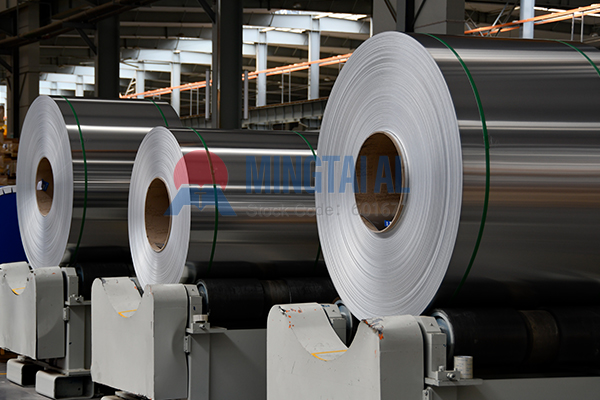
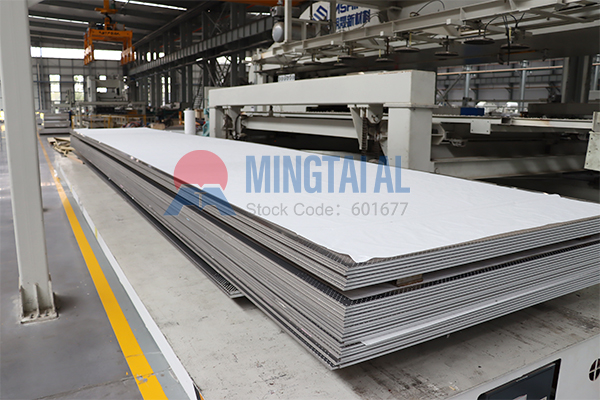
Once you’ve decided, your next crucial step is choosing a reliable material partner. Mingtai Aluminum, as a leading aluminum plate and sheet producer, understands the demanding requirements of the boat building industry. Every coil and sheet of our 5052 and 5083 marine aluminum undergoes strict quality control, ensuring consistency in strength, corrosion resistance, and dimensional accuracy—providing a solid foundation for your designs.
Whether you are building a comfortable and sleek yacht or a durable and safe commercial workboat, Mingtai Aluminum is ready to be your most reliable supply chain partner. Understanding the nuances of 5052 vs 5083 for boat building is key, and having the right supplier is what brings your project to life.
Ready to get started? Contact our expert sales team today for tailored material recommendations and a competitive quote for your boat project. Let’s build something great with reliable materials.