Stock code: 601677
Stock code: 601677
5454 aluminum alloy properties define a versatile, non-heat-treatable alloy from the aluminum-magnesium family, commonly supplied in H32 or H34 tempers. It is renowned for its exceptional balance of good corrosion resistance, moderate strength, and excellent workability. This combination makes it a critical material in demanding fields such as marine fabrication, pressure vessel construction, and transportation. This guide provides an in-depth analysis of its core characteristics and practical material selection advice.
The primary alloying elements in 5454 aluminum are magnesium (2.4-3.0%), manganese (0.5-1.0%), and chromium (≤0.25%). Magnesium enhances both strength and corrosion resistance, manganese contributes to strength, and chromium improves resistance to stress corrosion cracking. This scientific formulation is the foundation for its well-rounded performance.
Regarding mechanical properties, the common H32 temper offers a yield strength of over 230 MPa, a tensile strength around 270 MPa, and an elongation of more than 10%. This strength is achieved through strain hardening, ensuring the material meets structural requirements while retaining good formability.
The most prominent feature of 5454 aluminum is its outstanding resistance to corrosion, particularly in chloride-containing environments. It performs significantly better than many other aluminum alloys in seawater, brine, and chemical atmospheres. This is due to its protective oxide film and magnesium content. Its excellent resistance to stress corrosion cracking is especially valuable for components under sustained stress in corrosive settings.
This alloy exhibits superior welding characteristics. Common methods like MIG and TIG welding produce high-quality joints with good post-weld strength retention and minimal loss of corrosion resistance, making it ideal for complex fabricated structures.
It maintains good cold-forming capabilities (e.g., bending, stamping) while providing moderate strength. The H32/H34 tempers offer a practical balance of hardness and formability for subsequent manufacturing processes.
* vs. 5083 Alloy: While 5083 has slightly higher ultimate strength, 5454 offers superior fatigue performance and stress corrosion cracking resistance, making it better for parts subject to vibration or cyclic loading.
* vs. 5086 Alloy: These alloys are similar. 5454, with slightly higher magnesium content, provides greater strength and is a cost-effective choice for more demanding applications.
* vs. 5052 Alloy: 5454 offers comprehensively better strength and corrosion resistance (especially in marine environments), suitable for harsher operating conditions.
* Marine & Offshore Engineering: Superstructures, decks, walkways, piping systems—leveraging its seawater corrosion and fatigue resistance.
* Pressure Vessels & Tanks: Chemical storage tanks, transport trailers—utilizing its weldability and corrosion resistance.
* Transportation: Truck body panels, containers, specialty vehicle components—balancing strength with weight savings.
* Industrial Structures: Architectural fittings, crane components, drilling platform modules—where moderate strength and weatherability are required.
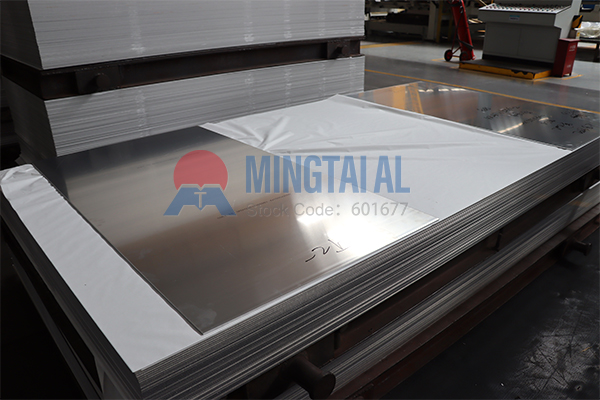
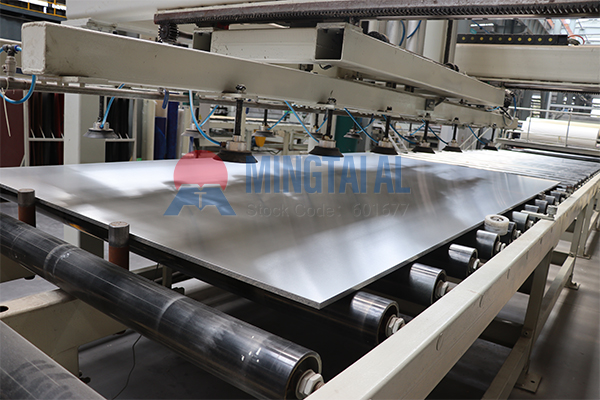
Selecting reliable raw material is foundational to product success. Mingtai Aluminum supplies 5454 aluminum sheet and coil that strictly adhere to international standards like ASTM, ensuring consistent and dependable performance. Our robust quality control and full traceability provide solid material security for your projects.
Q1: Can the strength of 5454 aluminum be increased by heat treatment?
A: No. 5454 is a non-heat-treatable alloy. Its strength is increased through strain hardening (e.g., rolling to H32 or H34 tempers).
Q2: For marine environments, how do I choose between 5454 and 5083?
A: 5083 is often used for primary hull plating where ultimate strength is critical. 5454, with better fatigue and stress corrosion resistance, is typically chosen for upper structures, walkways, and other parts enduring cyclic loads.
Q3: What are the key welding considerations for 5454 aluminum?
A: Use a matching 5XXX series filler wire and control heat input to avoid overheating. Post-weld heat treatment is generally not required to achieve good joint properties.
Q4: Which corrosive environments is 5454 aluminum best suited for?
A: It performs exceptionally well in marine atmospheres, seawater splash zones, industrial environments with chlorides, and infrastructure exposed to de-icing salts, thanks to its outstanding stress corrosion cracking resistance. For projects demanding these specific 5454 aluminum alloy properties, partnering with a trusted supplier like Mingtai Aluminum ensures material integrity.