Stock code: 601677
Stock code: 601677
In building HVAC (Heating, Ventilation, and Air Conditioning) systems, duct insulation is a crucial component. Uninsulated or poorly insulated ductwork leads to significant thermal energy loss, increased system energy consumption, higher operational costs, and potential issues like condensation, mold growth, and noise. Among various insulation solutions, aluminum foil for air duct insulation has become the preferred choice in the industry due to its comprehensive performance. This article delves into the core functions of aluminum foil in this application and provides professional guidance for material selection.
In air duct insulation systems, aluminum foil primarily serves a dual role as a highly effective vapor barrier and a thermal reflective layer.
* Superior Moisture and Vapor Resistance: This is its most critical function. Moisture in the air condenses on cold surfaces. Aluminum foil has an extremely low permeance, effectively blocking water vapor from penetrating the core insulation material (e.g., fiberglass, rock wool). This prevents the insulation from losing its thermal resistance (R-value) due to moisture saturation and eliminates problems associated with condensation, such as mold growth and duct corrosion.
* Excellent Thermal Reflectivity: The smooth surface of aluminum foil reflects up to 95% or more of radiant heat. When laminated to the outer surface of insulation, it reflects radiant heat attempting to transfer through the insulation, significantly enhancing the overall thermal performance and reducing energy loss.
* Robust Physical Protection: The foil provides a durable outer shell for softer insulation cores, protecting them from tearing, puncturing, abrasion, and minor mechanical impact during handling, installation, and long-term use, thereby extending the system’s lifespan.
* Ease of Installation and Safety: Aluminum foil is lightweight, flexible, and easy to cut, bend, and fit around complex duct shapes. Furthermore, it is inherently non-combustible (Class A), complying with stringent building fire safety codes.
Selecting aluminum foil should not be based on price alone. Several key parameters directly determine the reliability and longevity of the final insulation project.
* Alloy and Temper: Foil for duct insulation typically uses alloys like 8011 or 1235, processed to a full-hard (H18) or half-hard (H14) temper. This achieves an optimal balance between flexibility, ductility, and strength, ensuring a tight wrap that resists cracking.
* Thickness: This is a key indicator of durability and barrier performance. Common thicknesses range from 7 to 25 microns (µm). For demanding commercial or industrial projects, a thickness of 9 microns or higher is recommended. Thicker foil offers better puncture resistance, mechanical strength, and vapor sealing capability.
* Surface Treatment: Embossed foil not only improves aesthetics but also enhances the material’s strength in both the longitudinal and transverse directions through the “work-hardening” effect. For high-humidity or special environments, foil with anti-corrosion coatings or laminated with polymer films can be selected.
* Mechanical Properties: Tensile strength and elongation are crucial. High tensile strength prevents tearing during installation, while good elongation allows the foil to conform better to irregular surfaces. High-quality foil should have a uniform texture, free of visible pinholes or defects.
* Ensure the chosen foil complies with relevant national or industry standards (e.g., GB, ASTM) for the project location, a fundamental requirement for quality assurance.
* Substrate Preparation: Ensure the duct surface is clean, dry, and free of rust before installation.
* Critical Sealing: Use dedicated aluminum foil tape to firmly seal all joints, seams, and overlaps, creating a continuous, unbroken vapor barrier. This is key to preventing “vapor bridging” and condensation.
* Handling Complex Fittings: For valves, elbows, tees, etc., precise cutting is needed to ensure the foil wraps tightly. Use additional fasteners if necessary.
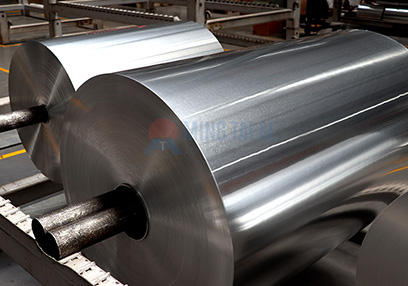
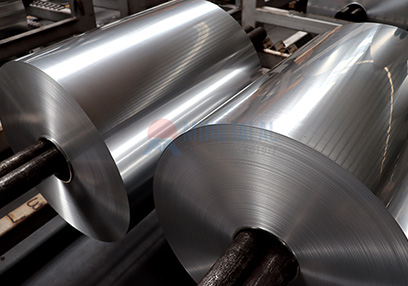
High-quality duct insulation starts with reliable raw materials. Mingtai Aluminum specializes in providing high-performance aluminum foil substrates for insulation material manufacturers.
We understand that stable foil is the cornerstone of downstream insulation product quality. Therefore, through precision manufacturing and strict quality control, we ensure every coil of foil offers excellent thickness uniformity, outstanding mechanical properties, and a clean surface finish. We can provide flexible customization in thickness, width, and surface finish (plain, embossed) according to your specific process requirements. Backed by strong large-scale production capacity, we are your reliable partner.
Building an efficient and durable HVAC system begins with the precise selection of core materials. Mingtai Aluminum provides robust assurance for your high-quality insulation products through professional foil solutions, making it an excellent source for your aluminum foil for air duct insulation needs.
Q1: What are the main advantages of using aluminum foil for insulation?
A: It provides a dual barrier: excellent moisture resistance to prevent insulation failure and mold, and high thermal reflectivity to boost energy efficiency.
Q2: How can I easily judge the quality of aluminum foil?
A: Check for uniform texture, good tensile strength (resists tearing), and a smooth surface free of pinholes. Sourcing from a reputable supplier like Mingtai is the best guarantee.
Q3: Is aluminum foil environmentally friendly?
A: Yes. Aluminum is 100% and infinitely recyclable. Its role in improving energy efficiency also supports sustainability.
Q4: Can aluminum foil be used for outdoor or high-temperature ducts?
A: Standard foil suits most HVAC applications. For harsh conditions, thicker gauges or specially coated foils are required, which Mingtai can provide.