Stock code: 601677
Stock code: 601677
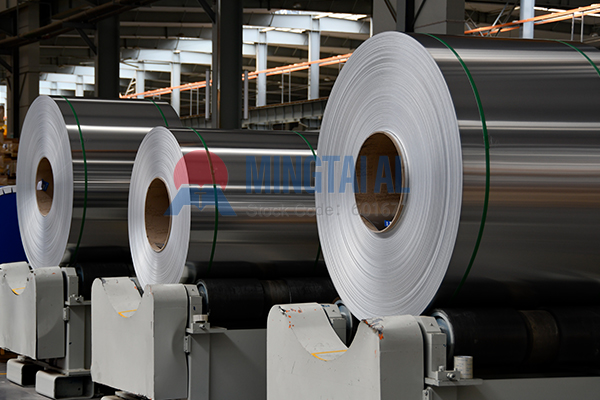
When selecting materials for your interior decoration project, aluminum coil for interior decoration offers an ideal balance of strength, formability, and surface-treatment adaptability. Many designers and specifiers are turning to the 5005 H32 grade for its reliable performance in ceilings, wall cladding, partitions, and furniture panels.
5005 is an aluminium‑magnesium alloy (magnesium content: 0.5%–1.1%). It cannot be strengthened by heat treatment, but gains strength through cold working (such as rolling).
Compared with 1xxx series pure aluminium, 5005 offers higher strength. Compared with 3xxx series (aluminium‑manganese), it gives a brighter and more uniform anodised finish. In short: it sits in the “sweet spot” – better performance than entry‑level alloys, yet more cost‑effective than high‑end ones.
“H32” is the temper designation. It means the coil has been strain‑hardened and then stabilised – so the material stays dimensionally stable during subsequent fabrication.
For interior use, this temper provides moderate strength with good formability. It resists deformation under normal loads, yet remains flexible enough for bending, stamping, roll‑forming, and other shaping processes. Whether you need flat ceiling panels or curved decorative elements, H32 handles the job without cracking.
– Excellent anodising response – The anodic film on 5005 is brighter and more uniform than on 3003, and it matches well with 6063 architectural extrusions. This means consistent, attractive finishes – whether you choose natural anodised or dyed colours.
– Reliable corrosion resistance – The alloy resists atmospheric corrosion effectively, even in humid indoor environments like kitchens and bathrooms.
– Good workability – It supports bending, drawing, stamping, and roll‑forming, making it suitable for a wide variety of decorative shapes.
– Cost‑effective – Compared to 5052, it costs less to process; compared to 1xxx and 3xxx, it delivers superior overall performance for a modest price premium.
5005 H32 aluminium coil is used in many indoor settings. Below are typical use cases:
Ceilings and suspended systems
Light weight reduces structural load, and good flatness ensures easy installation – both for regular grid ceilings and curved designs.
Interior wall cladding
As a base material for decorative wall panels, it works well in commercial spaces (hotel lobbies, offices, shopping malls) and high‑end residences.
Partitions and screens
The coil can be cut, perforated, or engraved into various patterns for space division and visual appeal.
Furniture and cabinet panels
Used for cabinet doors, decorative trims, and tabletop inserts – combining function with aesthetics.
Elevator cab interiors
Elevator finishes demand high surface quality and durability; 5005 H32 anodised finishes meet these requirements.
Signage and nameplates
Ideal for indoor directional signs, lobby logos, and corporate identity walls.
The following table shows common parameters – customisation is available upon request.
| Parameter | Common Range |
| Thickness | 0.2 mm – 10.0 mm |
| Width | 20 mm – 2650 mm |
| Coil weight | Customised per order |
For interior decoration, thickness usually falls between 0.3 mm and 3.0 mm – thinner for ceilings (0.3–1.0 mm), thicker for wall panels and furniture (1.0–3.0 mm).
You can choose from several surface conditions:
– Mill finish – as‑rolled surface, suitable for those who plan their own subsequent treatment.
– Anodised – provides a durable oxide layer for enhanced corrosion resistance and decorative effect.
– Colour‑coated – pre‑painted in various colours for ready‑to‑use decoration.
(We supply the base aluminium coil and do not perform surface treatment or further processing. You are free to arrange these steps according to your project needs.)
Material certification – Verify that the mill test report complies with international standards such as ASTM B209 or EN 485. The magnesium content must be within 0.5%–1.1%.
Surface quality – Inspect for cracks, scratches, or corrosion spots. A clean base material is essential for any subsequent finishing.
Dimensional tolerances – Thickness and width tolerances affect installation accuracy and material yield. Ask the supplier for clear tolerance data.
Lead time – Large projects often have tight schedules. Confirm the supplier’s delivery capability before placing an order.
When evaluating potential suppliers, consider these aspects:
– Production capacity – Can they handle your order volume steadily?
– Range of specifications – Do they offer the exact thickness and width you need? Is customisation possible?
– Quality consistency – Are batch‑to‑batch variations minimal? Do they have a robust quality control system?
– Delivery performance – Have they a track record of on‑time shipments? How do they package and ship coils?
– After‑sales support – Do they provide technical assistance and respond promptly to queries?
Working directly with an established, experienced mill often eliminates intermediaries and gives you better control over both quality and cost.
Q1: What is the main difference between 5005 H32 and 3003?
A: 5005 anodises more brightly and uniformly, and offers better corrosion resistance – making it preferable for high‑quality interior finishes.
Q2: Which thickness should I choose for my project?
A: Typically 0.3–1.0 mm for ceilings, and 1.0–3.0 mm for wall panels and furniture – adjust based on structural needs.
Q3: Can 5005 H32 be welded?
A: Yes, it has good weldability and can be joined using conventional welding methods.
Q4: What is the usual minimum order quantity?
A: It varies by supplier, but is often between 2 and 5 tonnes.
Q5: What matters most when checking quality?
A: Focus on the mill certificate (verify magnesium content), surface condition, and dimensional accuracy – these directly affect your final result.
5005 H32 aluminium coil combines well‑balanced mechanical properties, excellent anodising behaviour, and reasonable cost – making it a proven choice for modern interior decoration. From ceilings to partitions, and from furniture to signage, it offers both functional strength and visual flexibility for your space.
For a reliable source of 5005 H32 aluminium coil for interior decoration that meets ASTM B209 and other international standards, Henan Mingtai Aluminium supplies a wide range of specifications with consistent quality. Feel free to reach out for more information on your specific project requirements.