Stock code: 601677
Stock code: 601677
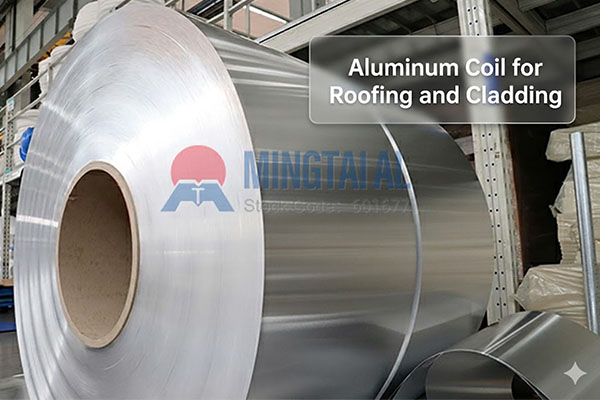
The use of aluminum coil for roofing and cladding has increased steadily as modern construction demands materials that can perform reliably in outdoor environments. Roofing and exterior wall systems are not only expected to protect a building, but also to maintain structural stability and visual consistency over time. Aluminum has become a preferred option because it balances performance, efficiency, and long-term value.
Roofing and cladding systems are constantly exposed to environmental factors such as sunlight, rain, humidity, and temperature changes. These conditions require materials that can resist corrosion, remain stable, and support long service life.
Aluminum stands out in this context due to its ability to perform under these conditions without adding excessive weight to the structure. This combination makes it suitable for both functional and architectural applications.
One of the most noticeable advantages of aluminum is its low weight. This reduces the load on the building and simplifies transportation and installation.
In large-scale projects, lighter materials can:
* Improve handling efficiency
* Reduce installation time
* Lower structural stress
These factors contribute to smoother project execution, especially when dealing with wide roofing spans or large wall surfaces.
Outdoor durability is essential for any roofing or cladding material. Aluminum performs well in environments where moisture, UV exposure, and temperature fluctuations are common.
Its natural resistance to corrosion helps maintain both structural integrity and surface condition over time, making it suitable for demanding climates, including coastal and high-humidity regions.
Modern architecture often requires materials that can adapt to different shapes and structural systems. Aluminum coil can be formed into various profiles, supporting both functional and aesthetic requirements.
Typical applications include:
* Roofing panels
* Exterior wall cladding
* Facade elements
* Custom building profiles
This flexibility allows for efficient fabrication while meeting design expectations.
Material properties become meaningful when they improve real-world results. Aluminum contributes to building performance in several practical ways:
1. Faster installation process
Lightweight material is easier to handle, helping reduce on-site complexity.
2. Consistent appearance
Uniform material quality supports a clean and modern exterior finish.
3. Reduced maintenance demand
Corrosion resistance helps lower long-term upkeep requirements.
4. Reliable performance across environments
Suitable for a wide range of climate conditions when properly specified.
These benefits make aluminum a practical choice not only during construction but also throughout the building’s lifecycle.
Choosing the right specifications is essential to achieving the expected performance. Different projects may require different combinations of properties.
Important factors include:
* Alloy type – influences strength, corrosion resistance, and workability
* Temper condition – affects hardness and forming performance
* Thickness – determines durability and suitability for roofing or wall systems
* Width and size consistency – impacts processing efficiency and installation results
* Surface condition – contributes to overall appearance
For applications requiring higher strength or enhanced structural performance, alloy aluminum sheet such as 3003 coil or 5052 aluminum coils can be a reliable choice for roofing and cladding applications, especially in areas with greater load requirements or more demanding environments.
Different building types highlight different advantages of aluminum.
Residential roofing
Focuses on ease of installation, lightweight structure, and visual harmony.
Commercial facades
Emphasizes surface quality, modern appearance, and long-term consistency.
Industrial buildings
Requires efficient coverage of large areas along with dependable performance.
Coastal or humid environments
Relies heavily on corrosion resistance and durability.
This adaptability is one of the reasons aluminum is widely used across various construction sectors.
Roofing and cladding materials play a key role in the overall durability of a building. Materials that maintain their properties over time help reduce maintenance frequency and improve long-term cost efficiency.
In this context, aluminum coil for roofing and cladding remains a dependable solution. It supports both construction efficiency and long-term performance, making it suitable for projects that require stability and reliability.
Mingtai Aluminum supplies aluminum coil solutions for roofing and cladding with stable quality and consistent performance. It is a reliable choice for projects that require dependable material support and long-term application value.
1. Why is aluminum widely used in roofing and cladding?
Because it is lightweight, corrosion-resistant, and suitable for long-term outdoor exposure.
2. What factors should be considered when selecting aluminum materials?
Alloy, temper, thickness, width, and environmental conditions all influence performance.
3. Is aluminum suitable for large construction projects?
Yes, it is widely used in large-area applications due to its ease of installation and stable performance.
4. Can aluminum help reduce maintenance costs?
Yes, its durability and resistance to environmental factors help minimize long-term maintenance needs.