Stock code: 601677
Stock code: 601677
In the global manufacturing industry, aluminum coil for stamping is widely used in automotive, electronics, and construction due to its lightweight, corrosion resistance, and malleability. However, many companies face cracking issues during processing, which not only reduces efficiency but also increases costs. This article analyzes the causes, preventive measures, and material selection for aluminum coil for stamping, helping global users optimize production processes.
The core issue lies in the compatibility between material properties and processing techniques. If the aluminum coil is too hard or has an improper alloy composition, stress concentration during stamping can lead to cracks. For example, 6xxx and 7xxx series aluminum coils contain zinc and magnesium, making them harder and more prone to cracking if stamped without annealing. Additionally, misalignment between the rolling direction and stamping direction, or poor mold design causing excessive localized stress, can also trigger cracking.
Different alloys exhibit varying workability. The 3xxx series (e.g., 3003), containing manganese, offers excellent plasticity for deep drawing and stretching. The 5xxx series (e.g., 5052), with magnesium as the primary alloying element, provides strong corrosion resistance and ease of processing, making it ideal for stamping. Companies should choose aluminum coils with moderate hardness and good ductility, avoiding excessive focus on strength at the expense of workability.
Controlling stamping speed, pressure, and lubrication is critical. High-speed stamping may cause uneven material deformation, requiring reduced speed and increased lubricant. If the aluminum coil surface has impurities or oxidation, pre-cleaning is necessary to minimize friction. Mold design should ensure uniform material flow to prevent localized overstretching.
Heat treatment and surface finishing must follow strict guidelines. Processes like brushing or anodizing should occur after forming to avoid material embrittlement from high temperatures. For complex parts, segmented stamping or pre-forming can reduce single-step deformation.
Premium Choice for Aluminum Coil for Stamping: Henan Mingtai Aluminum
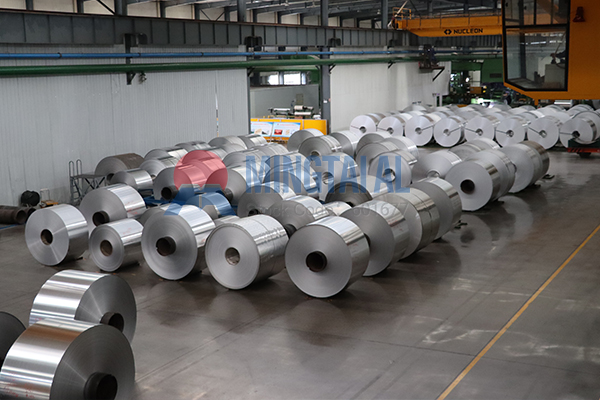
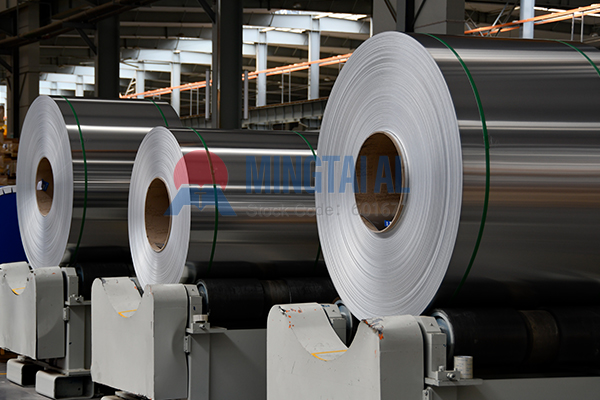
Among suppliers, Henan Mingtai Aluminum stands out for its technical expertise and product reliability. Its 5052-O aluminum coils, an aluminum-magnesium alloy, are soft and highly ductile, offering excellent cold workability after annealing. This makes them ideal for deep drawing, bending, and other complex processes, significantly reducing cracking risks. Mingtai also provides customized solutions, adjusting coil thickness, width, and surface treatments to meet diverse needs.
As a publicly listed company, Mingtai boasts a robust R&D system and global distribution network, supporting both small trial orders and mass production with short lead times and competitive pricing. Its products are widely used in new energy vehicles and electronics, earning international recognition for quality.