Stock code: 601677
Stock code: 601677
The foundation of your product starts with the material. The performance, lifespan, and production cost of your final goods are directly influenced by your base material. Making the right choice from the beginning is crucial.
With numerous suppliers in the market, how can you effectively judge the intrinsic value of aluminum coil? You don’t need a complex lab. Mastering the following evaluation framework will make you an informed buyer.
True quality starts from within. Documentation provides objective proof.
1. Verify Alloy & Standards: First, check the alloy grade (e.g., 1100, 3003, 5052). Different grades suit different applications. Ensure the product meets recognized international or industry standards (like ASTM, GB/T).
2. Request Material Test Certificate (MTC): This is the coil’s “ID card”. Scrutinize it. Key details include:
* Chemical Composition: Ensures alloying elements are within standard limits.
* Mechanical Properties: Verify tensile strength, yield strength, and elongation. These figures directly reflect the material’s strength and formability.
3. Check Manufacturer Credentials: Factories with certifications like ISO 9001 typically have more stable processes and consistent output.
Seeing is believing. Upon delivery, focus on these directly observable aspects.
* Thickness: Use a micrometer to measure multiple points. Consistent thickness is key. Excessive variation can cause processing issues and waste.
* Width & Diameter: Check against your order specifications. This affects production efficiency.
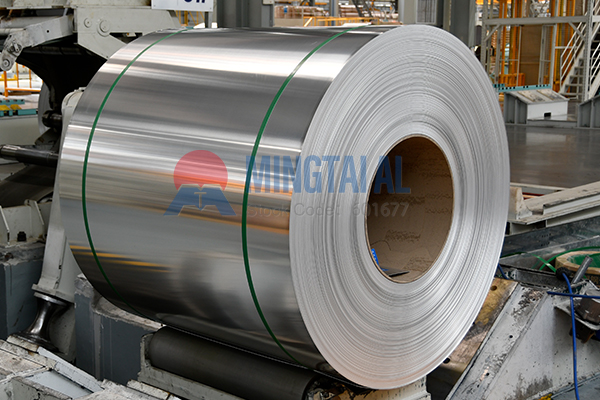
* High-quality coil should have uniform color and natural metallic luster (varies by alloy).
* Under good light, check for obvious scratches, dents, roller marks, or non-protective stains. A light protective oil film is normal.
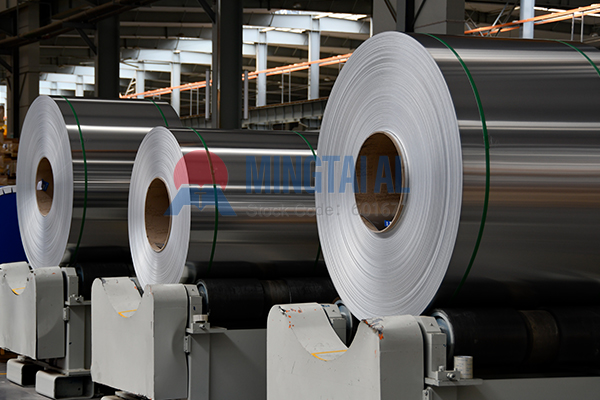
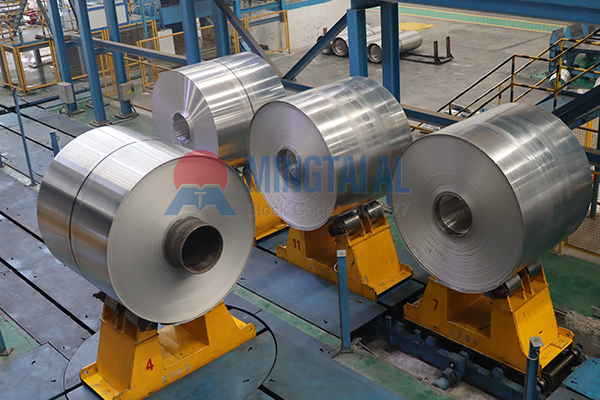
* The coil should be tightly and evenly wound, without loosening or “telescoping”. Poor winding affects handling and storage.
* The cut edges should be clean and straight, with minimal burrs. This reflects the precision of the slitting process.
A few basic actions can help you gauge performance.
A trustworthy supplier is the ultimate guarantee. They provide clear documentation, support sample testing, and maintain transparent communication.
At Mingtai Aluminum, we understand that foundation matters. Our standardized casting and precision rolling processes ensure every coil offers superior consistency and traceability in chemical composition, mechanical properties, and dimensional tolerances. We provide complete certification, so you can buy with confidence and reliability.
Choosing Mingtai means building your product on a solid, dependable foundation of aluminum coil quality.
Q: Is oil on the coil surface a defect?
A: Not necessarily. A minimal protective oil film or removable liner is standard for anti-corrosion during transit. Excessive oil or dirt, however, is a concern.
Q: How is consistent thickness guaranteed?
A: The key is controlling the “tolerance”. Specify “precision tolerance” requirements and verify the data on the MTC. Advanced mill equipment delivers superior tolerance control.
Q: Do slight color variations between batches affect performance?
A: For raw mill finish coil, minor color shifts often stem from tiny variations in alloy composition or heat treatment. They typically do not affect core mechanical properties or further processing. For critical color-sensitive applications, discuss with your supplier and keep a reference sample.