Stock code: 601677
Stock code: 601677
For an air conditioning system to operate efficiently over the long term, insulation is key. The layer of aluminum foil wrapped around the insulation material might seem insignificant, but it actually plays a vital role. Today, let’s discuss the aluminum foil specifically used for air conditioning insulation, covering everything from its functions to selection, helping you understand it all at once.
Many people think aluminum foil is just to make the pipes look good, but its core value goes far beyond that.
– Moisture Barrier, Preventing Insulation Failure
Insulation materials’ biggest enemy is moisture. Once they absorb water vapor, their insulating effect is greatly reduced, leading to condensation and dripping on the pipe surface. Aluminum foil acts as an excellent water vapor barrier, effectively sealing in moisture and keeping the insulation material dry for years.
– Physical Protection, Extending Service Life
Exposed insulation layers are fragile and prone to aging and damage. Wrapping them with aluminum foil effectively prevents UV radiation, mechanical impacts, and wind erosion, significantly extending the life of the entire insulation system.
– Fire Retardancy, Enhancing Safety
Aluminum foil itself is a non-combustible material. Using it as an outer layer can improve the fire safety rating of the entire air conditioning insulation system, a hard requirement in many project inspections.
– Reflecting Heat Radiation, Aiding Insulation
The bright surface of aluminum foil reflects most thermal radiation, adding an extra barrier to the insulation layer and helping to improve energy efficiency.
When purchasing aluminum foil, facing different alloys, thicknesses, and tempers can be confusing. However, grasping a few key points makes it simple.
– Alloy 8011 foil: The most commonly used alloy for air conditioning insulation. It offers balanced performance, with good strength, corrosion resistance, and formability, suitable for most applications.
– Alloy 1060 foil: Choose this if you need to wrap complex shapes like elbows or irregular parts. It’s softer and has better elongation.
– Alloy 3003 foil: This is a better choice for large air ducts or applications requiring high strength. Its strength is higher than that of 8011.
The choice of temper mainly depends on the installation method:
– O Temper (Soft): Suitable for manual wrapping. It’s pliable and conforms closely to the insulation layer.
– H22 or H24 Temper (Semi-rigid): Suitable for mechanical lamination or when used in composite panels. The foil has good stiffness and resists deformation.
The common thickness range is from 0.03mm to 0.2mm:
– 0.08mm – 0.12mm: Commonly used for manually wrapping pipes, offering sufficient strength while being easy to work with.
– 0.15mm – 0.20mm: Used for large air ducts or in harsh environments where the foil needs to withstand external forces.
– Starting from 0.03mm: Suitable for aluminum foil used in mechanical lamination processes.
The width of the aluminum foil can be customized as needed. Choosing the exact width based on your pipe diameter or duct flange spacing has clear benefits:
– Reduces the hassle of on-site cutting.
– Avoids material waste and helps control costs.
Choosing the right foil is crucial, but selecting the right supplier is equally important. A reliable source manufacturer can save you a lot of trouble.
A good supplier should offer various alloys, tempers, and thicknesses. This allows you to meet all your needs in one place.
As a source manufacturer, Mingtai Aluminum has the production capability for various alloys including 8011, 1060, and 3003, covering a wide range of specifications to meet diverse customer customization needs.
Project timelines cannot afford delays. A supplier’s inventory and production capacity are vital.
Mingtai Aluminum maintains stable production lines and sufficient raw material stock to ensure timely delivery of bulk orders. We offer flexible width customization services to help you reduce waste, a key advantage of being a source factory.
The pinhole rate, surface oil residue, and flatness of the aluminum foil directly impact its performance in subsequent use.
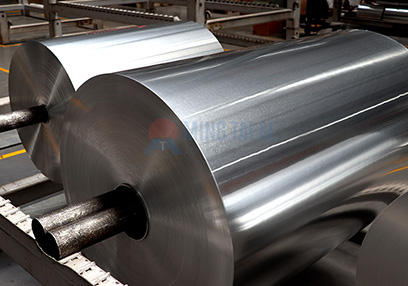
Mingtai Aluminum strictly controls its production processes. The aluminum foil coils delivered have a low pinhole rate, are cleanly degreased, and have good flatness, providing reliable base material for your insulation projects.
As a professional source manufacturer of aluminum foil, Mingtai Aluminum is dedicated to providing the air conditioning insulation industry with high-quality foil base materials that offer stable performance and complete specifications. If you are looking for a reliable partner for your air conditioning insulation projects, please feel free to contact us!
Q: Which is more suitable for air conditioning insulation, Alloy 8011 or 1060?
A: 8011 is the mainstream choice, offering good overall performance and high cost-effectiveness. 1060 is softer and has better elongation, making it suitable for complex shapes. Choose based on your installation method.
Q: What is the typical thickness for air conditioning insulation foil?
A: For manual wrapping, 0.08mm-0.12mm is common. For large ducts or load-bearing applications, 0.15mm or above is recommended. Consult your supplier for specific needs.
Q: What’s the difference between O Temper and H Temper?
A: O Temper is soft and flexible, easily bent by hand for good conformability. H Temper is stiff and resists deformation. Use O Temper for manual wrapping and H Temper for mechanical lamination.
Q: Can the width of the foil be customized?
A: Yes. Source manufacturers typically offer width customization. This helps reduce on-site cutting waste and saves you money.