Stock code: 601677
Stock code: 601677
In industrial settings, challenges such as heat loss from high-temperature equipment, energy waste from cold pipelines, and high operational costs are daily concerns for plant managers and engineers. Implementing an efficient and reliable insulation system is key to saving energy and enhancing productivity. In these systems, aluminum foil is far more than just an auxiliary material—it plays a central role in ensuring long-lasting thermal performance.
Why is aluminum foil so essential? It serves three critical functions:
Different applications require different types of foil. Making the right choice is crucial:
– Thickness: Common thickness ranges from 0.03mm to 0.2mm. Thinner foils (e.g., 0.03mm-0.05mm) are suitable for direct wrapping, while thicker options (0.1mm and above) provide higher strength and are often used as outer layers.
– Temper: O-temper (soft) foil offers good ductility, conforming easily to complex or irregular surfaces. H18-temper (hard) foil is stiffer and better suited for flat surfaces or large-diameter pipes requiring additional support.
– Alloy and Surface Treatment: Alloys such as 1060 foil and 1100 foil provide good corrosion resistance and reflectivity. An embossed surface helps minimize minor imperfections and reduces friction during installation.
Selecting high-quality and reliable aluminum foil for industrial insulation is fundamental to the success of any insulation project. Mingtai Aluminum, a leading aluminum product manufacturer in China, understands the stringent demands of industrial applications.
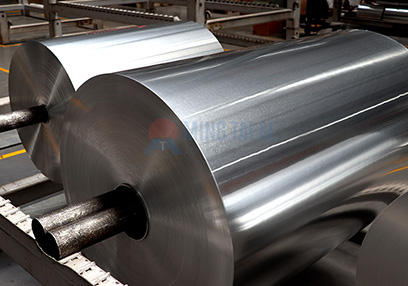
We produce specialized aluminum foil for industrial insulation using high-purity aluminum, ensuring uniform texture, high reflectivity, and strong moisture resistance. We offer a variety of alloys, thicknesses, and tempers (O/H18), and can provide custom embossed or composite materials (e.g., laminated with fiberglass cloth) to meet specific requirements in HVAC, petrochemical, cold storage, and other applications.
At Mingtai Aluminum, we provide more than just products—we deliver professional technical support and tailored solutions. Our team is ready to assist you in material selection, helping you achieve optimal insulation performance and cost-effectiveness.
Contact Mingtai Aluminum today to learn more about our aluminum foil for industrial insulation. Request free samples and technical documentation to enhance the efficiency and durability of your next project.