Stock code: 601677
Stock code: 601677
Aluminum foil in cold form pharmaceutical packaging is often underestimated because the foil layer looks like a simple barrier. In a cold form blister, however, the foil is not just a cover material. It is mechanically deep-drawn at room temperature into the cavity itself, so it acts as the forming body, the barrier core, and the structural support at the same time.
> A common misjudgment is: “Just use thicker foil.” In practice, the deeper the cavity and the more complex the shape, the more the substrate’s elongation and post-draw pinhole behavior determine yield and barrier reliability. This is exactly why 8021 is discussed so often.
8021 belongs to the Al-Fe-Si alloy family and contains no Mn or Mg. In the O temper, it offers more elongation and puncture resistance than the common 8011 grade, making deep drawing less prone to cracking and post-forming springback more controllable.
The key point is not whether the incoming foil has pinholes. The real question is whether the cavity wall and corner radius remain structurally sound after deep drawing. Corners usually see the highest tensile strain and are where pinholes and micro-cracks tend to appear first. The alloy composition and O-temper treatment of 8021 help it maintain a denser metal structure under higher strain.
Rather than asking “which one is better,” look at the differences:
– Conventional depth and regular PTP blisters: 8011 covers a wide range, is more economical, and has a mature forming window.
– Deep cavities, irregular shapes, and dense multi-cavity layouts: 8021 offers more plastic reserve, so cracking and springback risks are relatively more controllable.
– Alu-alu and other full-barrier structures: the forming foil must complete deep drawing while maintaining high barrier, and 8021 is more often included in the evaluation.
– Packaging lines that require high dimensional repeatability after forming: 8021’s springback control advantage is easier to see, but it still needs trial forming with the actual cavity.
The real question is whether the blister structure has moved beyond the conventional forming window, not which alloy grade sounds higher.
From the application side, 8021 is more often considered in these scenarios:
– Alu-alu blisters (tropical blisters): often used for light-sensitive drugs, antibiotics, hormones, and high-potency APIs.
– Deep or irregular cavities: large capsules, special-shaped tablets, and dense multi-cavity layouts create higher local strain.
– Moisture-sensitive dosage forms requiring long-term stability: cold form foil itself provides near-complete barrier, and 8021’s lower pinhole tendency in deep-drawn areas helps avoid a weak point after forming.
1. Define cavity parameters first: target forming depth, corner radius, and cavity density are the starting point for deciding whether 8021 is needed.
2. Then match thickness and O temper: thicker is not always better; thickness should be considered together with draw ratio and springback requirements.
3. Run a small trial: do not test only incoming pinholes; inspect the cavity wall and corner radius at the actual target depth.
4. Check springback and alignment: post-forming springback affects blister-to-lid alignment and heat-seal consistency, and this step is often overlooked.
5. Confirm batch consistency: O-temper property variation between batches directly affects scrap rate and deserves more attention than a single indicator.
6. Review compliance documents: pharmaceutical packaging substrates need conformity declarations under applicable pharmacopoeia and food-contact regulations.
For clarity, surface treatment and further processing of aluminum coil are not completed at the supply stage. The material is delivered as substrate coil, so each converter can arrange downstream lamination and forming according to its own process.
Q: Is 8021 always better than 8011 for pinholes after forming?
A: No, pinhole performance depends on actual forming depth and process conditions, so verification should focus on the deep-drawn corner area.
Q: Is it necessary to switch to 8021 for regular tablet blisters?
A: If cavity depth and shape are within the conventional range, 8011 is usually sufficient; 8021 is better suited to deep, irregular, or dense multi-cavity structures.
Q: What is the main difference between 8021 and 8011?
A: 8021 offers more plastic reserve for harder forming, while 8011 covers more conventional blisters and is more economical.
Q: How can I verify whether 8021 fits a specific blister structure?
A: Provide target cavity depth, corner radius, and layout parameters, then run a small trial and check corner pinholes and springback alignment.
Q: Is surface treatment and further processing of aluminum coil done at the supply stage?
A: No, the supply stage delivers aluminum foil substrate coil, and surface treatment and further processing are not completed there.
Q: Can compliance documents be provided for packaging evaluation?
A: Conformity declarations and relevant test documents under applicable pharmacopoeia and food-contact regulations can be provided, with the exact scope confirmed by target market.
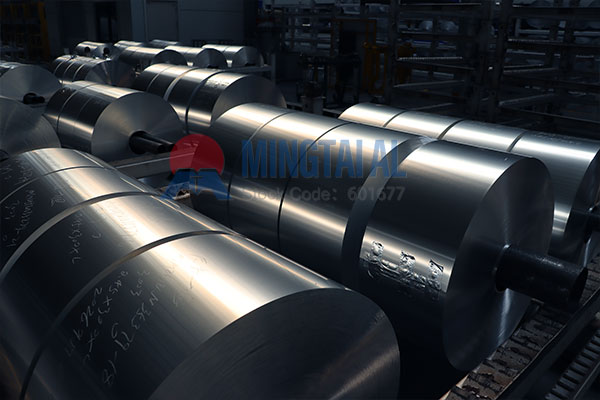
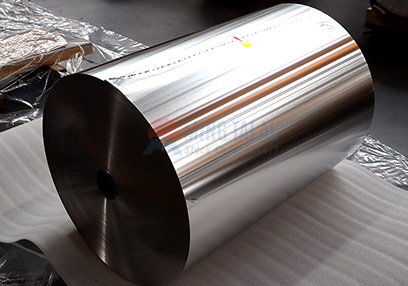
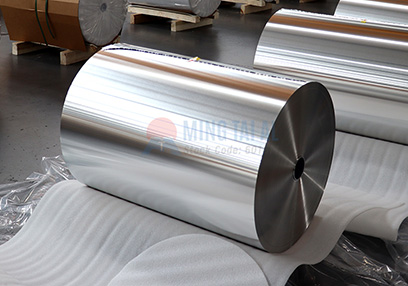
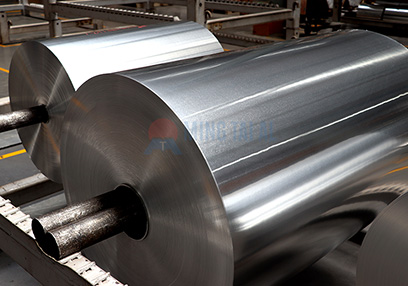
Mingtai Aluminum supplies 8021-O aluminum foil substrate for Aluminum Foil in Cold Form Pharmaceutical Packaging, with thickness and width discussed according to target cavity depth and lamination structure. To evaluate how 8021 performs with a specific blister design, share the cavity parameters for technical review.
Tel/Whatsapp/WeChat: +8617737126910
Email: sale03@mingtai-al.com