Stock code: 601677
Stock code: 601677
The global food packaging industry is witnessing a significant shift toward sustainable and high-performance materials. In this landscape, selecting high-quality aluminum for food storage containers is a critical decision that influences not only the durability of the final product but also the efficiency of the manufacturing process. For producers in the packaging sector, understanding the intricate relationship between alloy compositions, mechanical properties, and safety regulations is the cornerstone of a successful production line.
Not all aluminum is created equal. The choice of alloy dictates how the metal behaves during deep drawing, stamping, and folding. Below are the most prevalent series used in the food-grade sector:
* 3003 Aluminum Alloy: Known as the “workhorse” of the industry. The addition of manganese provides higher strength than 1xxx series while maintaining excellent workability and corrosion resistance. It is the go-to choice for semi-rigid containers.
* 8011/8006 Aluminum Foil: These are specialized grades designed for thin-gauge applications. They offer superior elongation and are often used for light-gauge containers that require high structural integrity despite a thin profile.
* 1060/1100 Series: These high-purity alloys are favored for their exceptional ductility. While lower in strength than the 3xxx series, they are ideal for components requiring extreme deformation without fracturing.
|
Feature |
3003 Alloy |
8011 Alloy |
1100 Alloy |
|
Main Element |
Manganese (Mn) |
Iron/Silicon (Fe/Si) |
Aluminum (99.0%+) |
|
Strength |
Moderate to High |
Moderate |
Low |
|
Formability |
Excellent |
Superior (Thin Gauges) |
Best |
|
Typical Use |
Heavy-duty trays |
Disposable foils |
Soft-formed lids |
Precision in thickness is more than a specification; it is a cost-control and quality-assurance metric. For high-speed automated lines, even a 0.01mm deviation can lead to material tearing or equipment downtime.
Pro-Tip for Manufacturers: Always verify the “Erichsen cupping value” of your raw material. A higher value indicates better deep-drawing performance, which is essential for complex container geometries.
The safety of aluminum for food storage containers is governed by strict international standards. Since the material is in direct contact with organic acids and oils, the surface quality of the aluminum coil must be impeccable.
* Surface Cleanliness: High-quality raw materials undergo specialized degreasing processes to ensure no rolling oil remains on the surface, preventing contamination during the heating or sterilization phases.
* Migration Limits: Compliance with FDA (USA), REACH (EU), and other local food-grade certifications ensures that no harmful metallic ions migrate into the food.
* Pinhole Control: For ultra-thin gauges, minimizing pinholes is vital to maintaining an absolute barrier against oxygen and light, which preserves food shelf life.
Achieving a high yield rate depends heavily on how the raw aluminum coils are handled before they enter the press. Industry professionals should consider the following operational insights:
The direction of the metal grain can affect how the material stretches. Aligning the layout of your stamping dies with the rolling direction of the coil can significantly reduce edge cracking in deep-draw applications.
Aluminum coils are sensitive to humidity. Storage in a temperature-controlled environment prevents “white rust” (oxidation), which can ruin the surface finish and interfere with any subsequent coating or printing processes.
While the raw material is provided in mill finish, using food-grade lubricants during the stamping process is essential for protecting both the aluminum and the dies, ensuring a smooth surface and longer tool life.
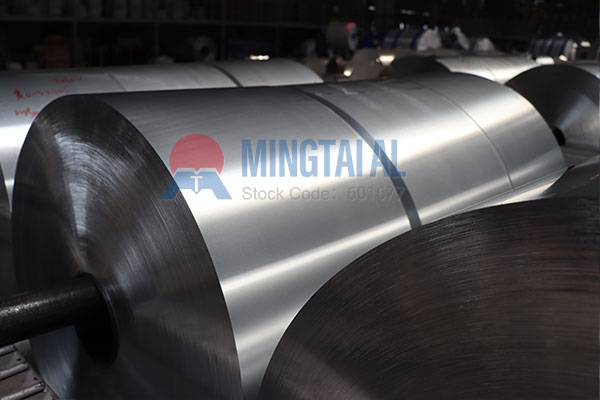
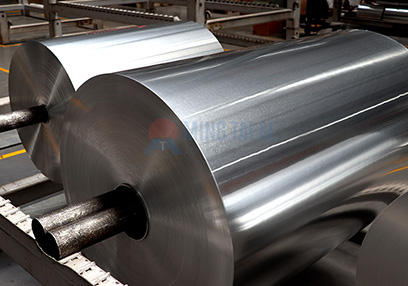
The difference between a high-efficiency production run and a high-scrap-rate shift often comes down to the consistency of the aluminum coil. Uniform mechanical properties across the entire length of a 5-ton coil ensure that the first container produced is identical to the last. This consistency reduces the need for constant machine recalibration and minimizes waste.
Mingtai Aluminum provides premium-grade aluminum sheets and coils engineered specifically for high-demand food packaging applications. Our materials are recognized for their superior formability and strict adherence to international food safety standards, helping manufacturers achieve optimal production efficiency.
Q: What is the most common grade of aluminum for food storage containers?
A: The 3003 alloy is the most widely used due to its excellent balance of strength, corrosion resistance, and price-to-performance ratio.
Q: How does temper affect the forming process?
A: Temper refers to the hardness. “O” temper is soft and easy to stretch, while “H” tempers are harder and provide more structural rigidity to the finished container.
Q: Can aluminum containers be recycled infinitely?
A: Yes, one of the greatest advantages of using aluminum is its 100% recyclability without loss of properties, making it a favorite for sustainable packaging initiatives.
Q: Does thickness tolerance really impact the bottom line?
A: Absolutely. Consistent thickness ensures uniform heat distribution during cooking/freezing for the end-user and prevents material failure during the industrial stamping process.