Stock code: 601677
Stock code: 601677
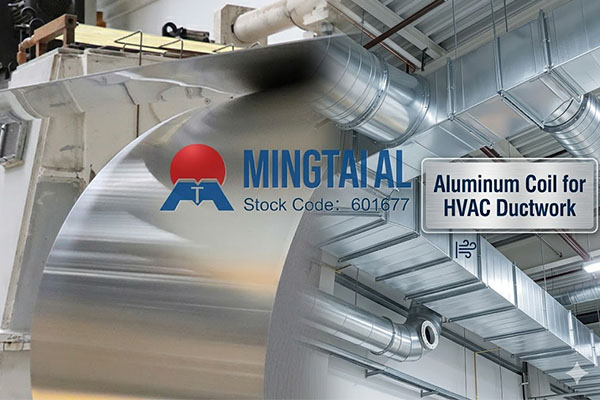
HVAC systems depend heavily on the quality and performance of duct materials. When selecting aluminum coil for HVAC ductwork, factors such as weight, fabrication efficiency, corrosion resistance, and dimensional stability all play an important role. A well-matched material can help improve processing performance while supporting long-term reliability in ventilation and air distribution systems.
As HVAC projects continue to focus on efficiency and durability, aluminum coil remains a widely used option for many ductwork applications.
Compared with some traditional duct materials, aluminum offers a practical combination of processing advantages and application performance.
Key benefits include:
* Lightweight structure for easier handling and installation
* Good corrosion resistance in humid or changing environments
* Suitable formability for duct fabrication processes
* Efficient material utilization during continuous production
* Clean and stable surface appearance
For many ventilation systems, reducing unnecessary weight while maintaining reliable performance is an important consideration. Aluminum coil can help support that balance in a variety of HVAC applications.
Different projects may require different coil specifications. Instead of choosing materials based only on price or habit, it is often more effective to evaluate the actual processing and application requirements first.
Alloy Grade
The alloy grade affects both fabrication behavior and final performance. Some alloys provide better formability, while others offer improved strength or durability. The selection should match the intended duct design and production method.
For many HVAC ductwork applications, 3003 aluminum coil is a practical choice because it offers a good balance of formability and corrosion resistance.
Thickness
Thickness directly influences rigidity, weight, and fabrication efficiency.
A thinner gauge may help reduce overall system weight, while a thicker option can improve structural stability. The ideal specification depends on the duct structure and operating conditions.
Coil Width and Dimensions
Before production begins, it is important to confirm:
These details affect equipment compatibility and material utilization during processing.
Surface Condition
A stable surface condition can help improve forming consistency and reduce unnecessary processing issues. In HVAC applications, smooth fabrication performance is often just as important as the material itself.
Different materials are used across HVAC systems, and each option has its own advantages.
|
Material |
Main Advantage |
Typical Consideration |
|
Aluminum |
Lightweight and corrosion-resistant |
May not be intended for extremely high-strength requirements |
|
Galvanized Steel |
Strong and commonly used |
Heavier and less resistant in some environments |
|
Stainless Steel |
Excellent durability |
Higher material cost |
For many standard ventilation systems, aluminum provides a balanced solution between performance, fabrication efficiency, and overall practicality.
Define the Application Clearly
Commercial buildings, industrial ventilation systems, and specialized HVAC projects may require different material specifications. Early clarification helps improve material selection accuracy.
Consider Fabrication Requirements
The processing route should be considered before ordering material. Cutting, forming, bending, and assembly requirements may all influence the most suitable coil specification.
Focus on Long-Term Consistency
Reliable dimensional accuracy and stable coil quality can help maintain smoother production over time, especially for repeated or large-volume projects.
Balance Performance and Cost
Material selection should focus on overall project value rather than only the lowest initial price. Stable processing and dependable application performance can help reduce future production or installation issues.
In HVAC-related manufacturing, stable supply and consistent quality are essential. A reliable supplier should be able to provide suitable specifications, clear technical communication, and dependable production capability for ongoing projects.
Mingtai Aluminum supplies aluminum coil products with stable quality and reliable specifications for a wide range of industrial applications. With extensive manufacturing experience in aluminum sheet and coil production, Mingtai Aluminum supports HVAC ductwork projects with dependable material solutions.
Is aluminum a suitable material for HVAC ductwork?
Yes. Aluminum is widely used in HVAC systems because it is lightweight, corrosion-resistant, and suitable for fabrication.
What factors are important when choosing an aluminum coil?
Key factors include alloy grade, thickness, width, surface condition, and the intended application environment.
Why is coil form commonly used in duct fabrication?
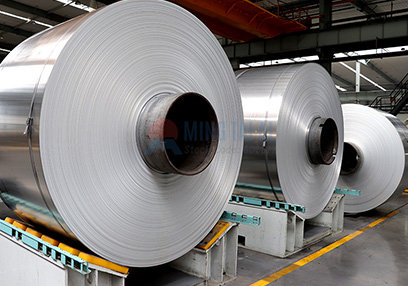
Coil material supports continuous processing and efficient production for many duct manufacturing operations.
Is thicker aluminum always better for duct systems?
Not necessarily. The right thickness depends on the duct design, processing requirements, and performance expectations.