Stock code: 601677
Stock code: 601677
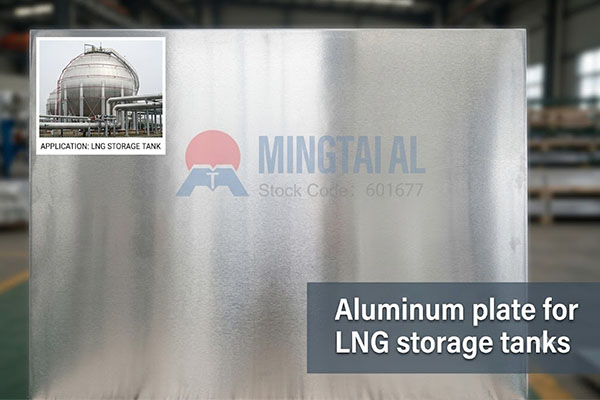
For LNG tank manufacturers and engineering companies, choosing the right material directly affects safety and service life. LNG operates at -163℃ – ordinary steel becomes brittle, while aluminum‑magnesium alloys are the mainstream choice due to low density, corrosion resistance, and good cryogenic toughness. Among the many grades, 5083 and 5052 are the two most common options, but their performance gap is much larger than “a little difference in magnesium content”.
|
Property |
5083 |
5052 |
|
Magnesium content |
4.0-4.9% |
2.2-2.8% |
|
Tensile strength |
290-350 MPa |
210-260 MPa |
|
Yield strength |
145-220 MPa |
90-130 MPa |
|
Elongation |
12-16% |
12-20% |
|
Impact toughness at -163℃ |
Excellent, stable |
Drops sharply, fails |
Most asked: why is 5083 so much stronger?
Because 5083 has higher magnesium content and additional elements like manganese and chromium, giving solid‑solution strengthening. 5052’s lower magnesium makes it suitable for general sheet metal work at room temperature, not for cryogenic service.
LNG tanks are either built at coastal terminals or mounted on ships. Chloride corrosion from seawater is a long‑term challenge.
– 5083: Excellent resistance to seawater corrosion, especially stable against stress corrosion cracking after welding. With proper welding control, the weld zone is not a weak point.
– 5052: It also resists seawater corrosion, but under long‑term static stress the heat‑affected zone of welds may show intergranular corrosion tendency. This has caused leaks in some small tanks, so classification societies do not recommend 5052 for main tank bodies.
LNG tanks require extensive welding of plates. Weld quality determines overall safety.
– 5083 can be welded by MIG or TIG, with weld strength coefficient reaching over 90% of the base metal. For thick plates, control interpass temperature – post‑weld heat treatment is generally not required.
– 5052 suffers more strength loss after welding: weld zone strength drops to about 70% of the base metal, with obvious softening in the heat‑affected zone. If you weld a pressure tank with 5052, the welds become the most dangerous part.
This is what engineers care about most. In the international IGC Code (International Code for the Construction and Equipment of Ships Carrying Liquefied Gases in Bulk) and major classification society rules:
– 5083‑O (annealed) is explicitly listed as a recommended material for independent LNG tanks. DNV, ABS, LR, BV all have certification paths for 5083 plates.
– 5052 is not listed as a recommended material for main tanks. It can only be used for non‑pressure, non‑welded auxiliary parts such as roof cover plates, ladders, and pipe supports.
> If your project needs classification society inspection certificates, 5083 is the only choice. Even if 5052’s properties look acceptable, the plan reviewer will not sign off.
Main tank inner shell (pressure‑bearing, welded, -163℃) → 5083
Secondary barrier / leakproof floor (not directly fired) → 5083 (safety margin)
Roof cover plates, climbing ladders, instrument brackets → 5052 (lower cost, sufficient)
Small onshore non‑pressure tanks → 5052 can be used locally, but tank body still recommended 5083
Simply put: any part that is welded, pressure‑bearing, or in direct contact with cryogenic temperatures must use 5083. Auxiliary structures can use 5052 to save some cost.
5052 plates are usually 15‑20% cheaper than 5083. But LNG projects prioritize safety – material cost is a very small part of total construction. Saving a few thousand dollars on material in exchange for possible weld cracking is not worth it.
Two common misunderstandings clarified:
– Misunderstanding: “5052 is also 5xxx series aluminum, so it should perform similarly at low temperature.”
Fact: 5052’s impact absorbed energy at -163℃ is far lower than 5083, and it cannot pass the CTOD test required by the IGC Code.
– Misunderstanding: “5083 is too hard to process.”
Fact: 5083‑O has moderate hardness and can be normally bent and stamped. If further forming is needed, choose H111 or H112 temper – even better workability.
Investing in safe, code‑compliant material is the bottom line for any LNG project. 5083 is comprehensively better than 5052 in cryogenic toughness, weld strength, corrosion resistance, and certification coverage. For the main tank body, you must use 5083. For auxiliary structures, 5052 is an option to reduce cost.
When you select aluminum plate for LNG storage tanks, always verify the supplier’s mill test reports and third‑party classification society certificates.
Mingtai Aluminum supplies certified 5083 plates with DNV/ABS/LR approvals, suitable for LNG storage tanks from 10m³ to 20,000m³.
Q1: Can 5083 aluminum plate really be used for the main LNG tank at -163℃?
A1: Yes, 5083‑O passes the IGC Code low‑temperature impact test and is approved by classification societies.
Q2: 5052 is much cheaper – why can’t I use it for the tank body?
A2: Because 5052 loses too much toughness and weld strength at -163℃, creating leakage risk.
Q3: Does 5083 need post‑weld heat treatment?
A3: Generally no – just control interpass temperature. For thick plates, local stress relief may be applied per procedure.
Q4: How do I verify that a plate truly meets LNG tank requirements?
A4: Check the supplier’s classification society certificate and the low‑temperature impact test report for each batch.
Q5: What thickness and width can 5083 plates achieve?
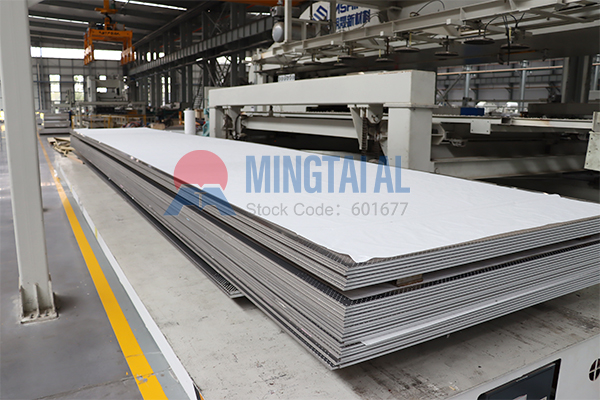
A5: Typical thickness 6‑50mm, max width up to 2600mm – depends on the mill’s rolling capacity.