Stock code: 601677
Stock code: 601677
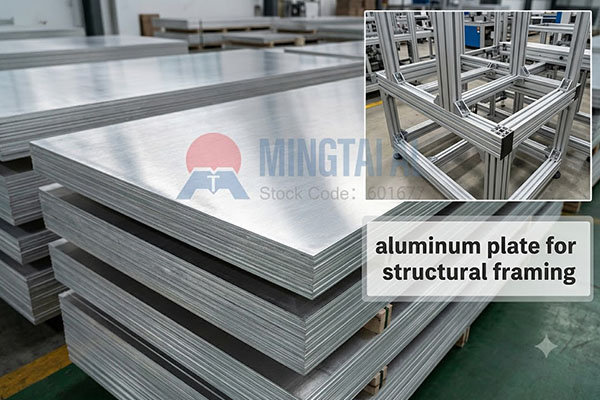
If you need a lightweight, durable material for building frames, aluminum plate for structural framing is a smart choice. It’s now widely used in curtain walls, roof trusses, mezzanines, and modular buildings. Aluminum plate lowers foundation loads and resists corrosion without painting. But you must pick the right alloy and thickness. This article covers the basics—advantages, grades, applications, and practical tips.
Light weight is the top reason. Aluminum has about one-third the density of steel, yet with proper alloying it can match structural steel’s strength. That means less transport cost, easier lifting, and lighter foundations.
Corrosion resistance comes naturally. Aluminum forms a protective oxide layer in air, so it survives moisture, industrial pollution, and coastal salt spray without coatings. Steel needs paint or zinc; once damaged, it rusts.
Easy to machine – you can cut aluminum plate with woodworking saws, drill and slot quickly. (Note: this article covers only raw plate; no surface treatment or cutting services.)
Fully recyclable – at end of life, aluminum plate can be recycled using far less energy than primary production, helping green building credits.
Don’t use pure aluminum (like 1100) – it’s too soft. For building frames, focus on these three:
– 6061-T6 – Most versatile. Good strength and weldability. Ideal for beams, columns, support joints.
– 6063-T5/T6 – Great for extruded profiles. Used for curtain wall mullions, window frames. Slightly lower strength than 6061 but better surface finish.
– 5083-H116 – High‑magnesium alloy. Excellent corrosion resistance and weld strength. Best for coastal or wet environments.
Avoid 1xxx series, casting alloys, and 3003 – they cannot handle structural stress.
Structural aluminum plate thickness typically ranges from a few mm to several tens of mm. Always ask for a Mill Test Certificate (MTC). Check:
– Yield strength at typical structural grade levels.
– Adequate elongation to avoid brittle failure.
– Standards: ASTM B209, EN 485, or GB/T 3880.
Flatness matters. Poor flatness causes misalignment and residual stress in your frame.
– Mezzanine floors – Aluminum plate + beams give much lower weight than steel.
– Roof trusses – For stadiums or airports, aluminum plate reduces roof dead load.
– Curtain wall frames – Vertical mullions (6063) with horizontal connections (6061 plate).
– Modular buildings – Container houses, site cabins – easy to cut, no rust.
– Light platforms – Walkways and maintenance platforms (anti‑slip punching is a secondary process, not included here).
Connections – Use stainless steel bolts or aluminum rivets. Avoid direct contact between aluminum plate and carbon steel – that causes galvanic corrosion in wet conditions.
Thermal expansion – Aluminum expands more than steel. For long spans, leave expansion gaps or use slotted connections. Otherwise summer heat can bow the frame.
Fire safety – Aluminum loses strength at high temperatures. In tall buildings, add fire protection (fire‑rated boards or coatings – not provided by the plate supplier). Always follow local codes.
|
Property |
Aluminum (6061-T6) |
Steel |
Wood (Pine) |
|
Density |
Low |
High |
Very low |
|
Strength-to-weight |
High |
Medium |
Low |
|
Outdoor corrosion |
Excellent (no coating) |
Poor (needs paint) |
Poor (rots) |
|
Machining |
Woodworking saws |
Torch or plasma |
Woodworking saws |
|
Service life (outdoor) |
Decades |
Moderate |
A few years |
Aluminum wins on strength‑to‑weight and durability – perfect for weight‑sensitive or hard‑to‑maintain locations.
Summary: Choosing High-Quality Aluminum Plate for Structural Framing
Confirm alloy and temper (6061-T6 is most common). Get the MTC and inspect for cracks or bowing. Choose a supplier who offers stable quality across multiple thicknesses.
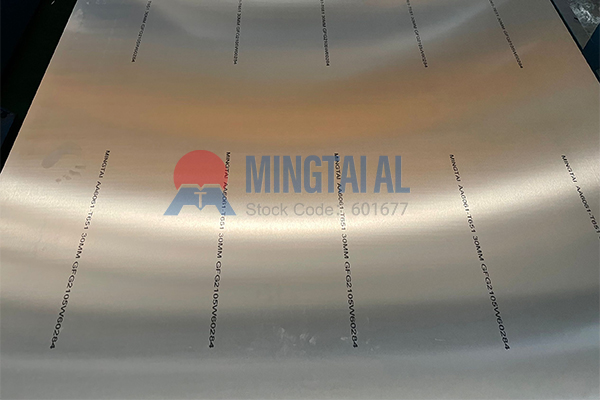
> For reliable structural performance, Mingtai Aluminum provides ASTM/EN‑compliant 6061, 6063, and 5083 plates in a wide thickness range – consistent batch quality.
Q1: Can aluminum plate replace steel beams?
A: Yes, but redesign the cross‑section – aluminum beams usually need to be taller.
Q2: Is aluminum much more expensive than steel?
A: Price per weight is higher, but total installed cost is often similar or lower.
Q3: Does outdoor aluminum need anodizing?
A: No – natural oxide film is enough for normal conditions.
Q4: Can 6061-T6 be bent?
A: T6 temper cracks when bent; use O or T4 temper instead.
Q5: How to stop corrosion between aluminum and steel bolts?
A: Use stainless bolts with nylon washers or insulating coating.
Q6: Strength loss after welding?
A: The heat‑affected zone loses strength – locally increase plate thickness.
Q7: What is the most overlooked parameter?
A: Flatness tolerance – uneven plates cause assembly problems.