Stock code: 601677
Stock code: 601677
Beneath the impressive facade of a building curtain wall lies an invisible cornerstone that determines its ultimate performance and lifespan—the mill-finish, rolled aluminum sheet used for building facades. For curtain wall fabricators, engineering firms, and professional purchasers, selecting a high-quality raw material is far more than a simple dimensional purchase; it is a critical technical decision impacting manufacturability, finished product yield, and long-term project reliability. This guide will systematically explain how to look beyond surface specifications to identify the aluminum substrate truly suited for high-end architectural applications.
Substandard raw sheets act as hidden defects, triggering a chain reaction in subsequent processing and application:
* Poor Flatness: Leads to subtle “orange peel” or “oil canning” effects after painting, which become glaringly apparent under natural light, severely compromising the facade’s aesthetic.
* Inconsistent Material: Fluctuations in alloy composition or temper can cause cracking during bending or inconsistent springback in curving, significantly increasing processing difficulty and scrap rates.
* Surface Imperfections: Rolling marks, scratches, or oil stains can become magnified after coating or directly undermine coating adhesion, creating starting points for corrosion.
* Uncontrolled Tolerances: Excessive thickness or width variation affects adhesive uniformity in composite panels or compromises load-bearing calculations in framing systems, potentially creating safety hazards.
Therefore, the stability of the source material is the first and most crucial line of defense in ensuring the final curtain wall’s quality.
When reviewing an aluminum sheet specification, focus on these key indicators:
* Common Alloys: 3003 (good all-around properties, most versatile), 3004/3105 (better strength and corrosion resistance for high-rises or harsh environments), 5005 (higher magnesium content for enhanced corrosion resistance and workability).
* Temper Designation: Such as H14 (moderate strength, excellent workability), H24 (partially work-hardened, optimal balance of strength and formability, widely used for facades). Temper directly dictates yield strength and elongation.
* Tensile & Yield Strength: Determine load-bearing capacity and resistance to permanent deformation under stress.
* Elongation: Indicates ductility. Insufficient elongation risks cracking during deep drawing or severe forming.
* Typical thickness ranges from 1.5mm to 4.0mm. Tolerance control is critical, with differences between national and international (e.g., EN, ASTM) standards. Opting for precision-tolerance products (e.g., thickness held within ±0.1mm) ensures consistent fabrication, reduces sealant use variation, and is fundamental to high-quality results.
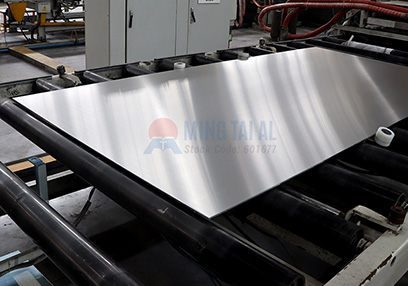
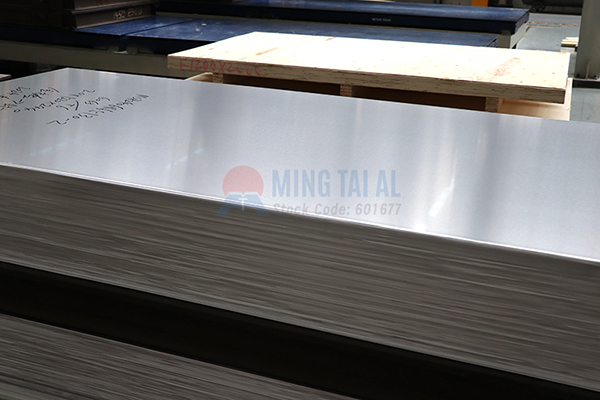
* A premium sheet should exhibit a uniform, clean metallic luster, free from visible discoloration, roll marks, scratches, corrosion spots, or non-metallic inclusions. This directly impacts the final appearance and adhesion of any applied coating.
|
Final Curtain Wall Requirement |
Key Focus for Raw Sheet Selection |
Typical Application |
|
PVDF/Powder Coated Single Skin Panels |
Flatness, surface cleanliness, stable mechanical properties. Prefer 3003-H24/H14 for a mirror-smooth finish post-coating. |
Commercial Complexes, Office Towers |
|
Anodized Panels |
Extreme uniformity of alloy composition. Choose 5xxx or specific 6xxx series. Any variation causes color inconsistency after anodizing. |
Landmark Public Buildings, Tech Parks |
|
Face/Back Sheet for Composite Panels |
Exceptionally tight thickness tolerance and shape. Uniform Airports, Metro Stations, Large Pavilionsthickness is key to core bond strength and panel flatness. |
Airports, Metro Stations, Large Pavilions |
|
Deep-Drawn or Complex Shapes |
Superior plasticity (high elongation). May require O-temper (annealed) or specific soft tempers. |
Artistic Sculptural Facades, Complex Curves |
Beyond hard specifications, the “soft power” of a reliable supplier is paramount:
* Quality Consistency: Can they guarantee stable performance and appearance across different production batches? This is vital for large-scale, continuous projects.
* Technical Data Support: Do they provide detailed, traceable Mill Test Certificates (MTCs) from accredited laboratories?
* Capacity & Delivery Reliability: Do they have sufficient inventory and production capacity to handle urgent orders or sustain large project demands?
An exceptional curtain wall is born from respect and rigor at every foundational stage. Selecting a specialized and focused supplier for the primary raw material is the most decisive step toward project success.
Mingtai Aluminum specializes in the production and development of high-quality mill-finish aluminum sheets for building facades. We do not compete with our customers by operating fabrication shops; instead, we are committed to being the most professional and reliable base material partner in the supply chain. We offer a full range of facade-specific alloys, tempers, and precision-tolerance products, ensuring full traceability and transparent data for every batch. Choosing Mingtai means choosing assured quality from the very source.