Stock code: 601677
Stock code: 601677
Amidst the waves of electrification and digitalization, the automotive industry is undergoing a profound lightweighting revolution. Reducing vehicle body weight has become a core strategy for extending the range of electric vehicles, improving the energy efficiency of fuel-powered cars, and enhancing dynamic safety performance. In this context, aluminum alloys stand out due to their exceptional strength-to-weight ratio, emerging as the material of choice for lightweight design. The foundation of this all begins with a single sheet of high-performance, high-quality aluminum material.
Aluminum has a density approximately one-third that of steel. Using aluminum body panels can achieve component weight reduction of up to 40%-50%. This translates directly into longer driving range, lower energy consumption, and more agile handling—a strategic choice to meet stringent environmental regulations and market demands.
Modern automotive aluminum is not about trading strength for lightness. Through innovative alloy design and heat treatment processes, high-strength aluminum alloys (such as the 6000 series) can provide excellent energy absorption and dent resistance while reducing weight, delivering outstanding performance in crash safety tests and perfectly embodying the concept of “lighter and safer.”
The natural, dense oxide layer on aluminum gives it superior corrosion resistance, extending body life and lowering maintenance costs. More importantly, aluminum is a 100% recyclable green material. Recycling it requires only about 5% of the energy needed for primary aluminum production, significantly reducing the carbon footprint over its entire lifecycle and aligning with the sustainability goals of the automotive industry.
5000-series alloys (e.g., 5182, 5754): Primarily alloyed with magnesium, they offer excellent formability and corrosion resistance. They are particularly suitable for inner panels and structural parts like doors and hoods that require complex deep-drawing.
6000-series alloys (e.g., 6016, 6061): They combine good formability with the crucial “paint-bake hardening” characteristic. After stamping, their strength increases significantly during the paint-curing process, making them ideal for outer panels like doors, fenders, and roof panels.
Formability: Directly impacts stamping production yield and the feasibility of complex designs. Superior formability means less risk of cracking or wrinkling.
Strength and Stiffness: Yield strength and tensile strength define the structural performance of a part, while material stiffness affects driving feel and NVH (Noise, Vibration, Harshness) performance.
Surface Quality: As the “canvas” for painting, the substrate must be clean, uniform, and free from rolling defects, oil stains, or embedded impurities. This is essential for achieving a perfect Class-A surface finish.
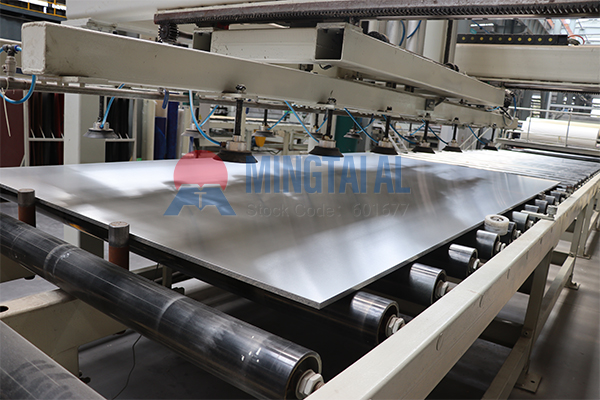
Dimensional Accuracy and Flatness: Tight thickness tolerances and excellent flatness ensure stable stamping processes, uniform assembly gaps, and reduced material waste.
For automotive mass production, absolute consistency in material properties is far more critical than single sample test data. Variations in mechanical properties and formability across a coil, between batches, or over time can be invisible culprits behind frequent press line adjustments and high scrap rates. This consistency stems from the supplier’s precision process control capabilities—from casting and homogenization to rolling.
Furthermore, uniform internal metallurgical structure is the foundation of high performance. A fine, uniform grain structure not only enhances strength and toughness but is also key to determining deep-drawing and flanging capabilities. This “inner quality” isn’t visible on a chemical composition sheet but directly manifests in the quality of stamped parts.
Finally, the relentless pursuit of surface and dimensional perfection guarantees efficiency. Beyond visible quality, microscopic surface cleanliness determines paint defect rates. Excellent flatness and precise thickness control directly boost production line efficiency and material utilization.
At Mingtai Aluminum, we deeply understand the paramount importance of consistency, uniformity, and precision for automotive manufacturing. We focus on the essence of the aluminum substrate. Through advanced melting and purification technology, intelligent rolling processes, and end-to-end quality monitoring, we are committed to providing our customers with:
* Highly stable-performance aluminum sheets, ensuring smooth and efficient stamping operations.
* Aluminum sheets with uniform internal structure, guaranteeing the successful forming of complex body components.
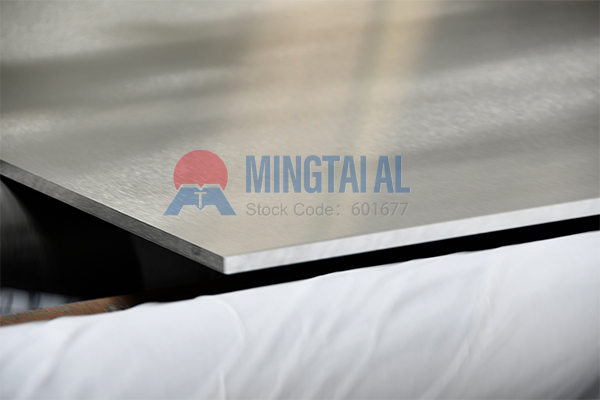
* Aluminum sheets with pure surfaces and precise dimensions, serving as the perfect starting point for high-end paint finishes and precise assembly.
We are more than just a material supplier; we are your reliable technical partner. With deep production expertise and technical support, Mingtai Aluminum helps global customers turn lightweight design into reality.
> Choosing Mingtai Aluminum means choosing stability and reliability from the source. Let us be your solid material foundation, driving the lightweight future of automotive manufacturing together. We provide the high-quality aluminum sheets for car body panel that your next project demands.
Q1: Which aluminum alloy series are most commonly used for car body panels?
A1: The 5000-series (like 5182) offers excellent formability and corrosion resistance. The 6000-series (like 6016) provides good formability and gains strength after painting. The choice depends on the specific part and its requirements.
Q2: Are high-strength aluminum sheets more difficult to stamp?
A2: Not necessarily. With advanced production techniques, modern high-strength aluminum can be engineered to maintain excellent formability, meeting the demands of complex stamping processes.
Q3: What is the most important factor when selecting aluminum for body panels?
A3: A balanced consideration of part design, required strength, painting process, and total cost. Early testing and collaboration with your supplier are key to success.