Stock code: 601677
Stock code: 601677
In metal processing and manufacturing, purchasing aluminum sheets is a significant investment that impacts the quality, appearance, and reliability of your final products. However, one often overlooked aspect can undermine this investment: the period between receiving the sheets and using them in production. Incorrect storage and rough handling can lead to scratches, dents, warping, and even oxidation. These damages are often irreversible and directly affect subsequent processes like cutting, bending, and surface treatment.
As a professional producer of aluminum base materials, Mingtai Aluminum understands that superior product quality comes not only from expert manufacturing but also from proper care after delivery. We specialize in providing high-quality aluminum sheets as base materials. While we do not perform further processing or surface treatment, this focus allows us to ensure that every sheet you receive is the perfect starting point for a high-quality product. This article shares best practices for aluminum sheets storing and handling to help you maximize the value of your material investment.
A correct storage environment is the first defense against damage and deformation.
* Dry and Ventilated: The warehouse should have low humidity and good airflow to prevent moisture buildup that causes surface oxidation or white spots. Avoid direct contact with concrete floors.
* Stable Temperature and Clean: Avoid significant temperature fluctuations to reduce condensation risk. The environment should be free from dust, oil, and corrosive gases.
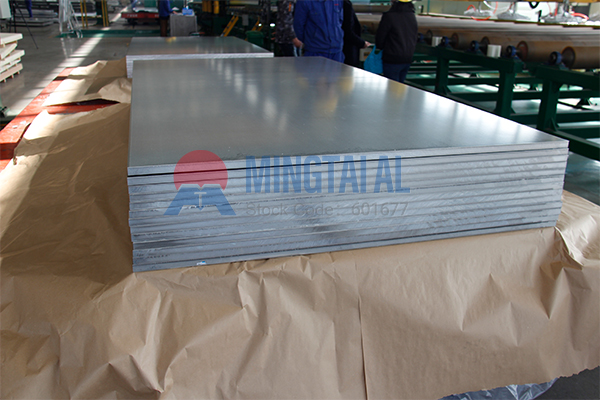
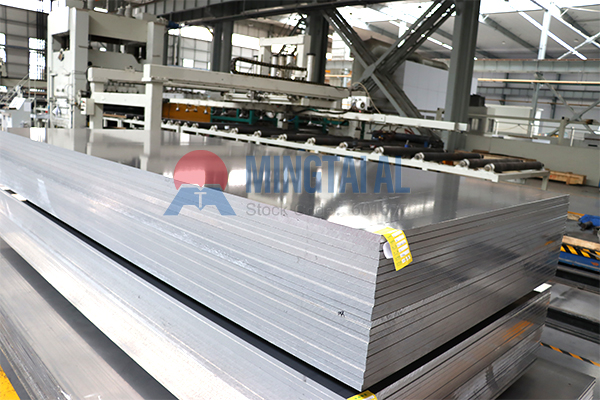
* Flat Support, Off the Ground: Use level, sturdy racks or pallets to ensure even support and prevent permanent sagging or deformation. Pallets should be spaced appropriately, and sheets must be stored off the ground.
* Control Height, Labels Outward: Stack height should not be excessive to avoid extreme pressure on the bottom sheets. Use the oldest stock first and keep material labels facing the aisle for easy identification.
* Use Interleaving Material: Placing clean kraft paper, PE protective film, or foam sheets between aluminum plates is a highly effective and low-cost way to prevent scratches and friction.
* Thick Plates: Can be stored vertically or horizontally. For vertical storage, use dedicated racks and ensure the angle to the ground is greater than 80 degrees to prevent tipping.
* Thin Sheets (especially <2mm): Horizontal flat storage is strongly recommended. For very thin sheets (<0.5mm), store them vertically on dedicated racks or place a protective cover on top of the stack to prevent deformation.
Improper handling is a primary cause of damage. Establishing standard procedures is crucial.
* Personal Protective Equipment (PPE): Operators must wear cut-resistant gloves and safety shoes.
* Equipment Check: Ensure all handling equipment is clean and functional.
* Manual Handling: Always requires two or more people. Lift vertically to avoid bending. Gloves prevent cuts and protect the surface from corrosion from hand moisture.
* Mechanical Handling – Vacuum Lifters Preferred: This is the ideal method, offering the best surface protection by distributing force evenly. Ensure lifter surfaces are clean before use.
* Mechanical Handling – Forklift Operation: Use wide forks with protective sleeves. Insert the forks slowly, centered, and symmetrically. Never push or pry sheets directly with the forks.
* Hoisting: Use soft, clean nylon slings. Steel cables are strictly forbidden as they scratch the surface. Adjust sling angles properly to prevent slipping or deformation.
* When removing a single sheet from a stack, slide it out parallel. Never force it or lift one corner, as this causes deformation and scratches. A dedicated sheet separator is recommended.
* Misconception 1: “Aluminum sheets are hard, so storage doesn’t matter much.”
* Reality: While strong, aluminum is malleable. Localized stress or long-term uneven support easily causes deformation.
* Misconception 2: “Stack them high to save space.”
* Reality: Excessive stacking height can cause permanent deformation of bottom sheets and is a significant safety hazard.
* Misconception 3: “Any hoist and sling will do.”
* Reality: Steel cables or chains can create deep scratches. These scratches will be highlighted during subsequent anodizing or painting, potentially causing rejects.
Proper storage and handling protect the value of your aluminum sheets. However, the foundation for excellent performance is the quality of the base material you choose at the source.
Mingtai Aluminum has decades of experience in aluminum processing. We focus exclusively on the production of aluminum sheets and coils as base materials. Because we do not do further processing or surface treatment, we concentrate all our expertise and resources on one goal: ensuring every square meter of aluminum sheet we ship excels in alloy composition, internal structure, mechanical properties, and surface flatness.
We know that a clean, high-quality base material free of oil stains and internal defects is essential for successful cutting, bending, welding, and final surface treatment results. Mingtai Aluminum aims to be your most professional and reliable supplier of raw aluminum materials.