Stock code: 601677
Stock code: 601677
Aluminum tread plate for stair treads is a widely used solution where slip resistance, durability, and lightweight structure are required. It is commonly applied in building stairs, industrial platforms, and access systems, offering both functional performance and long-term reliability.
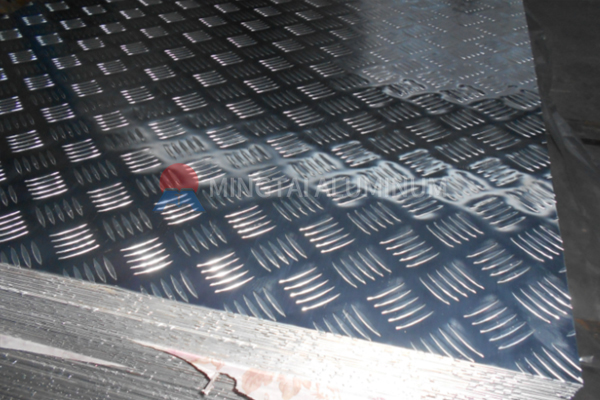
Unlike flat aluminum sheets, tread plates feature raised patterns that improve traction. This makes them especially suitable for stair applications where safety is a priority.
Key advantages include:
* Better grip under foot traffic
* Reduced risk of slipping in wet or dusty conditions
* Lightweight compared to steel alternatives
* Good resistance to corrosion in indoor and outdoor environments
These characteristics make aluminum tread plate a practical material choice for stair tread systems.
Not all tread plates perform the same. The surface pattern plays an important role in both function and appearance.
Typical options:
* Five bar pattern – widely used, balanced anti-slip performance
* Diamond pattern – more decorative, moderate grip
* Three bar pattern – lighter visual profile
Among these, five bar tread plate is often preferred for stair treads due to its consistent traction in multiple directions.
Choosing the right aluminum tread plate for stair treads requires attention to several technical details. Instead of focusing on a single parameter, it is better to evaluate the following aspects together.
Thickness
Thickness determines how the plate performs under load.
* Thinner plates are suitable for light-duty applications
* Thicker plates provide better support for high-traffic or industrial stairs
* Insufficient thickness may lead to deformation over time
Selecting the right thickness helps balance safety and material cost.
Alloy Series
Different alloys offer different levels of strength and corrosion resistance.
* 3xxx series: good workability and general-purpose use
* 5xxx series: higher strength and better performance in demanding environments
For stair tread applications, alloys such as 3003 aluminum tread plate and 5052 aluminum tread plate are commonly used due to their balance of strength, corrosion resistance, and formability.
The choice depends on whether the stair treads are used indoors, outdoors, or in industrial conditions.
Size and Format
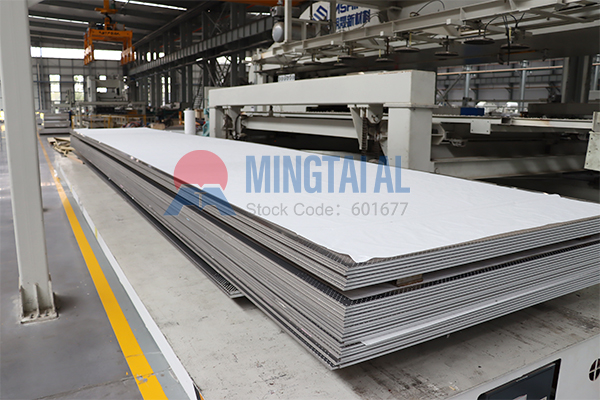
Aluminum tread plates can be supplied in standard sheets or customized sizes.
Things to consider:
* Stair tread dimensions
* Installation method (fixed or supported)
* Whether cutting or pre-sizing is required
Accurate sizing improves installation efficiency and reduces waste.
Beyond specifications, real performance in use is equally important. Several practical aspects should be taken into account.
* Load distribution: Proper support underneath prevents bending
* Traffic frequency: High-traffic areas require more durable configurations
* Surface wear: Repeated use may gradually affect the pattern surface
* Environment: Moisture, oil, or dust can influence slip resistance
Understanding these factors helps ensure the selected material performs reliably over time.
Aluminum tread plate for stair treads is suitable for a wide range of applications:
* Building staircases
* Industrial stairs and platforms
* Equipment access steps
* Warehouses and logistics facilities
* Outdoor stairs exposed to weather
Different environments may require adjustments in thickness, alloy, or pattern type.
Even with the right material, installation plays a key role in overall performance.
Important points include:
Proper installation helps maintain stability and extends service life.
For applications requiring consistent quality and reliable supply, Mingtai Aluminum provides aluminum tread plate in a range of specifications suitable for stair treads and similar uses.
With stable production capability and flexible size options, it supports projects that require dependable material performance and steady delivery.
1. What thickness is commonly used for aluminum tread plate stair treads?
It depends on the load and usage conditions. Higher traffic and heavier loads usually require thicker plates.
2. Which alloy is suitable for stair tread applications?
Both 3xxx and 5xxx series alloys are commonly used, depending on strength and environmental requirements.
3. Can aluminum tread plate be used for outdoor stairs?
Yes, it performs well outdoors due to its corrosion resistance and anti-slip surface.
4. Is customization available for stair tread sizes?
Yes, aluminum tread plates can be supplied in different sizes and thicknesses to match specific project needs.