Stock code: 601677
Stock code: 601677
5005 and 5052 are both recognized as anodized grade aluminum alloys, widely used in anodizing. Choosing the wrong one may lead to color inconsistency, insufficient strength, or unnecessary costs. The decision between these two essentially comes down to one question: is your priority surface appearance or structural performance? This article provides a selection reference from five dimensions.
*(This discussion focuses on material selection only, not subsequent surface finishing.)*
The fundamental difference lies in magnesium content.
– 5005 – approximately 0.5%–1.1% Mg
– 5052 – approximately 2.2%–2.8% Mg
Lower magnesium yields a clearer, brighter anodic film; higher magnesium delivers greater strength and better corrosion resistance.
> In short: 5005 is a “decorative‑grade alloy made for anodizing,” while 5052 is a “structural‑grade alloy that can be anodized.”
This is the most critical point for many. 5005 outperforms 5052 in overall anodic appearance.
According to the Aluminum Anodizers Council (AAC), 5052 tends to develop a yellowish tint under thicker anodic coatings, whereas 5005 maintains a clear silver‑gray or gray tone. As coating thickness increases, the yellowing and darkening of 5052 become more noticeable.
Key advantages of 5005:
– Clear, bright, and uniform anodic film
– Minimal color variation, stable over long‑term use
– Forms a dense, high‑gloss film that resists fading
> Core takeaway: If your project demands strict aesthetic consistency – for example, architectural curtain walls, consumer electronics enclosures, or high‑end decorative trim – 5005 is the safer choice. As an anodized grade aluminum for visible applications, 5005 is often preferred. 5052 can be anodized, but its appearance uniformity is not as reliable.
5052 offers higher overall strength than 5005.
– 5005 has strength comparable to 3003, with stable plasticity and easy bending, stamping, and forming operations.
– 5052 excels in resistance to deformation and fatigue, making it suitable for load‑bearing structural components.
Forming characteristics differ:
– 5005 has moderate hardness, causes less tool wear during punching, and yields smoother edges – ideal for precision stamping.
– 5052 provides stable weldability and good deep‑drawing performance.
Both alloys offer basic corrosion protection, but each suits different environments:
|
Environment |
Recommended |
|
General indoor/outdoor, normal humidity |
5005 |
|
Salt spray, coastal or marine settings |
5052 |
|
Mild chemical exposure |
5052 |
> For coastal or marine projects, prioritize 5052. For inland general use, choose based on appearance needs.
Common uses for 5005:
– Architectural curtain walls, interior/exterior decorative panels
– Consumer electronics housings (laptops, phone frames)
– Signage, lighting reflectors
– Medical device enclosures, precision equipment panels
Common uses for 5052:
– Marine components, offshore structures
– Truck fuel tanks, vehicle body panels
– Chemical storage fittings
– Outdoor precision hardware
|
Priority |
Recommendation |
|
Appearance first, uniform anodic finish |
5005 |
|
Higher strength, load‑bearing needs |
5052 |
|
Marine or high‑salt environments |
5052 |
|
Curtain walls, interior decoration |
5005 |
|
Both appearance and strength matter |
Choose 5005 if appearance weighs more, 5052 if strength does |
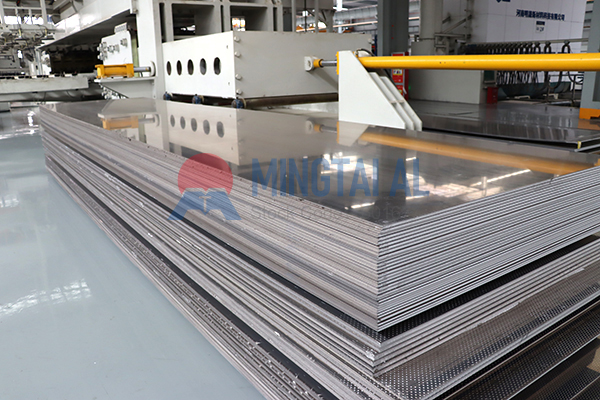
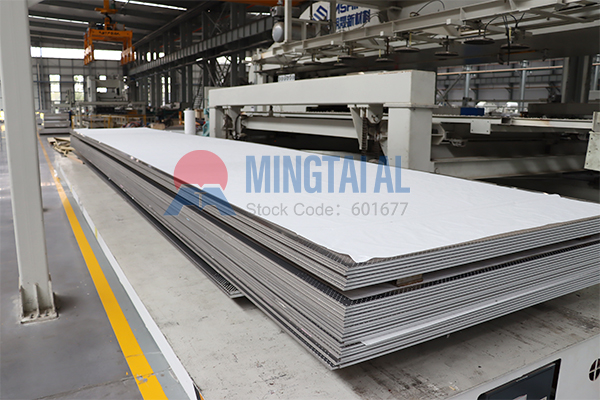
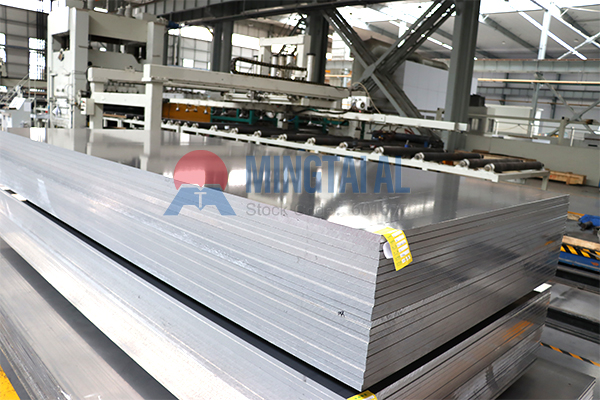
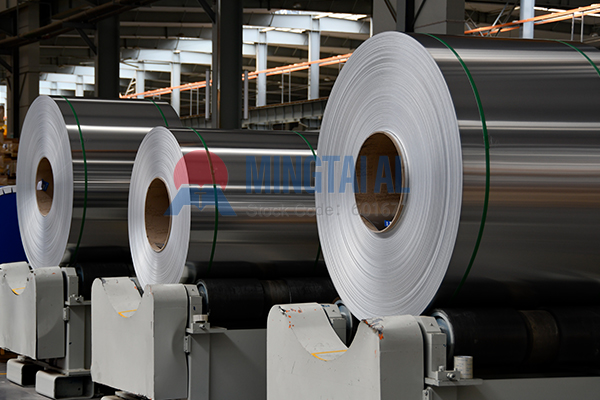
There is no absolute “better” between these two – only what fits your project. Choose 5005 for appearance‑driven applications, and 5052 for performance‑driven ones. Mingtai Aluminum regularly stocks a wide range of 5005 and 5052 aluminum coils and sheets to meet diverse industry requirements.
FAQ
Q: Which offers better anodized appearance, 5005 or 5052?
A: 5005 delivers a more uniform, brighter finish with less color variation – the top choice for decorative anodizing.
Q: Does 5052 turn yellow after anodizing?
A: 5052 may show yellowing under thick coatings, while 5005 remains clear silver‑gray.
Q: Is 5005 strong enough for structural use?
A: 5005 has similar strength to 3003, sufficient for common decorative and light structural parts, but not as strong as 5052.
Q: Should I choose 5005 or 5052 for marine environments?
A: Choose 5052 for its superior resistance to salt spray corrosion.
Q: Is there a big price difference between them?
A: 5052 is typically slightly more expensive due to its higher magnesium content.