Stock code: 601677
Stock code: 601677
In the world of aluminum materials, 1060 and 1100 are both part of the “pure aluminum” series—often considered two easily confused “brothers.” With only a slight difference in their codes and nearly identical appearance, selecting the wrong material can lead to increased costs or underperformance in critical applications. So, what exactly is the difference between 1060 and 1100 aluminum, and how do you make the right choice? As a leading manufacturer in China’s aluminum processing industry, Mingtai Aluminum is here to provide a detailed analysis.
The root of all performance variations lies in their chemical composition.
– 1060 Aluminum: Contains over 99.60% aluminum, making it a genuinely high-purity aluminum. Trace elements (such as iron and silicon) are minimal.
– 1100 Aluminum: Has an aluminum content of 99.00% or higher. Although also high in purity, its main “impurity” is copper (Cu), typically ranging between 0.05% and 0.20%.
This less-than-1% difference in purity, along with the presence of copper, leads to subtle yet crucial distinctions in their properties.
To provide a clear overview, let’s compare them in a table:
|
Property |
1060 Aluminum |
1100 Aluminum |
Winner |
|
Aluminum Content |
99.60% |
99.00% |
1060 |
|
Strength |
Lower |
Slightly Higher |
1100
|
|
Ductility & Formability |
Excellent |
Good |
1060
|
|
Corrosion Resistance |
Exceptional (due to higher purity) |
Very Good |
1060
|
|
Conductivity |
Slightly Higher (~61% IACS) |
High (~59% IACS) |
1060
|
|
Common Applications |
Deep-drawn parts, chemical containers, reflectors |
Hardware, cookware, nameplates, heat sinks |
|
In-Depth Explanation:
– Higher purity means a more regular internal lattice structure, granting superior plasticity. This makes 1060 ideal for deep drawing and complex forming processes without cracking.
– Corrosion is often an electrochemical process. With fewer impurities, 1060 demonstrates top-tier corrosion resistance, especially in chemical industrial environments.
– The copper in 1100 provides slight solid solution strengthening, similar to adding a bit of flour to soft dough, resulting in marginally higher strength and hardness compared to 1060.
Understanding their properties makes the choice straightforward:
– Choose 【1060 Aluminum】 for:
– Deep drawing or stamping: Products like lampshades, chemical tank liners, speaker cones, and battery cases requiring extensive shaping.
– High-corrosion environments: Applications in chemical processing or marine components where long-term corrosion resistance is essential.
– Conductive or reflective uses: Slightly better conductivity for busbars or conductors, and high reflectivity for lighting reflectors.
– Choose 【1100 Aluminum】 for:
– General sheet metal work: Enclosures, covers, or nameplates that need good formability with slightly higher strength.
– Cookware and daily hardware: Pots, pans, and kitchen utensils where strength meets ease of processing.
– Common heat sinks and pipes: Applications balancing strength and thermal conductivity.
Whether your project requires ultra-pure 1060 or well-balanced 1100, Mingtai Aluminum offers reliable solutions tailored to your needs.
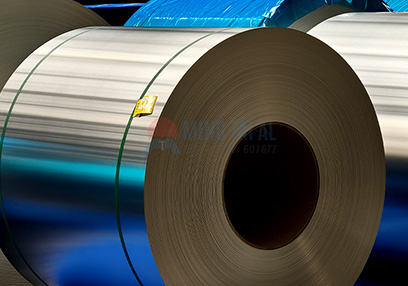
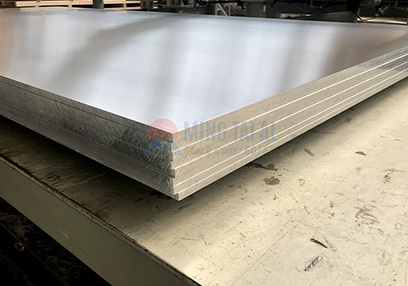
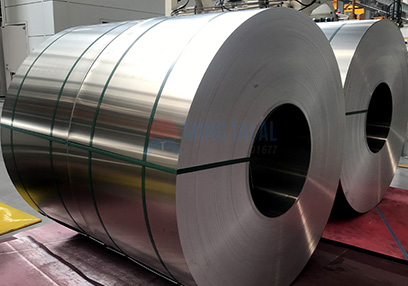
We understand that material consistency is the foundation of product quality. Through strict raw material control and advanced production processes, Mingtai ensures precise chemical composition and uniform mechanical properties in every coil and sheet of our 1060 and 1100 aluminum products. Our O-temper material delivers unmatched deep-drawing performance, while H18, H24, and other tempers provide various strength options.
Understanding the difference between 1060 and 1100 aluminum is key to optimal material selection. If you’re still unsure which alloy fits your needs, Mingtai’s technical experts are here to help. We offer personalized advice based on your processing methods and end-use requirements, along with free samples for testing.
Choosing Mingtai means more than just selecting a material—it’s choosing reliability and peace of mind.