Stock code: 601677
Stock code: 601677
Introduction:
In the procurement and application of aluminum sheets, quality is the cornerstone that determines the success of the final product. Whether used for high-end building materials, transportation, or precision electronic devices, inferior aluminum base material can lead to processing failures, product defects, and even significant economic losses. So, as a buyer or end-user, how can you effectively judge the quality of an aluminum sheet? As Mingtai Aluminum, a manufacturer specializing in aluminum base material production for decades, we present a comprehensive and practical guide from a professional perspective.
These methods require no complex instruments and can help you perform a rapid initial screening upon receipt of goods.
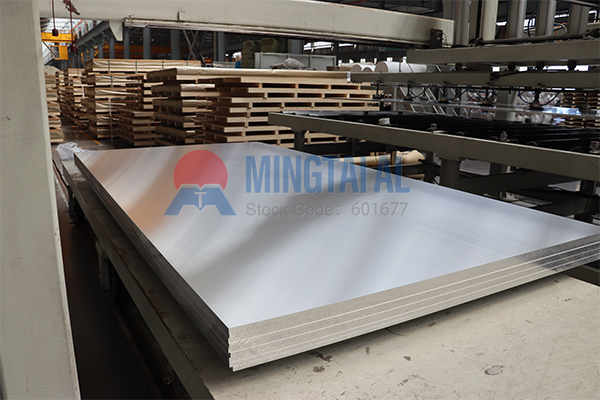
* Surface Flatness: Observe the sheet under light from an angle to check for waves, warping, or unevenness. High-quality aluminum sheets should have a straight, flat surface free from visible deformities.
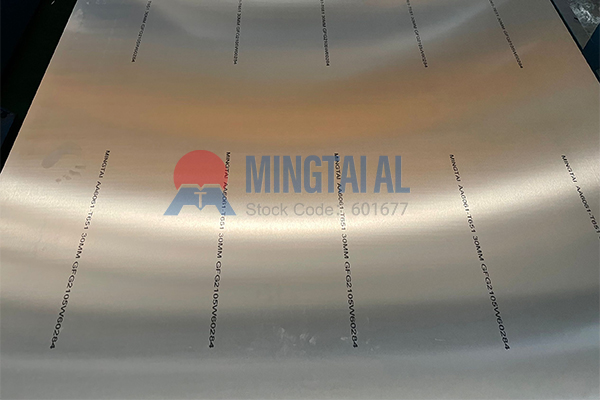
* Surface Quality: Carefully inspect the surface for scratches, abrasions, roller marks, bubbles, spots, or embedded non-metallic impurities. Base material from Mingtai Aluminum undergoes strict inspection to ensure a clean, uniform surface, providing a perfect canvas for your subsequent processing (e.g., painting, anodizing).
* Color & Finish: Aluminum sheets from the same batch and alloy grade should have consistent color and finish, without noticeable color differences.
* Thickness Tolerance: Use a precise micrometer to measure the thickness at multiple points across the sheet (especially near the edges and center). Qualified aluminum sheet thickness must fall within the agreed standard tolerance range (e.g., GB/T, ASTM). This is a key indicator of the manufacturer’s rolling precision.
* Width, Length & Diagonals: Use a tape measure to confirm the actual dimensions match the specified ones. Also, measure the lengths of the two diagonals. A significant difference indicates the sheet is not square, which can affect blanking.
This part concerns the core indicators of the aluminum sheet’s intrinsic quality, typically relying on lab equipment or authoritative documentation provided by the supplier.
* Hardness Test: Commonly uses Brinell (HB) or Webster (HW) scales. The hardness value directly relates to the sheet’s wear resistance and strength. Portable hardness testers can be used for spot checks.
* Tensile Test: This is the most crucial mechanical test, measuring the sheet’s Tensile Strength, Yield Strength, and Elongation using a universal testing machine.
* Tensile Strength represents the material’s maximum ability to resist failure.
* Yield Strength is the stress level at which the material begins to undergo significant plastic deformation.
* Elongation reflects the material’s capacity for plastic deformation; a higher value indicates better formability for processes like stamping and bending.
* 【Mingtai Pro Tip】: For most clients, conducting tensile tests in-house is costly. The most effective and common method is to: Request the Mill Test Certificate (MTC) from your supplier with the shipment.
The properties of an aluminum sheet are fundamentally determined by its chemical composition. Different alloy series (e.g., 1000 pure aluminum, 3000 rust-proof, 5000 high magnesium, 6000 Al-Mg-Si) possess distinct characteristics. Spectrometer analysis can precisely determine element content, ensuring the alloy grade (e.g., 6061, 5083) exactly matches your requirements. Again, this data is clearly stated in the Mill Test Certificate (MTC).
Since you are purchasing base material, its suitability for subsequent processing is crucial.
* Coating Adhesion Test: If planning for painting, a cross-cut test can be performed on a sample to check the bond between the coating and the aluminum substrate. A clean, uniform base material surface is prerequisite for good adhesion.
* Anodizing Effect Test: For products requiring anodizing, the microstructural uniformity of the base material directly determines the color consistency and quality of the anodic film. Choosing a supplier like Mingtai Aluminum that provides stable, high-quality base material helps prevent issues like blotchiness or color variation from the source.
A complete aluminum sheet quality assessment should integrate the methods above:
* Step 1: Perform Quick On-Site Inspections (visual, dimensional) upon receipt.
* Step 2: Verify against Authoritative Documentation – Request and carefully review the Mill Test Certificate (MTC). It acts as the aluminum sheet’s “ID card,” recording core data like chemical composition and mechanical properties, serving as legal proof for quality traceability.
* Step 3: For critical projects, periodically send samples to a third-party testing lab for Authoritative Re-inspection.
Understanding how to test aluminum sheet quality is a powerful tool for safeguarding your interests. However, the most economical and efficient strategy is to choose a trustworthy, professional base material supplier from the very beginning.
Mingtai Aluminum, as a leading domestic producer of aluminum base materials, understands deeply that “the quality of the base material determines the potential of the final product.” We focus exclusively on producing aluminum base materials, not engaging in downstream processing. This ensures our dedicated focus and ultimate pursuit of raw material quality.
* Source Quality Control: Strict quality checkpoints are implemented throughout every process—from casting, hot rolling to cold rolling—with continuous monitoring of composition, structure, and performance.
* Authentic & Traceable Data: We provide a detailed Mill Test Certificate (MTC) for every batch of product, with accurate, authentic, and traceable data, giving you peace of mind.
* Stable & Consistent Performance: Specializing in base material production, we ensure high consistency in surface quality, dimensional tolerances, and mechanical properties, providing a stable foundation for your subsequent processes like stamping, bending, and anodizing.
* Wide Range of Alloys: We offer various alloys, tempers, and specifications to meet the demanding needs of different applications.
Focus on your design and manufacturing. Leave the base material quality concerns to us. Choosing Mingtai means choosing assurance that starts at the source.
Contact the Mingtai Aluminum sales team now to get the latest product catalog and samples of our authoritative Mill Test Certificates. Experience the exceptional difference that professional base material makes!