Stock code: 601677
Stock code: 601677
China stands as a global powerhouse in aluminum manufacturing and export, offering significant opportunities in terms of competitive cost and massive production capacity for international buyers. However, navigating this market also presents challenges, such as identifying reliable suppliers and ensuring consistent quality. This guide is designed to provide a clear roadmap for sourcing, helping you make informed decisions and streamline your procurement process.
Begin your sourcing journey by clearly defining your technical needs. This ensures you receive accurate quotations and suitable product recommendations.
* Alloy & Temper: Understand common alloys and their applications. For instance, 1050/1060 (good formability), 3003/3004 (general purpose, moisture resistance), and 5052/5754/5083 (higher strength, marine applications). Tempers like H14 (half hard) or O (annealed) define the hardness and formability.
* Dimensions: Key specifications include thickness, width, and inner/outer coil diameter. Know the standard ranges and potential for customization.
* Surface Finish: Options range from standard mill finish to specialized treatments like anodizing or coating (e.g., PVDF, PE).
* Pro Tip: Prepare a detailed specification sheet including all the above points before requesting quotes to ensure efficiency and clarity.
Finding the right partner is crucial. Focus on these factors to assess reliability and long-term value.
* Manufacturer vs. Trader: Partnering with an integrated manufacturer (with capabilities in casting, hot and cold rolling) typically offers greater control over quality stability, production scheduling, and technical support compared to a trading company.
* Certifications & Standards: Prioritize suppliers with recognized certifications like ISO 9001 for quality management. Relevant product test reports (e.g., chemical composition, mechanical properties) from third parties like SGS add credibility.
* Quality Control Capability: Inquire about in-house QC processes. Reliable suppliers use advanced equipment (spectrometers, thickness gauges) to strictly control chemical composition, mechanical properties, dimensional tolerances, and surface quality.
* Production & R&D Strength: Evaluate production capacity, the technological level of rolling mills, and the existence of an R&D team. This indicates their ability to handle volume orders and potential custom requirements.
The product price is just one part of the total landed cost. A comprehensive view prevents surprises.
* Price Structure: The cost is often based on the LME (London Metal Exchange) aluminum price plus a processing fee. Final price is influenced by alloy, specifications, order quantity, and surface treatment.
* Incoterms: Understand key trade terms like FOB (Free On Board), CIF (Cost, Insurance and Freight), and EXW (Ex Works). They define responsibilities, risks, and costs between buyer and seller.
* Logistics & Packaging: Discuss shipping options (full container load is common). Ensure the supplier uses export-standard packaging—sturdy wooden crates/pallets, waterproof paper, and steel strapping—to prevent damage during transit. Marine insurance is recommended.
A clear process ensures a smooth transaction from start to finish.
Risk Mitigation Tip: Conduct due diligence on suppliers, agree on a reasonable deposit/payment schedule, and use inspection services for large orders.
As an established aluminum rolling manufacturer, we understand that global buyers seek more than just a product—they seek consistency, reliability, and true value.
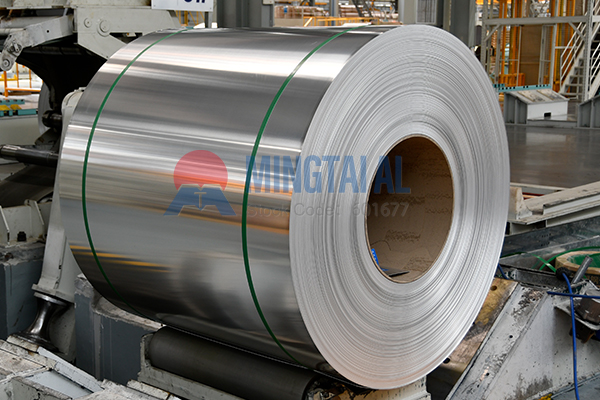
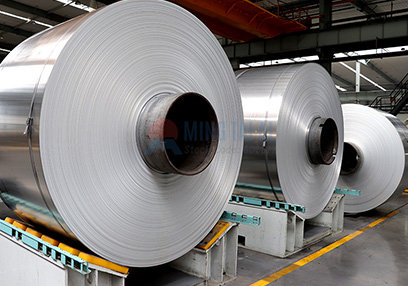
We specialize in supplying high-quality aluminum coils that meet international standards. Our advanced production lines and rigorous quality control ensure full traceability from raw material to finished product, giving you the confidence to import aluminum coil from China seamlessly.
Looking for a reliable partner? Mingtai Aluminum offers not just products, but peace of mind. Contact us today with your specifications for a competitive quote and dedicated technical support.
Q1: What is the typical lead time for ordering aluminum coils from China?
A: Usually 20–30 days after order confirmation for standard products, depending on specifications and quantity.
Q2: Can you provide samples before bulk ordering?
A: Yes, samples are available for quality verification. Sample costs and freight are typically the buyer’s responsibility and may be credited against future orders.
Q3: What are the common payment terms?
A: Standard terms include T/T (with deposit) and L/C at sight, negotiable based on order size and partnership.
Q4: How do you ensure the quality of aluminum coils during shipping?
A: We use export-grade packaging (wooden pallets, waterproof wrapping, steel strapping) to prevent damage, and recommend marine insurance.