Stock code: 601677
Stock code: 601677
For manufacturers of HVAC ductwork, building insulation, and industrial thermal wraps, selecting the right aluminum foil for insulation is the first critical step toward product performance. Yet, with a myriad of specifications like alloy, temper, and thickness, the choice can be overwhelming. This guide cuts through the complexity. We’ll explain the core properties of pure insulation aluminum foil and provide a clear, actionable framework to help you specify the optimal base material for your manufacturing needs, ensuring reliability, efficiency, and cost-effectiveness.
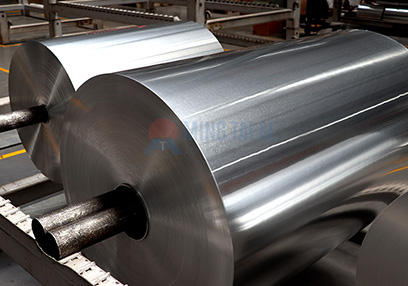
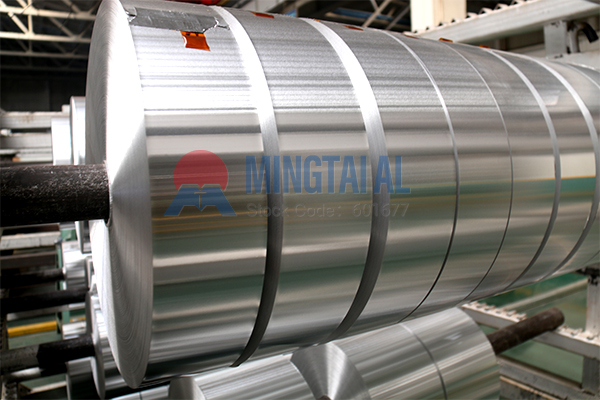
The insulation aluminum foil discussed here is the uncoated, pure aluminum coil—the essential raw material for producing composite products like foil-faced fiberglass, duct wrap, or laminated vapor barriers. Unlike finished goods, the base foil is judged on its inherent material properties: purity, surface quality, mechanical strength, and consistency. Choosing the correct base is not about buying a product; it’s about securing the foundation of your supply chain.
Forget generic sales pitches. When evaluating base foil, focus on these four interconnected properties that directly impact your production and final product performance.
The primary function of insulation foil is to reflect radiant heat. This capability hinges on surface reflectivity, which is directly tied to aluminum purity.
* The Science: Higher purity alloys (like 1060, 1070) offer superior, stable reflectivity (over 95%) compared to alloys with more additives.
* Your Selection Tip: For maximum thermal performance in HVAC or building applications, specify high-purity alloys (1xxx series). This ensures the foil in your composite acts as an efficient heat mirror from day one.
A foil’s value as a vapor barrier is only as good as its continuity. Moisture ingress is the enemy of insulation R-value.
* The Science: The barrier works by providing a continuous, impermeable layer. The fewer the pinholes (microscopic gaps), the better the protection.
* Your Selection Tip: Inquire about pinhole count standards. Foil for critical barrier applications (e.g., under concrete slabs, in exterior walls) requires premium rolling techniques to minimize defects. A consistent, clean surface from the mill is paramount.
This decision impacts how the foil behaves on your production line and in the end-use.
* O Temper (Annealed/Soft): Highly ductile and malleable. Ideal for deep-draw forming, tightly wrapping pipes, or laminating processes where conformity is key. It reduces breakage on high-speed lines.
* H Temper (Hard/Strain-Hardened): Offers higher tensile strength and inherent stiffness. Best suited for applications where the foil needs to provide structural support or a smooth, rigid facing, such as on duct board.
* Your Selection Tip: Match the temper to your processing. Need to laminate and wrap? Choose O temper. Need a self-supporting facing? H temper is likely better.
Thickness is a key cost driver and performance differentiator. Here’s a quick reference:
* Ultra-Thin (0.006mm – 0.01mm): Maximizes flexibility and material yield (coverage per kg). Perfect for cost-sensitive wraps, complex pipe insulation, and lightweight composites. (*Common choice: 0.007mm for HVAC duct wrap*).
* Standard & Heavy-Duty (0.012mm – 0.02mm+): Provides greater durability, puncture resistance, and rigidity. Used for high-abuse areas, duct board facings, and premium vapor barriers where absolute integrity is critical.
Use the framework above to guide these common scenarios:
* HVAC Flexible Duct Wrap: Prioritize flexibility and conformity. Recommendation: 0.007mm – 0.01mm, O Temper, 1060/1070 alloy.
* Duct Board & Panel Facing: Needs smoothness and rigidity. Recommendation: 0.015mm – 0.02mm, H Temper, 1100/8011 alloy.
* Industrial Pipe Lagging: Must conform to irregular surfaces. Recommendation: 0.01mm – 0.012mm, O Temper, for optimal wrap performance.
* Critical Vapor Barrier in Construction: Zero-compromise on moisture protection. Recommendation: 0.015mm+ foil with certified low pinhole count; consult technical specs.
Selecting the right specification is half the battle. Sourcing it consistently is the other. This is where a partner with vertical integration adds value.
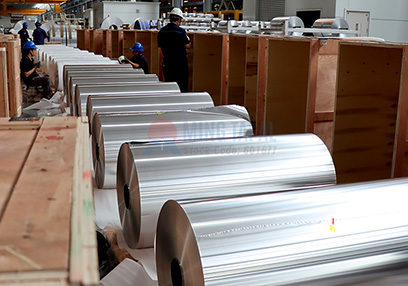
* Consistency You Can Build On: At Mingtai Aluminum, we control the process from molten metal to precision slitting. This ensures the alloy purity, temper uniformity, and gauge consistency required for reliable high-speed lamination and forming in your factory.
* Customization is Standard: We don’t just sell stock items. We provide customized alloys, tempers, and thicknesses to meet your exact design and manufacturing requirements, helping you optimize performance and cost.
* Expert Support, Not Just Sales: Our team provides actionable technical support. We help you translate application challenges into precise material specifications, often providing sample coils for your production trials.
Choosing insulation aluminum foil base material is a technical decision with lasting impact on your product quality and production efficiency. By focusing on alloy, temper, thickness, and surface quality—and partnering with a committed producer—you secure a reliable foundation for your insulation products.
Download our comprehensive Base Foil Technical Data Sheet for detailed specifications on alloys, mechanical properties, and standard sizes.
Contact Mingtai Aluminum’s technical team today for a free, no-obligation specification review. We’ll help you select the optimal grade, temper, and gauge, and can arrange for sample materials to test in your process.