Stock code: 601677
Stock code: 601677
The short answer to “is 3003 aluminum sheet weldable” is yes—3003 aluminum sheet can be MIG welded, and MIG is one of the methods worth considering first. 3003 is an aluminum-manganese alloy that is not strengthened by heat treatment, and it is generally less sensitive to hot cracking than many common aluminum alloys. The real question is usually not whether it can be welded, but how to weld it consistently and avoid unnecessary rework.
3003 does not depend on heat treatment for strength, so its heat-affected zone does not behave like those of some heat-treatable alloys during welding. The aluminum-manganese family is also relatively forgiving when it comes to hot cracking. For many common thicknesses and routine MIG settings, hot cracking is not the first problem to solve.
That said, “weldable” has limits. Good cracking resistance does not make porosity or thin-sheet distortion disappear by itself. In practice, the difference between a sound joint and a poor one often comes down to pre-weld condition and process control.
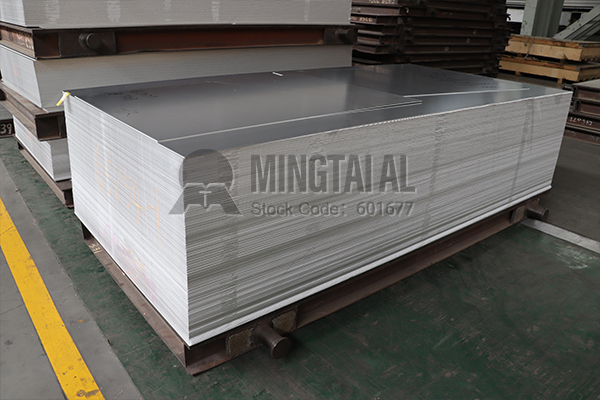
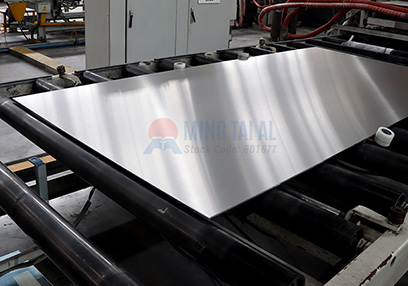
The 3003 sheet discussed here is supplied in mill condition. Surface treatment and further processing are outside the supply scope, so cleaning and edge preparation remain part of fabrication. If you are checking whether the material suits a welded structure, start with the application overview for aluminum sheet for MIG welding and then return to the process details below.
Filler choice is not about memorizing grade names; it is about what the joint needs to do. A practical way to narrow it down:
– ER4043: A general-purpose choice with good weld-pool fluidity and low cracking sensitivity. It suits many routine 3003 welding jobs. If the weld will be visible or finished later, consider the color difference in advance.
– ER5356: A better fit when joint strength and corrosion resistance matter more, especially in damp, coastal, or salt-spray environments. It usually requires a little more attention to technique and parameter matching.
– ER1100: A close match to the 3003 base metal and well suited to joints where corrosion resistance and formability are the main priorities.
A useful starting point: begin with ER4043 for general fabrication; move to ER5356 when higher strength or marine-grade corrosion resistance is needed; choose ER1100 when the goal is to stay as close as possible to 3003’s corrosion behavior. For a fuller comparison, see how to choose aluminum welding wire.
The oxide layer on aluminum melts at a much higher temperature than the base metal, and the MIG arc breaks it down only partially. Leftover oxide can end up inside the weld, while oil, moisture, and dirt on the surface are direct sources of porosity. The sequence matters:
1. Remove oil, marker ink, and dust with a solvent.
2. Clean the groove and both sides with a stainless-steel wire brush reserved for aluminum—not one shared with steel—to break the oxide layer.
3. Weld soon after cleaning to limit re-oxidation and dust settling.
> 3003 is forgiving to weld, but only when pre-weld cleaning is not skipped.
On thin 3003 sheet, burn-through and wavy distortion are often more immediate concerns than cracking. Aluminum conducts heat quickly and expands significantly when heated, so once heat input runs away, distortion and burn-through tend to appear together. Practical steps include:
– Use a lower current and a faster travel speed while still achieving fusion, and avoid letting a large weld pool sit on the sheet.
– Use pulsed MIG or a suitable arc control mode to reduce average heat input.
– Use symmetrical tack welds, backstep welding, and rigid clamping to control distortion during welding rather than correcting it afterward.
For more workshop methods, see luminum welding distortion control.
Hot cracking is not the first concern with 3003. With sensible filler selection—ER4043 or ER5356, for example—the likelihood of hot cracking in routine MIG welding is relatively low. If your background is with 6061 or higher-strength aluminum, there is no need to carry the same level of concern into 3003.
Porosity is more common. Porosity in aluminum MIG welds is usually linked to surface contamination, damp wire or base metal, insufficient shielding, or a dirty wire-feed system. The fix is less about endlessly adjusting parameters and more about dry filler storage, clean surfaces, suitable shielding gas flow, and a clean liner. Pure argon is a common choice for 3003 MIG welding; set flow based on arc stability and weld-pool protection. For troubleshooting, see preventing porosity in aluminum welding.
So the practical answer to “is 3003 aluminum sheet weldable” is this: 3003 gives you a forgiving starting point, provided filler, cleaning, and heat input are handled with care.
Mingtai Aluminum supplies 3003 aluminum sheet in consistent mill conditions suitable for MIG welding and can help confirm alloy, temper, and thickness for your joint design. If you are specifying 3003 for a welded assembly, start with the 3003 aluminum sheet specifications and tempers page.
Q: Does 3003 aluminum sheet need preheating for MIG welding?
A: Thin sheet usually does not need preheating; consider preheating only for thicker sections or very low ambient temperatures.
Q: Should I use ER4043 or ER5356 for 3003 MIG welding?
A: Start with ER4043 for general use, and choose ER5356 when higher strength or marine-grade corrosion resistance is required.
Q: Does 3003 crack easily after welding?
A: 3003 is relatively resistant to hot cracking, and with suitable filler and controlled heat input, cracking is not the main concern in routine MIG welding.
Q: Why can porosity still appear in 3003 welds?
A: Porosity is usually related to surface contamination, damp wire or base metal, or insufficient shielding rather than to 3003 itself.