Stock code: 601677
Stock code: 601677
In shipbuilding and offshore engineering, material selection is a cornerstone of project success. Marine aluminum sheet, known for its light weight, high strength, and superior corrosion resistance, has become a preferred material in modern shipbuilding. However, navigating the multitude of marine aluminum sheet suppliers to find a trustworthy partner is a critical challenge for every naval architect, engineer, and procurement manager. A poor choice can lead to significant safety risks and financial losses. This article breaks down the five key factors for selecting a supplier and highlights a reliable professional partner.
The marine environment is harsh, and standard aluminum alloys cannot withstand long-term exposure to seawater. Therefore, a supplier’s products must adhere to stringent international standards.
* Key Standard: The most critical standard is ASTM B928 / B928M, which specifically governs magnesium-containing 5xxx series marine-grade aluminum alloy sheets. The 5083-H116/H321 grade is the premier choice for hull structures, largely due to its excellent resistance to stress corrosion cracking.
* Classification Society Approvals: Top-tier suppliers should also hold certifications from classification societies like CCS, ABS, or BV, which are essential for entering specific shipbuilding markets.
* Selection Tip: The first step in evaluating a supplier is verifying their ability to provide complete material test reports and relevant certification documents.
Different parts of a vessel have different requirements. An excellent supplier should offer expert guidance on material selection.
* Primary Marine-Grade Alloys:
* 5083/H116/H321: The premier alloy, offering high strength and exceptional resistance to seawater corrosion. It is the first choice for primary structures like hulls and main decks.
* 5086/H116: Slightly less strong than 5083 but with better formability, it is often used for superstructures and non-primary structural components.
* 6061-T6: Noted for its higher strength achieved through heat treatment, it is commonly used for masts, railings, and outfitting.
* Value-Added Service: A professional supplier can recommend the most cost-effective and suitable alloy and temper based on your specific application, such as for workboats, yachts, or naval vessels.
Stable product quality stems from robust production capacity and meticulous process control from start to finish.
* Full-Process Control: Every step—from melting and casting, homogenization, hot and cold rolling, to final heat treatment—directly impacts the material’s microstructure and mechanical properties. Suppliers with integrated production lines can better guarantee quality control at the source.
* Technical Equipment: Advanced rolling mills and precision heat treatment facilities are fundamental for producing high-performance, high-tolerance aluminum sheets.
* Evaluation Point: Understanding a supplier’s production scale, technical equipment, and quality management systems (e.g., ISO 9001) is crucial for assessing their ability to deliver consistent, qualified products.
Shipbuilding projects have long cycles and strict requirements for material dimensions and delivery timelines.
* Size Range: The supplier should offer a wide variety of thicknesses, widths, and lengths to meet different hull design needs.
* On-Time Delivery: Sufficient raw material inventory and efficient production planning are key to ensuring project schedules are met.
* Surface Treatment Options: The ability to provide various finishes, such as mill finish, anodizing, or pre-painted coatings, demonstrates a supplier’s service depth.
A top-tier supplier acts not just as a material vendor, but as a technical partner.
* Value-Added Services: The ability to provide support on welding procedures, machining recommendations, and corrosion protection strategies is what distinguishes a basic supplier from a strategic partner.
* Problem-Solving: A responsive mechanism for addressing and resolving any issues that arise during fabrication or use is critically important.
When evaluating these criteria, Mingtai Aluminum stands out as a premier choice for fulfilling all your requirements for high-quality marine aluminum sheet.
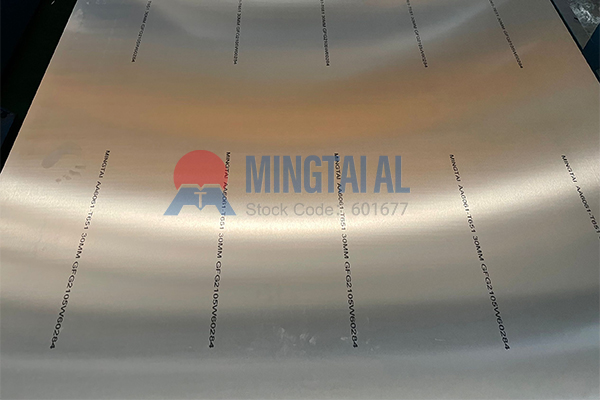
* Complete Certification & Quality Assurance: Mingtai’s marine-grade aluminum sheets (5083, 5086, 6061, etc.) strictly comply with international standards like ASTM B928 and can obtain necessary classification society approvals, guaranteeing safety and reliability from the source.
* Professional Product Range: With decades of experience in aluminum processing, we have a profound understanding of marine-grade alloys. We stably supply plates in various tempers (H116, H321, H111) with comprehensive specifications to meet all your needs, from hull to superstructure.
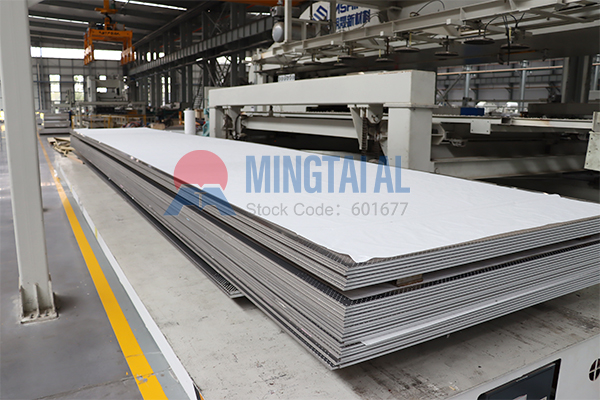
* Strong Capacity & Stable Supply: Leveraging advanced production lines and strict quality control, Mingtai ensures consistent performance batch after batch. Our robust supply capacity protects your project timeline.
* Technical Leadership & Full Support: Our professional technical team provides comprehensive support, from material selection and process optimization to problem-solving, acting as a solid technical backbone for your projects.
* Global Trust & Wide Application: Mingtai Aluminum has been exported worldwide and is widely used in yachts, speedboats, workboats, and offshore structures. Its excellent performance and reliability have earned widespread praise from clients.
Choosing Mingtai means choosing peace of mind and a mutually beneficial partnership.
Visit the Mingtai Aluminum website or contact our sales engineers directly for detailed catalogs, the latest quotations, and free technical consultation. We are also happy to provide samples so you can experience the superior quality of our marine aluminum sheets firsthand.