Stock code: 601677
Stock code: 601677
Choosing an outdoor enclosure aluminum sheet for electrical cabinets is less about aluminum versus steel and more about which alloy and temper can bend without cracking, weld reliably, and stay flat outdoors. 5052 H34 is widely specified for this application because it strikes a practical balance between rigidity, formability, and weather resistance without forcing constant compromises.
> A reliable enclosure panel requires the right balance of alloy and temper. 5052 H34 delivers structural flatness and weather resistance without sacrificing bendability.
Outdoor electrical cabinets are usually built as folded sheet-metal bodies with continuously welded seams. Doors need structural rigidity, side panels require strict flatness, and the complete cabinet must remain light enough for efficient transport and installation.
* 6061-T6 limits: Offers higher strength, but its cracking risk rises rapidly when bend radii are tight. It suits mounting plates or internal frames better than large cabinet skins.
* 1100 pure aluminum limits: Bends easily, but lacks the mechanical strength needed for wide doors and stable performance under outdoor wind load.
* 5052 Al-Mg performance: An anti-corrosion alloy that gains strength through cold working rather than heat treatment. Bending and welding will not disturb a heat-treated temper state.
An outdoor cabinet does not need the highest raw strength available. It needs a material that performs across bending, welding, and long-term exposure simultaneously. 5052 sits right in that optimal intersection.
|
Selection Metric |
5052 H34 Sheet |
5052 H32 Sheet |
|
Strength & Rigidity |
Higher yield strength; superior resistance to panel bowing |
Moderate strength; adequate for lighter structural loads |
|
Bending Capability |
Requires a slightly larger minimum bend radius |
Highly forgiving for tight bends and complex flanges |
|
Primary Cabinet Uses |
Wide doors, large flat panels, high wind-load enclosures |
Thin-gauge parts, tight radius brackets, complex flanging |
|
Corrosion & Welding |
Excellent marine exposure resistance and seam weldability |
Identical base alloy corrosion and welding performance |
There is no single “better” temper—only a proper match for your cabinet design and load path. For wide doors, strict flatness requirements, and comfortable bend radii, H34 helps the cabinet remain flat and sealing gaskets stay effective over time.
When preparing your material request for outdoor enclosure aluminum sheet orders, evaluate three core parameters:
* Thickness Tolerance: Cabinet bodies typically use medium-gauge sheet, while doors require strict gauge control. Thickness consistency and flatness matter more than nominal gauge alone to prevent gaps along sealing faces.
* Bend Radius Limits: H34 requires a larger bend radius than H32. For tight corners, evaluate H32 first or adjust structural bend lines. Always consider the relationship between bend line orientation and rolling direction.
* Sheet Width Optimization: Minimizing welded seams is essential for outdoor sealing. Selecting sheet widths that cover full single-piece side panels or door skins reduces unnecessary joint welding.
The protection rating of an outdoor enclosure relies on structural design, gasket sealing, welded seams, and surface treatment working together. The base aluminum sheet provides the critical starting point:
[ Base Aluminum Sheet ] ──> Flatness & Gauge Control ──> Uniform Fit-up
[ Seamless Protection ] <── Anodizing / Coating <── Sound Welded Joints
* Flatness & Gauge Control: Flat panels ensure that rubber gaskets compress evenly along the perimeter without leakage points.
* Base Surface Quality: Mill-finish plate must be free of deep scratches, oil contamination, or surface defects so downstream powder coating or anodizing adheres properly.
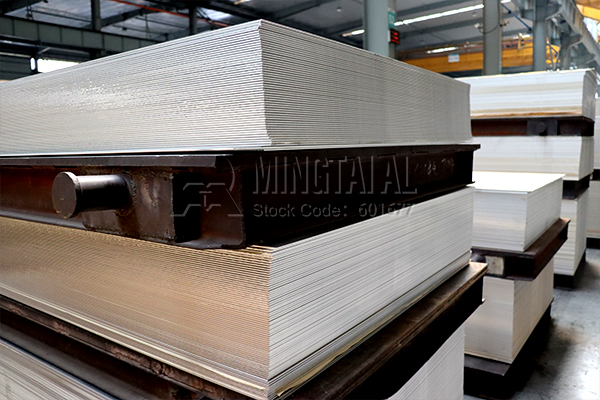
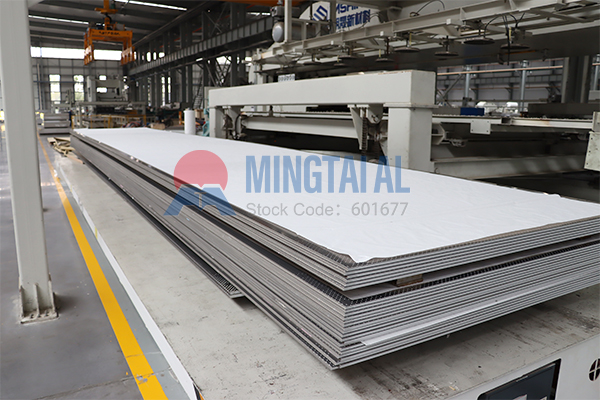
5052 H34 is supplied as mill-finish base aluminum plate. Downstream slitting, bending, welding, and surface finishing are completed by the cabinet fabricator.
1. Standards & Documentation: Specify ASTM B209 or EN 485, with Mill Test Certificates (MTC) available per heat batch.
2. Explicit Temper Stating: Always specify H34 explicitly rather than just 5052. H32 and H34 perform noticeably differently on press brakes.
3. Flatness Requirements: Define strict flatness tolerances alongside nominal thickness to avoid oil-canning on large cabinet faces.
4. Surface Protection: Agree on protective film (PE film), paper interleaving, or oil-free delivery according to your downstream coating workflow.
5. Seam-Reducing Widths: Order custom sheet widths to minimize intermediate seam welding on large enclosures.
Mingtai Aluminum supplies 5052 H34 outdoor enclosure aluminum sheet produced to ASTM B209 standards, with full batch MTC support to help lock down material compliance before fabrication starts.
Q: Is 5052 H34 suitable for welded outdoor electrical cabinet bodies?
A: Yes, its sound weldability and heat-affected zone stability suit continuously welded enclosure seams.
Q: How should I choose between 5052 H34 and H32?
A: Select H34 for wide doors and higher rigidity, and H32 for tight radius bends and complex flanging.
Q: What sheet thickness is recommended for outdoor electrical cabinets?
A: Determine gauge based on enclosure dimensions and wind loads while checking flatness and thickness tolerance.
Q: Can 5052 H34 be used in marine or coastal environments?
A: Yes, 5052 is an Al-Mg anti-corrosion alloy with proven long-term durability in marine atmospheres.
Q: Does Mingtai supply pre-coated or anodized 5052 H34 sheets?
A: No, Mingtai supplies mill-finish base aluminum plate, while surface treatments are applied downstream.