Stock code: 601677
Stock code: 601677
A drawing that specifies heavy structural aluminum plate is really asking a more practical question: which plate will weld cleanly, machine stably, and hold up over years of crane-arm service? The difficulty with crane arms is never a single strength number. It is the balance between strength, welding heat effects, and thick-plate dimensional stability. That is why 6082 T6 is repeatedly specified for this application.
– Enough load-bearing capacity, but not just a peak strength number. Crane arms see cyclic loads, so structural uniformity through thick sections matters more than the highest value on a data sheet.
– Weldability, with post-weld derating accepted as a design condition. Heat-treatable aluminum alloys soften in the heat-affected zone after welding; this is a material characteristic, not something a different filler wire can fully remove.
– Stable dimensions after thick-plate machining. Pin bosses and connection plates are often machined from thick plate with large material removal. If internal residual stress is not properly relieved, flatness problems follow.
> A simple rule: the value of 6082 T6 is not “which single property is highest,” but that it offers a workable balance across all three requirements.
6061 T6 is a mature, widely used general-purpose alloy and works well for many structural parts. Its advantage becomes less clear when crane-arm sections are thick, load margins are tight, or the design standard points to the European structural aluminum system.
6082 contains more manganese, which helps refine grains and improve structural uniformity in thick plate. In real service, the difference is not “whose data sheet is higher,” but the ability of thick sections to resist long-term cyclic loading. So if the drawing specifies EN AW-6082, or main load-bearing parts have fatigue-life requirements, buying 6082 directly is more consistent with the design logic than substituting thicker 6061.
6082 has good weldability within the 6xxx family, and both TIG and MIG are suitable. Two points should be clear before fabrication begins:
1. Welding heat locally reduces strength in the heat-affected zone. Design checks should not use base-metal strength directly for the area near the weld.
2. The connection method determines how much of the material advantage can be used. With bolted or pin connections, 6082 T6 can contribute more of its strength; with fully welded structures, heat-affected-zone reduction should be treated as a normal design condition.
In other words, 6082 T6 is not a material that remains as strong as the base metal after welding, but it is still worth selecting once the welding constraints are clearly defined.
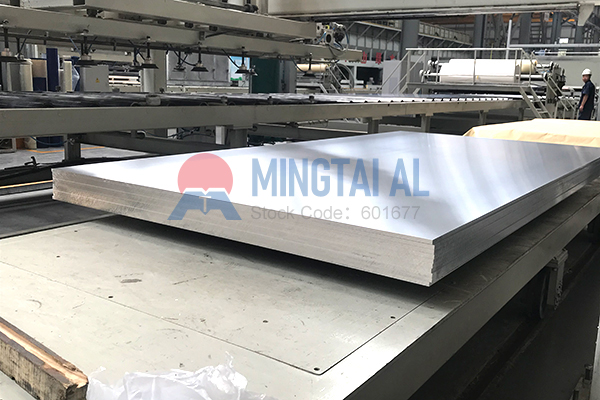
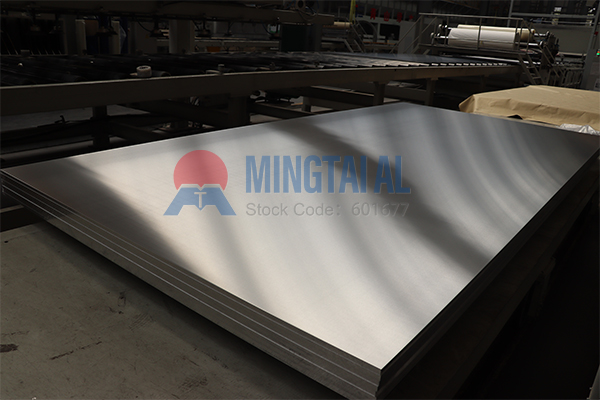
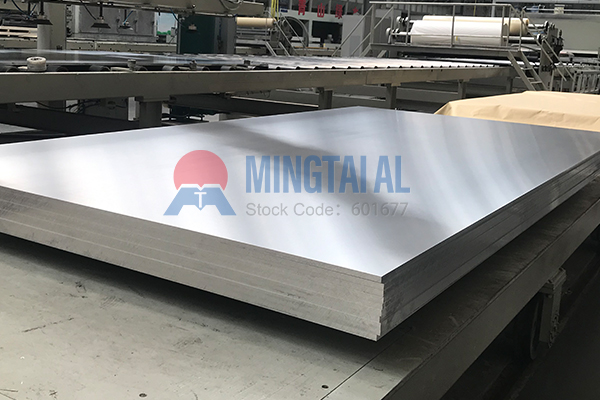
Choose T651 when thick-plate milling and flatness acceptance matter; choose T6 for thin or simple shapes—Mingtai Al supplies 6082 T6/T651 heavy structural aluminum plate to EN standards with MTC available, so stress-relief condition and flatness can be checked at the quotation stage.
Some crane-arm parts are easy to underestimate: boom-head connection plates, pin bosses, and mounting faces. They involve large material removal and also have flatness requirements. T6 thick plate retains residual stress after rolling and quenching; large-area milling releases that stress suddenly, and a part may distort only after it leaves the machine.
The engineering value of T651 is an additional stretch stress-relief step on top of T6, reducing the risk of distortion after machining at the material level. It cannot make a part “absolutely distortion-free,” but it makes thick-plate behavior after large-area milling more controllable.
> Writing only “6082 T6” in a specification is therefore not enough when thick-plate milling and flatness acceptance are involved. The stress-relieved temper (T651) should also be stated, or the thick-plate residual-stress control method should be confirmed at the quotation stage.
1. Applicable standard: When the drawing is based on the European system, state EN AW-6082 and the required temper directly.
2. Thickness tolerance and flatness: Thick-plate flatness should be written as an acceptance item, not left for discussion after delivery.
3. Temper selection: T6 is usually sufficient for thin or simple shapes; T651 is preferred for thick parts with large-area milling.
4. Quality documents: Use actual values in the mill test certificate (MTC) for acceptance, which is more reliable than referring to “typical values.”
One scope note: we supply rolled aluminum plate as raw material only. Surface treatment of aluminum coil and foil and downstream processing are outside our supply scope and should be arranged on the fabrication side.
Q: What is the most practical difference between 6082 T6 and 6061 T6 for crane arms?
A: 6082 usually has an advantage in thick-section load bearing and cyclic-load resistance, making it more suitable for main load-bearing parts and fatigue-sensitive locations.
Q: Should 6082 for crane arms be ordered as T6 or T651?
A: T6 is usually sufficient for thin or simple shapes, while T651 is preferred for thick parts with large-area milling and flatness requirements.
Q: Does 6082 T6 lose much strength after welding?
A: Strength in the heat-affected zone does decrease, which is normal for heat-treatable 6xxx alloys, so design checks should apply joint reduction rather than base-metal strength.
Q: Beyond alloy and temper, what should be confirmed when ordering plate for crane arms?
A: Confirm the applicable standard, thickness tolerance, flatness requirement, and mill test certificate supplied with the shipment.
Mingtai Aluminum supplies 6082 T6/T651 plate for crane-arm projects and can confirm thickness, width, and MTC documents against project requirements. Contact the material team through the official website to check thick-plate availability and quality documents.