Stock code: 601677
Stock code: 601677
In modern shipbuilding, aluminum alloys have become a key material replacing traditional steel due to their outstanding comprehensive properties. Their exceptional lightweight characteristics significantly lower the vessel’s center of gravity, enhance stability and speed, and increase effective payload. Their remarkable corrosion resistance, particularly their superior resistance to seawater, greatly extends vessel lifespan and reduces maintenance costs. Coupled with good weldability, workability, non-magnetic properties, and 100% recyclability, aluminum is the ideal choice for high-performance shipbuilding. Among various aluminum alloys, the 5xxx series (Al-Mg) dominates hull structures due to its excellent corrosion resistance and medium strength. This article provides an in-depth analysis of the three most commonly used Shipbuilding Aluminum Sheets 5083, 5086, and 5052, helping you make the precise choice for your project.
To make the correct choice, it is essential first to understand the core positioning and performance differences of these three alloys.
* Key Characteristics: Offers the highest strength and supreme seawater corrosion resistance in this group, thanks to its high magnesium content. Common tempers like H116/H321 are specially processed for excellent resistance to stress corrosion cracking.
* Primary Marine Applications: The go-to choice for critical, high-stress hull structures—including the main shell, deck, keel, and watertight bulkheads.
* Key Characteristics: Provides a strong balance of medium-high strength, very good corrosion resistance, and enhanced formability and weldability compared to 5083.
* Primary Marine Applications: Ideally suited for superstructures, hull panels, and decks where a combination of reliable strength and easier fabrication is required.
* Key Characteristics: Excels in formability, surface finish, and cost-effectiveness. It has good corrosion resistance but lower strength than 5083/5086, making it easy to fabricate.
* Primary Marine Applications: Primarily used for interior components such as cabin partitions, linings, ductwork, and furnishings, where complex shaping or cost management is a priority.
|
Ship Section |
Recommended Alloy |
Key Considerations |
|
Main Hull Structure, Keel, Bottom |
5083 |
Highest strength, extreme seawater corrosion resistance, impact resistance |
|
Main Deck, Side Shell, Watertight Bulkheads |
5083 |
High structural integrity, corrosion resistance, load-bearing |
|
Superstructure, Wheelhouse Deck |
5083/5086 |
Balances strength and weight, optimizes top-side stability |
|
Internal Bulkheads, Ceiling, Interior |
5052 |
Excellent formability, good surface finish, economical, reduces internal weight |
|
Fuel/Fresh Water Tanks |
5083/5086 |
High corrosion resistance to media, ensures long-term sealing safety |
|
Pipe Covers, Ventilation Systems, Furniture |
5052 |
Easy to fabricate and form, corrosion resistant, lightweight |
Selecting the correct alloy is just the first step. To ensure the long-term safety and reliability of the vessel, attention must also be paid to:
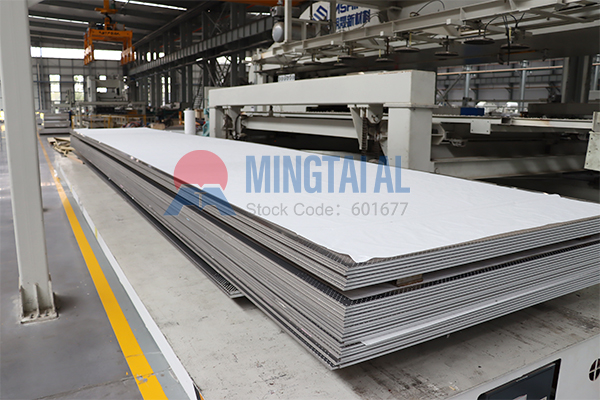
For reliable Shipbuilding Aluminum Sheets 5083, 5086, and 5052, Mingtai Aluminum supplies a complete range of high-quality marine-grade aluminum sheets that comply with GB, ASTM, and major classification society standards. We are committed to providing stable-performance, full-specification material solutions for global shipyards and designers.
Q1: What’s the main difference between 5083 and 5052?
A: Strength and use. 5083 is a high-strength structural alloy for hulls. 5052 offers better formability for interiors and non-structural parts.
Q2: Any special welding requirements?
A: They weld well. Use matching 5xxx series filler wire (e.g., 5183) and control heat input to maintain corrosion resistance.
Q3: How do I confirm suitability for marine use?
A: Look for alloys like 5083/5086 in tempers like H116/H321, and request corrosion test reports or classification society certificates.
Q4: Do you offer custom sizes or small batches?
A: Yes, we provide material cut to your specifications for projects of various scales.