Stock code: 601677
Stock code: 601677
Procuring aluminum plate might seem like a straightforward purchase of raw materials, but it’s actually a decision-making process filled with technical nuances. A seemingly minor oversight can lead to cost overruns, project delays, or even product defects. Whether you are an experienced procurement manager or a project engineer, understanding and avoiding common pitfalls is crucial for ensuring a smooth supply chain and project success. This article reveals the ten most frequent mistakes made when sourcing aluminum plate, helping you make smarter, more economical choices.
Different alloy grades (e.g., 6061, 5052, 3003) have vastly different properties. The wrong choice can result in insufficient strength, poor corrosion resistance, or difficulties in machining. Before purchasing, clearly define the end use: Is it for high-strength structural components (choose 6061-T6), or for marine or automotive applications requiring excellent corrosion resistance (choose 5052 or 5083)? Material selection must be precise based on the application. Consult your supplier’s technical experts for advice.
The lowest unit price often carries the highest risk. Hidden costs include: increased scrap rates from inconsistent quality, production line stoppages due to delayed deliveries, and the resources spent on resolving post-sale disputes. The real metric is the “Total Cost of Ownership.” Evaluate the balance between quality, lead time, service, and price.
Vague verbal descriptions like “smooth” or “bright” are a primary source of later disputes. Specify whether you need a mill finish, brushed finish, or an anodized surface. Providing a physical sample or specifying standards like surface roughness (Ra value) in writing is the only way to ensure received material meets expectations.
Tolerance for thickness and flatness can differ significantly between commercial and precision grades. Plates with inconsistent thickness or warping can cause welding distortion and assembly issues. Clearly specify exact tolerance requirements for all critical dimensions on your drawings or purchase specifications, and confirm the supplier’s equipment can meet them.
Tempers like -O, H18, and T6 directly affect the hardness, strength, and machinability of the plate. For instance, selecting a hard temper like H18 for a part that requires bending will likely lead to cracking. Determine the correct temper by considering the subsequent processing and final performance requirements.
Is the supplier a trader or a manufacturer with large rolling mills? This determines their quality consistency and ability to guarantee thickness ranges. Verify their production qualifications, certifications (e.g., ISO9001), and actual factory scale. Prioritizing a source manufacturer with a complete production chain from melting to sawing is fundamental to risk control.
Discovering unexpectedly high MOQs or lead times of several months can completely disrupt production plans. During initial inquiries, clarify the supplier’s standard capacity, minimum order requirements, and production schedules. Integrate this information into your overall project planning to avoid last-minute surprises.
The MTC is the aluminum plate’s “ID card.” It records core data such as chemical composition and mechanical properties, serving as the basis for quality traceability and incoming inspection. Always require a standard-compliant Mill Test Certificate (MTC/COA) with each batch. Learn to check that key parameters match your order requirements.
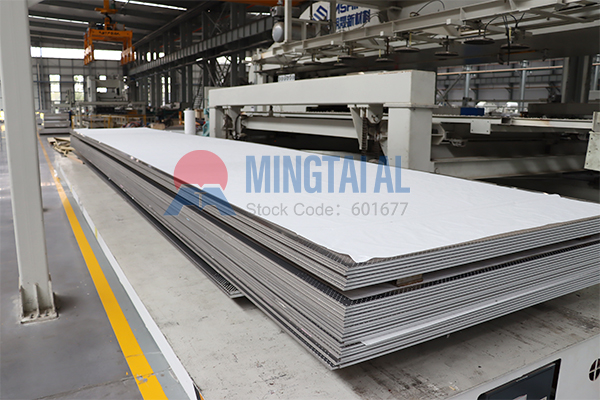
Simple bundled packaging can easily lead to scratches, dented corners, or moisture corrosion during long-distance transport. For precision parts or products with high surface requirements, agree on customized packaging solutions with your supplier, such as protective interleaving paper, sturdy wooden crates, or metal frames.
A sample is the best way to verify if the supplier’s promises match the actual product quality. Always request a sample for physical inspection and even trial processing before bulk ordering. Thoroughly verify its dimensions, surface finish, properties, and suitability for your machining process. This is the final safeguard against large-scale losses.
Successful procurement hinges on strict attention to detail and careful partner selection. As a leading aluminum plate manufacturer in China, Mingtai Aluminum operates advanced, large-scale modern rolling mills and maintains a comprehensive quality control system. We not only supply a full range of standard and custom aluminum alloy plates but are also committed to providing end-to-end professional support—from precise material selection advice and strict quality control to reliable logistics. We help our clients avoid risks at the source and achieve value-driven sourcing aluminum plate.
Q: How can I quickly select the right aluminum plate for my product?
A: Focus on three key factors: your product’s end-use environment (e.g., stress, corrosion), planned fabrication processes (e.g., bending, welding), and critical performance needs (e.g., strength, flatness). Share these details with a technical expert for an accurate recommendation.
Q: How can I preliminarily assess an aluminum plate supplier’s quality level?
A: Evaluate three core areas: 1. Production Capability – Do they own key manufacturing equipment like mills? 2. Documentation – Can they provide proper Mill Test Certificates? 3. Product Verification – Always test a physical sample to confirm quality firsthand.