Stock code: 601677
Stock code: 601677
Against the backdrop of rising global building energy standards and increasing energy costs, the thermal performance of a building’s envelope has become a key measure of its quality. Among various insulation materials, thermal insulation aluminum foil for building plays an indispensable role in reducing energy consumption and enhancing comfort, acting like an efficient layer of “invisible armor” for structures, thanks to its unique reflective insulation principle. This article delves into its core value, applications, and key selection criteria.
Traditional insulation materials (like fiberglass or rock wool) primarily work by inhibiting “heat conduction.” The core mechanism of insulation aluminum foil, however, is “reflecting radiant heat.” Its smooth surface (especially from high-purity alloys) has very low emissivity, allowing it to directly reflect back up to 95% or more of radiant heat (such as scorching summer solar radiation or indoor heat loss in winter). This proactive method of heat blocking enables excellent insulation with a relatively thin layer, making it particularly effective in thermal environments where radiant heat is dominant.
Beyond superior reflectivity, building insulation aluminum foil combines several key advantages:
* Excellent Moisture & Vapor Barrier Properties: It acts as a highly effective vapor barrier, blocking moisture penetration to protect building structures from condensation damage and extending the building’s lifespan.
* Lightweight, Strong, Durable, and Stable: High-quality aluminum foil is chemically very stable. It does not age, become brittle, or corrode easily, offering a service life that matches the building itself.
* Direct Link to Eco-Friendliness and Energy Savings: By significantly reducing the energy needed for air conditioning and heating, it directly lowers carbon emissions, serving as an effective means to achieve green building certifications.
Insulation aluminum foil is applied throughout critical parts of a building:
Selecting the right insulation aluminum foil is prerequisite to achieving the designed performance. Decision-makers should focus on these two aspects:
* Alloy and Purity: Alloy grades like 8011 and 8079 are recommended. High purity ensures high reflectivity and stable metallic properties, which are fundamental to long-term performance.
* Thickness and Mechanical Properties: Common thicknesses range from 6.5 to 20 microns. An adequate thickness (e.g., 10 microns and above) provides better tensile strength and elongation, ensuring resistance to tearing during composite processing and installation.
Aluminum foil is often laminated with other materials to suit different needs:
* Single / Double-Sided Foil: Double-sided reflective material is suitable for spaces requiring bi-directional insulation.
* Choice of Laminate Substrate: Lamination with EVA/PE enhances flexibility and adhesion; with scrim reinforcement drastically improves puncture and tear resistance for demanding applications like roofing; with kraft paper offers a more economical option for certain interior vapor barriers.
Selection Strategy: Identify your specific application environment (e.g., roof, wall, exposed or not), mechanical requirements, fire rating, and budget to match the most suitable aluminum foil composite structure.
A crucial construction principle must be remembered: The reflective insulation layer must have a sealed air gap of at least 25mm between it and any adjacent material. The reflective function works optimally only when facing an air space. Direct, tight contact with other materials will greatly reduce its efficacy. Also, seams should be sealed with specialized aluminum foil tape to form a continuous, complete barrier.
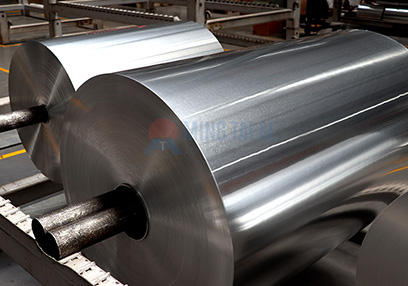
For over two decades, Mingtai Aluminum has been dedicated to providing high-performance raw material aluminum foil substrates for the global building insulation industry. We understand that high-quality, consistent raw foil is the first essential guarantee for downstream manufacturers to produce efficient insulation products. Our specialized aluminum foil for building insulation, known for its excellent purity, consistent gauge, and superior mechanical properties, serves as the trusted starting point for many reputable brands. Choosing a reliable raw material is the first step in building a superior insulation product.
Q: Which is better, insulation aluminum foil or foam board insulation?
A: They work on different principles and are often used complementarily. Foam primarily resists heat conduction, while aluminum foil mainly reflects radiant heat. In hot or cold climates, using them together (e.g., foam boards with foil facers) creates a more efficient composite insulation system.
Q: When purchasing finished insulation aluminum foil products, what should I ask the supplier about first?
A: Prioritize inquiring about the alloy grade, base thickness, and reflectivity of the aluminum foil substrate used. These core raw material parameters directly determine the long-term performance baseline of the finished product and reflect the supplier’s quality control.
Q: Is the aluminum foil insulation layer safe in a fire?
A: Aluminum foil itself has a high melting point and is non-combustible. Its fire safety primarily depends on the fire rating of the materials it is laminated with (e.g., EVA, PE). Ensure the overall fire performance of the composite product complies with local building codes.