Stock code: 601677
Stock code: 601677
When comparing 3003 Aluminum vs 1100 Aluminum, both are non‑heat‑treatable alloys with similar appearance and good workability. Yet they differ significantly in strength, electrical conductivity, and the applications they serve. Understanding these distinctions helps you select the right material for your specific project.
– 1100 Aluminum is commercially pure, with an aluminium content of at least 99.00%. Apart from small amounts of copper (0.05%‑0.20%) and traces of iron and silicon, it contains almost no other alloying elements.
– 3003 Aluminum is an aluminium‑manganese alloy, containing about 1.0%‑1.5% manganese as its main alloying addition. It also includes limited copper (0.05%‑0.20%) and no more than 0.7% iron and 0.6% silicon.
The key difference in one sentence:
1100 prioritises purity; 3003 prioritises strength – that 1%+ of manganese boosts its strength by roughly 20% over 1100.
In the H14 temper, typical mechanical values are:
|
Property |
3003‑H14 |
1100‑H14 |
|
Tensile Strength |
~152 MPa |
~124 MPa |
|
Yield Strength |
~145 MPa |
~97 MPa |
|
Elongation |
~8%‑16% |
~3%‑5% |
|
Brinell Hardness |
~40 HB |
~44 HB |
What this means in practice:
– 3003 offers about 22% higher tensile strength and 49% higher yield strength than 1100.
– This makes 3003 far more resistant to deformation under load – a critical advantage for building facades, structural panels, or load‑bearing components.
– 1100 has slightly lower hardness but a wider elongation range (1.1%‑32%), giving it more flexibility for complex forming operations.
– Density – Both alloys are very close: 3003 at ~2.8 g/cm³, 1100 at ~2.7 g/cm³. Their weight‑saving benefits are nearly identical.
– Electrical Conductivity – This is one of the biggest differentiators. 1100 achieves ~59% IACS, while 3003 is about 44% IACS. For heat exchangers, radiators, or electrical conductors, 1100 is the clear choice.
– Corrosion Resistance – Both perform well in most environments. However, 3003’s manganese content gives it slightly better rust‑prevention properties in humid or corrosive settings. 1100, thanks to its high purity, also offers excellent resistance, especially in atmospheric and fresh‑water conditions.
– Formability – Both alloys are highly formable. 1100, being softer and purer, performs slightly better in deep‑drawing and intricate stamping operations. 3003 is also widely used for forming and is among the most versatile aluminium alloys available.
– Weldability – Both have excellent weldability and can be joined by all common commercial welding methods.
– Machinability – Both are rated as fair for machining.
*Surface treatment and further processing are not covered in this article.*
3003 Aluminum is often chosen for:
– Building & construction – roofing, siding, curtain walls, corrugated sheets
– Chemical and food industries – tanks, piping, chemical equipment
– Transportation – auto body panels, truck trailers
– General manufacturing – stamped parts, battery housings, pressure vessels
1100 Aluminum is preferred for:
– Chemical and food processing equipment
– Heat exchangers, radiators, and fin stock
– Electrical conductors, cable sheathing
– Deep‑drawn products, cookware, nameplates, reflectors
Rule of thumb: Need strength? → Choose 3003. Need high conductivity or complex deep‑drawing? → Choose 1100.
1100 typically has a slightly lower raw‑material cost because it contains fewer alloying elements. However, the price gap is not large. When deciding, look beyond the unit price – consider overall service life and performance.
|
Consideration |
Recommended Choice |
|
Higher strength and deformation resistance |
3003 |
|
Complex deep‑drawing or precision forming |
1100 |
|
Electrical or thermal conductivity required |
1100 |
|
Humid or corrosive environment |
3003 |
|
Budget‑sensitive, no high‑strength need |
1100 |
|
General sheet metal or structural parts |
3003 |
Both 3003 and 1100 are excellent aluminium materials – 3003 trades purity for higher strength, while 1100 offers superior conductivity and formability. Ultimately, the decision between 3003 Aluminum vs 1100 Aluminum comes down to what your project truly demands.
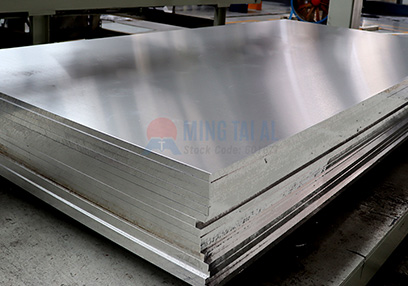
Mingtai Aluminum supplies high‑quality 3003 and 1100 aluminium sheet coils. Feel free to reach out for more information.
Q1: Which is stronger, 3003 or 1100?
A: 3003 is about 20% stronger than 1100 – in H14 temper, 3003 has ~152 MPa tensile strength vs. ~124 MPa for 1100.
Q2: Which has better corrosion resistance?
A: Both are excellent, but 3003’s manganese content gives it slightly better rust resistance in humid or corrosive environments.
Q3: Is 3003 more expensive than 1100?
A: 3003 is usually a little pricier, but the difference is small – focus on overall performance and lifespan rather than unit cost alone.
Q4: Which is better for deep‑drawing applications?
A: 1100 is softer and more ductile, so it performs better in complex deep‑drawing; 3003 is stronger but slightly less formable.
Q5: Which alloy welds better?
A: Both have excellent weldability and can be welded using all common commercial methods.