Stock code: 601677
Stock code: 601677
In aluminium procurement, the 5000 series aluminium family has always been the preferred choice for shipbuilding, pressure vessels, and transportation industries. This aluminium-magnesium alloy family, with its unique combination of properties, has become an indispensable material in numerous industrial sectors. This article provides a detailed analysis of the core characteristics of 5000 series alloys, guidance on mainstream grade selection, and key procurement considerations to help you make more informed material decisions.
5000 series aluminium refers to alloys where magnesium (Mg) is the primary alloying element, typically containing between 2% and 5% magnesium. This alloy family has three core characteristics:
– Non-heat-treatable: Strength in the 5000 series is achieved through work hardening, not heat treatment. This means the final performance is closely related to the processing method.
– Excellent corrosion resistance: These alloys show outstanding resistance to corrosion, particularly from seawater and industrial atmospheres. This is the fundamental reason they are called “marine grade alloys”.
– Good weldability: Highly suitable for MIG or TIG welding, making them ideal materials for manufacturing hulls, pressure vessels, and vehicle bodies.
The 5000 series family includes several commonly used grades, each with different characteristics and applications. Below is a comparison of the grades most frequently searched by B2B buyers:
|
Grade |
Magnesium Content |
Core Characteristics |
Typical Applications |
|
About 2.5% |
Balanced strength and formability, versatile |
Fuel tanks, sheet metal parts, appliance housings |
|
|
About 4.5% |
Highest strength, excellent low-temperature toughness |
Hulls, LNG storage tanks, submarines |
|
|
About 3% |
Good formability and weldability |
Truck bodies, automotive structural parts |
|
|
5086 |
About 4% |
Performance between 5052 and 5083 |
Ship superstructures |
– If you need a general-purpose material, 5052 is an economical and practical choice.
– For seawater environments or low-temperature conditions, 5083 is the industry standard.
– In the automotive and transportation sectors, 5754 is the most widely used.
5000 series aluminium alloys have a very wide range of applications, mainly concentrated in the following areas:
This is the most traditional application field for the 5000 series. Hulls, decks, bulkheads, and offshore platforms extensively use 5083 and 5086 alloys. These materials withstand long-term seawater corrosion while maintaining good structural strength.
For tank trucks transporting chemicals, petroleum, or food products, the 5000 series is the preferred material. Alloy 5454 is commonly used for tank bodies, while 5083 is widely applied in low-temperature pressure vessels.
In truck bodies, bus structural components, and trailer panels, the use of 5754 and 5052 is increasingly common. Driven by the lightweighting trend, these materials help vehicles reduce dead weight and improve payload efficiency.
With the rapid growth of the electric vehicle industry, 5052 and 5754 are extensively used for power battery casings and trays. Their good thermal conductivity, corrosion resistance, and processing properties make them the preferred materials for battery packaging.
As a professional buyer, the following points require special attention:
– Confirm Standards and Mill Certificates
When purchasing, always require suppliers to provide mill test certificates conforming to standards like ASTM B209 or EN 485-2. The chemical composition (especially magnesium content) and mechanical property data on these certificates are key criteria for determining whether the material is qualified.
– Accurately Specify the Temper
The O temper (annealed) is suitable for deep drawing processes, while H116/H321 are suitable for marine environments. Accurately specifying the required temper when ordering can prevent mismatches between material and process.
– Choose a Stable and Reliable Supplier
Alloy control and production stability for 5000 series aluminium directly affect downstream processing results. Choosing an experienced supplier ensures consistent quality between batches and reduces production variables.
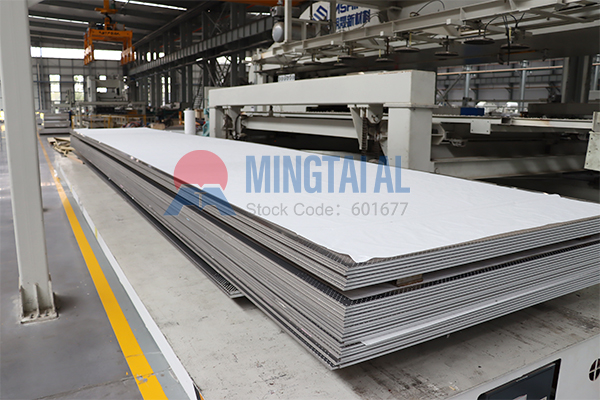
Mingtai Aluminum has specialized in 5000 series aluminium for many years. We offer a full range of specifications for mainstream grades like 5052, 5083, and 5754, from thin sheets to medium and thick plates. Our strict quality control system ensures every batch of products meets international standards, providing the most reliable base material for your subsequent processes like welding and forming. Please contact us to discuss your specific grade and size requirements.
5052 contains about 2.5% magnesium for general fabrication. 5083 contains up to 4.7% magnesium, offering higher strength for marine and cryogenic use.
Yes, it offers excellent weldability. Use 5183 filler wire for 5083 and 5356 for 5052 or 5754.
No. They are strengthened by work hardening (H tempers), unlike the heat-treatable 6000 series.
5083, 5086, and 5754. They offer excellent seawater resistance and are certified for shipbuilding.
Yes. 5754 and 5052 are widely used for body panels and EV battery enclosures.