Stock code: 601677
Stock code: 601677
Reliable outer protection layers directly determine the operational safety and lifespan of power and communication cables. To withstand underground mechanical pressures, moisture erosion, and complex outdoor laying conditions, high-performance aluminum coil for cable armouring and wrapping has become an indispensable core material in modern cable engineering.
Integrating aluminum into protective outer structures brings multiple functional advantages, making it essential to understand key material selection factors before starting production.
Modern power infrastructure demands lightweight, durable shielding to maintain long-term operational reliability. Utilizing aluminum materials across outer layers delivers distinct protective performance:
* Mechanical Defense: Functioning as an armouring layer, it effectively resists external crushing, mechanical impacts, and underground rodent risks to keep inner insulation intact.
* Moisture Sealing and Shielding: Acting as a wrapping layer, the aluminum strip tightly adheres to the cable core to provide exceptional moisture isolation and electromagnetic shielding.
* Weight Reduction and Cost Efficiency: Compared to traditional heavy metallic shields, aluminum significantly reduces overall cable weight, facilitating faster transportation and easier field installation.
Evaluating specific material grades and mechanical properties serves as the primary gateway to ensuring smooth cable forming and structural integrity:
* 1060 / 1100 Industrial Pure Aluminum: Delivering outstanding electrical conductivity, exceptional ductility, and strong corrosion resistance, these grades represent the standard choice for cable insulation wrapping and mechanical protection.
* Optimal Elongation Requirements: During high-speed wrapping and bending operations, the aluminum strip must maintain proper elongation to bend smoothly around cable cores without cracking or fracturing.
> Selection Tip: Matching appropriate mechanical performance parameters to specific cable structures—whether inner armouring or outer shielding—forms the foundation for continuous automated production.
Beyond material composition, physical dimensions and processing accuracy directly impact production yield rates across manufacturing facilities:
* Width Tolerance and Straightness: High-precision slitting dimensions ensure stable movement through high-speed forming equipment, preventing deviations or uneven overlapping during winding.
* Burr-Free Edges: Smooth, clean-cut edges are vital to completely eliminate the risk of puncturing inner cable insulation layers during high-speed winding processes.
High-quality cable protection relies heavily on stable, precision-engineered substrate inputs. Consistent thickness tolerances, flat surface profiles, and uniform internal grain structures directly influence production efficiency.
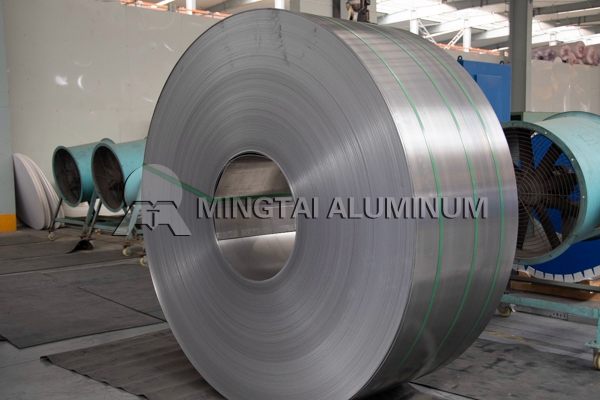
As a primary aluminum manufacturer, we focus entirely on supplying top-tier, raw mill-finish aluminum products, including the specialized aluminum coil for cable armouring and wrapping.
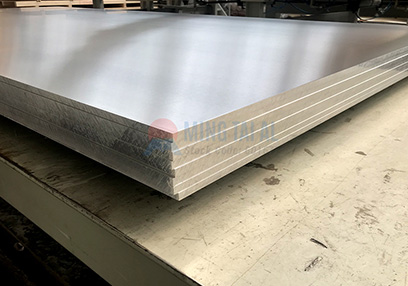
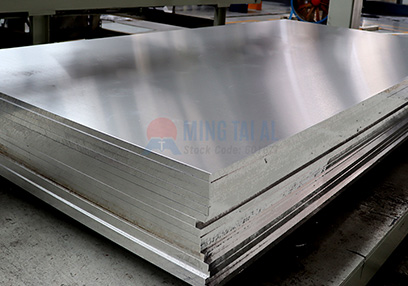
> Note: We directly supply raw mill-finish aluminum coils and strips to cable manufacturing facilities, without offering secondary surface treatments (such as coatings or anodizing) or secondary processing services. Precise thickness tolerances and clean slitting edges provide a solid foundation for high-speed manufacturing lines.
Selecting the correct substrate specification establishes the foundation for durable, high-performing cable products. Aligning material grades and dimensions with actual operating conditions drives maximum efficiency across automated production lines.
Looking for reliable raw aluminum substrates for cable lines? Mingtai Aluminum provides high-precision, custom-specified mill-finish aluminum coils and strips to fully support large-scale manufacturing needs.
Q: What aluminum alloy is most commonly used for cable armouring?
A: Pure aluminum grades like 1060 and 1100 are widely chosen for their exceptional formability and corrosion resistance.
Q: Why is proper elongation essential for cable wrapping applications?
A: Adequate elongation ensures that the aluminum strip bends tightly around the cable core without breaking during high-speed winding.
Q: How do edge burrs affect cable manufacturing operations?
A: Smooth, burr-free edges prevent the aluminum strip from scratching or puncturing the internal insulation layers during processing.
Q: Do you provide surface-treated or coated aluminum coils for cable production?
A: No, operations focus strictly on supplying raw mill-finish aluminum coils and strips without surface treatments or secondary processing.
Q: Can raw mill-finish aluminum strips feed directly into continuous cable wrapping lines?
A: Yes, these mill-finish strips offer excellent flatness and uniform mechanical properties suitable for high-speed continuous forming.