Stock code: 601677
Stock code: 601677
In chemical equipment manufacturing and liquid transport, selecting the right aluminum sheet for chemical storage tanks is the foundational step to ensuring long-term operational safety. Compared with traditional materials, 5-series aluminum-magnesium alloys have become the top choice for chemical storage tanks and road tankers due to their exceptional corrosion resistance, lightweight structure, and excellent weldability.
When evaluating common market grades, deciding between 5052 and 5454 often comes down to specific operating conditions. This guide breaks down practical application scenarios to help you select the exact alloy plate for your project needs.
Chemical storage vessels endure harsh media contact and demanding ambient environments, making material durability paramount. Industrial builders prefer aluminum alloys for three core operational benefits:
* Self-Healing Corrosion Barrier: When exposed to air or specific media, aluminum naturally forms a dense protective oxide film that inherently resists organic acids, ammonia water, nitric acid, and various fuels.
* Superior Welding & Formability: Excellent ductility and joinability streamline large-scale plate rolling, dished head forming, and pipe joint welding.
* Significant Weight Reduction: Lowering structural weight in mobile tank trailers and tall vertical tanks boosts transport efficiency and cuts long-term maintenance costs.
> Note on Supply Condition:
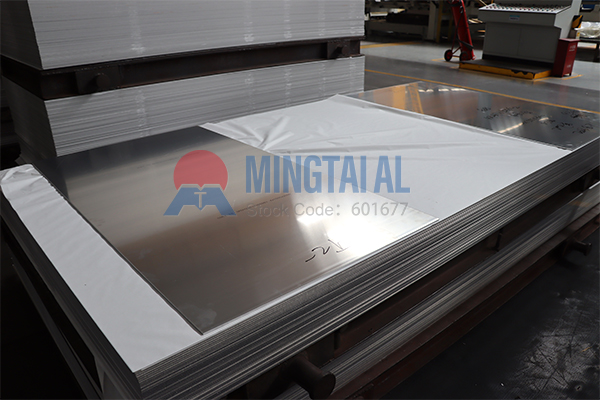
> To give your facility total flexibility for custom welding, cutting, and fabrication according to your specific tank codes, we supply standard mill-finish aluminum sheets and coils without secondary surface processing or finish treatments.
While both 5052 and 5454 belong to the non-heat-treatable Al-Mg family, their chemical compositions create distinct temperature and strength characteristics.
* Key Properties: Moderate strength, outstanding cold formability, and reliable resistance to atmospheric and aquatic corrosion.
* Best Applications:
1. Ambient-temperature industrial water treatment tanks
2. Fuel, diesel, and lubricant storage vessels
3. General organic chemical storage containers
* Key Properties: Higher magnesium content delivers higher tensile strength. Crucially, it maintains excellent resistance to stress corrosion cracking (SCC) at elevated operating temperatures.
* Best Applications:
1. Chemical liquid tanks operating in warm or heated environments
2. Heavy-duty chemical transport tank trailers
3. Marine-environment or high-salt-spray industrial storage facilities
For large vertical tanks and tank trailers, the total length of weld seams directly influences structural safety and production efficiency:
1. Reduced Leakage Risks: Utilizing extra-wide plates reduces both circumferential and longitudinal welds, minimizing potential leak points across the vessel shell.
2. Lower Labor & Inspection Costs: Fewer seams mean shorter welding hours and significantly less non-destructive testing (NDT) work, such as X-ray or ultrasonic inspection.
Precision in dimensions directly dictates final product quality during plate rolling and automated welding:
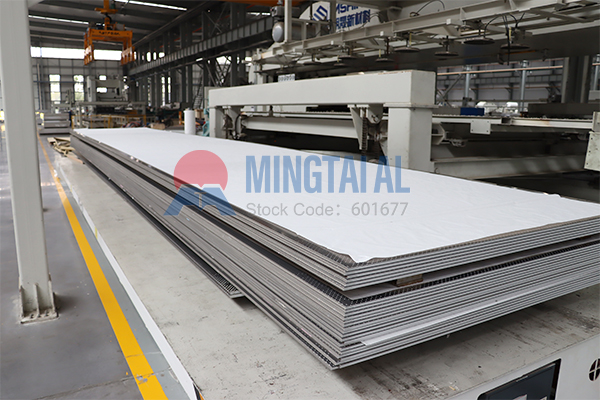
* Superior Flatness: Ensures uniform force distribution in plate bending machines, preventing localized bulging or uneven curvature to maintain tank roundness.
* Tight Thickness Tolerances: Guarantees consistent joint thickness during butt welding, preventing burn-through or incomplete penetration issues.
Once you have selected your alloy, verifying these logistical and technical factors will ensure a seamless procurement process:
* Media Compatibility: Confirm that the stored chemical’s pH level, concentration, and operating temperature fall within safe aluminum limits.
* Standards & Compliance: Ensure sheet specifications comply with international standards such as ASTM B209 or EN 485.
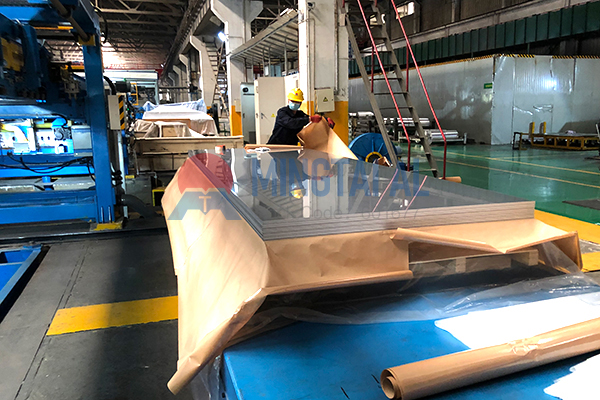
* Moisture-Proof Packaging: Because ocean transit takes time, mill-finish plates require robust waterproof paper wrapping and fumigated wooden pallets to arrive without surface oxidation stains.
Q: Can 5052 and 5454 aluminum sheets store all types of industrial chemicals?
A: No, while they resist many organic chemicals, fuels, and water, compatibility depends on specific chemical concentration, pH level, and operating temperature.
Q: Which alloy should be selected for storage tanks operating at elevated temperatures?
A: Alloy 5454 is recommended because it retains mechanical strength and resists stress corrosion cracking in continuous medium-to-high temperature environments.
Q: What welding methods are suitable for 5052 and 5454 aluminum alloys?
A: Both alloys offer excellent weldability and are typically joined using MIG or TIG welding processes.
Q: Can mill-finish aluminum sheets be welded directly upon delivery?
A: Yes, mill-finish plates can be welded directly after basic degreasing and cleaning of oxide films around the weld seam area.
Q: What should be considered when ordering extra-wide or thick aluminum plates?
A: You need to confirm the mill’s maximum rolling width alongside shipping container dimensions to ensure safe loading and transport.
If you are sourcing high-quality, mill-finish 5052 or 5454 aluminum sheet for chemical storage tanks, contact the Mingtai Aluminum team today to receive direct factory pricing and expert export service.