Stock code: 601677
Stock code: 601677
The term “aluminum foil for cable shielding” is often briefly noted on cable project specifications. For engineers and buyers, however, it represents a series of technical and cost-related decisions that require alignment. Poor material selection can lead to minor signal fluctuations or major project rework. This article cuts through generalizations to address the key decision points in real-world applications, providing a clear path for reliable project execution.
Shielding is first an electrical challenge, then a material one. The aluminum foil used in cables is a functional material where continuous conductivity is paramount. Common packaging foil or low-purity foils may have inconsistent resistance due to impurities and surface conditions, creating potential shielding “gaps.”
Professional selection begins with the alloy grade. For communication data cables requiring high shielding effectiveness (e.g., Cat.6A and above), high-purity foils like 1060/1070 (aluminum content ≥99.6%) are preferred for their stable conductivity. In applications demanding higher tensile strength for complex installation environments, specially annealed 8011 aluminum alloy foil offers a better balance between conductivity and mechanical properties. The starting point for any decision should be the cable’s design standard (e.g., IEC, UL), not just the material name.
Purchasers often focus on thickness (e.g., 0.015mm) to control costs, while engineers focus on it to ensure performance. The true common ground should be thickness consistency. The precision of the rolling process directly determines the thickness variation along the length and width of the foil roll.
In high-speed cable serving operations, inconsistent thickness leads to two major hidden costs: first, it creates weak spots in shielding performance, becoming points of EMI leakage; second, it increases the risk of breakage under tension, causing frequent production line stoppages for splicing. Therefore, technical agreements should specify not only the nominal thickness but also the thickness tolerance (e.g., ±0.001mm) and the supplier’s process control capability, which is more valuable than debating thickness alone.
Aluminum foil is rarely used as a standalone shield. Its performance is highly dependent on the overall cable design. Engineers must communicate the application clearly with the material supplier:
* As the Sole Shield: Used in single-shield cables, it requires a sufficient overlap rate (typically >25%) and a plan for grounding termination.
* As Part of a Composite Shield: In “foil + braid” structures, the foil handles mid-to-high frequency shielding. Its surface finish can affect the contact resistance with the braid, influencing overall grounding effectiveness.
* As Pair Shielding: In high-speed data cables, the foil must work precisely with the pair’s twist lay. Here, the foil’s flexibility (elongation) and fatigue resistance are crucial to avoid cracks from repeated bending.
A cable manufacturer’s expertise lies in cabling technology, not foil processing. Choosing foil that arrives with the required surface finish, mechanical properties, and slit quality is key to smooth production. This means the supplier should provide:
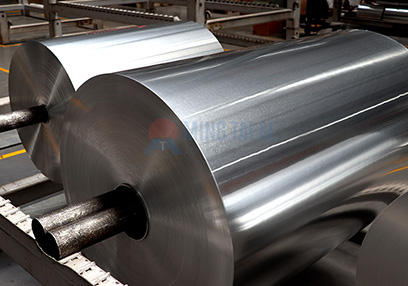
* Mother coils in widths ready for direct slitting on your machinery, minimizing reprocessing.
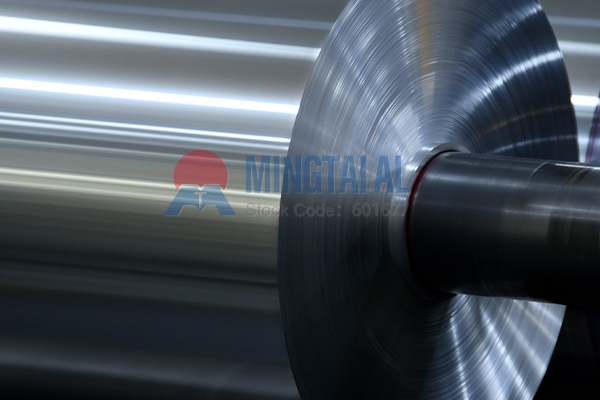
* A uniform, controlled rolled surface (one bright, one matte side) to ensure consistent bonding strength with polyester film or stable friction during serving.
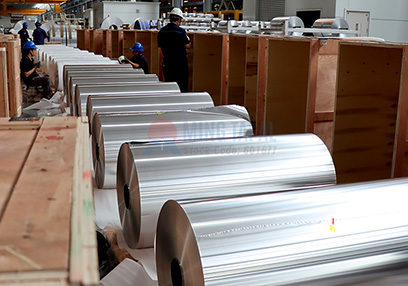
* Secure winding and packaging to guarantee coils arrive undamaged, without loose layers, and ready for immediate use.
Procuring foil as a standardized, high-performance “industrial component” rather than a raw material needing reprocessing significantly reduces production line variability.
At the project’s outset, a qualified foil supplier should provide baseline performance data for different cable constructions (e.g., coaxial, data, power), such as typical conductivity ranges, tensile strength, and recommended bend radii. This aids engineers in more accurate design-stage simulation and evaluation.
More importantly, the supplier’s consistent quality and batch traceability are the bedrock for stable performance in mass-produced cables. This requires a supplier with integrated capabilities—from casting and rolling to slitting—coupled with a robust quality control system.
Mingtai Aluminum specializes in providing high-performance aluminum foil substrates for the cable industry. We supply 1060, 1070, and 8011 alloy foils that meet stringent industry standards. Through our stable rolling processes, we ensure consistent thickness, mechanical properties, and surface finish in every coil. Let your shielding design and production begin with a foundation of reliable aluminum foil for cable shielding.
Q: How is grounding typically handled for foil-shielded cables?
A: Using plain foil alone makes grounding difficult. The standard practice is to use aluminum-polymer laminate tape (composite tape), which incorporates a longitudinally placed metallic drain wire (copper or aluminum) for reliable grounding. This is part of the cable design, and the composite tape supplier’s specifications should be confirmed during material selection.
Q: How do I verify if the foil’s shielding effectiveness meets requirements?
A: The Shielding Effectiveness (SE) of the raw material requires lab testing with specialized fixtures. A more practical project approach is to: request the supplier’s certified material conductivity test report, and based on this data, have the cable designer verify the final product’s shielding class through standard cable sample tests (e.g., the triaxial method).