Stock code: 601677
Stock code: 601677
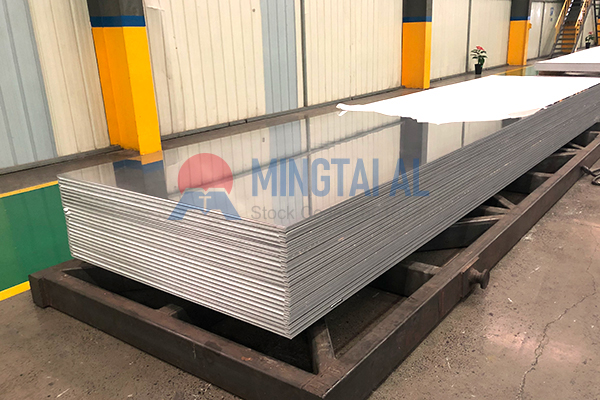
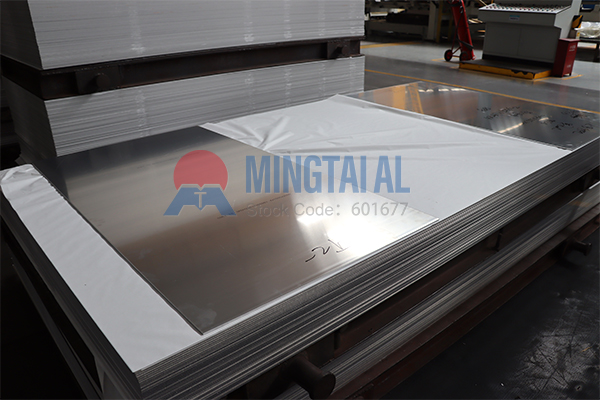
Aluminum tanker trucks have become the preferred choice for transporting fuel and chemical liquids across modern fleets. The core advantage is straightforward: reduced vehicle weight translates directly into higher legal payload and lower operating costs per mile. When specifying aluminum plate for tanker truck bodies, the alloy and temper you select determine how well the tank performs over its service life. Among the available options, 5182 aluminum plate in H111 temper has emerged as the benchmark material for both tank shells and dished heads.
Switching from carbon steel to aluminum changes the economics of liquid transport in several measurable ways.
– Weight reduction at the source. Aluminum weighs roughly one-third as much as steel for the same volume. A tanker built from aluminum plate sheds significant tare weight, which means more of the legal gross vehicle weight can be used for cargo rather than the vehicle itself.
– Fuel and tire savings. A lighter vehicle requires less energy to accelerate and maintain speed. Over a long-haul route, this shows up as reduced fuel consumption and slower tire wear, both of which feed directly into a lower cost per ton of cargo delivered.
– Corrosion resistance without coatings. Aluminum naturally forms a dense oxide layer on its surface. This passive film resists rust and pitting, so tank interiors handling gasoline, diesel, or light chemicals generally do not need additional protective linings. The same oxide layer also resists salt spray on exterior surfaces, extending service life in coastal areas and winter driving conditions.
These factors combine to make aluminum tanks a practical choice for operations where payload and uptime matter more than the lowest possible upfront material cost.
5182 is a member of the 5xxx series of aluminum-magnesium alloys. Its magnesium content typically ranges from 4.0% to 5.0%, with manganese added to refine the grain structure. This composition gives the alloy a balance of strength, formability, and weldability that is well suited to the demands of a liquid transport tank.
The H111 temper is produced by a light amount of strain hardening followed by partial annealing. The result is a material that sits in a practical middle ground:
– It is strong enough to meet tank design pressure requirements without being so hard that it cracks during forming.
– It retains enough ductility to be rolled into cylindrical shells, pressed into dished heads, and bent into baffles without introducing micro-cracks that could become leak paths later.
– It resists the fatigue caused by repeated loading from liquid sloshing during starts, stops, and road irregularities.
For tanker applications, plate thickness commonly falls in the 4 mm to 10 mm range, depending on the compartment volume and the pressure rating the design calls for.
A tanker on the road is never static. Liquid cargo shifts during braking and cornering, and the tank shell absorbs those repeated impact loads. 5182-H111 handles this by offering a stable combination of tensile strength, yield strength, and elongation. It resists the localized bulging and deformation that can occur when a tank is subjected to cyclic pressure and vibration, which helps the tank maintain its designed geometry.
Beyond forming and mechanical strength, two properties determine how well a tanker plate performs in service: weld integrity and corrosion resistance.
Tank shells are welded structures, and welds are the most likely location for leaks to develop. 5182 responds well to both MIG and TIG welding, the two processes most commonly used in tank fabrication. The alloy has a low susceptibility to weld cracking, and the weld beads tend to form with good profile and penetration. Post-weld strength retention is favorable, and the welds can pass the radiographic or dye-penetrant inspection standards required for hazardous liquid transport.
The magnesium in 5182 contributes to strong resistance against a range of media, including gasoline, diesel, and light chemical feedstocks. The oxide film is stable in these environments, so internal surfaces resist pitting and staining. Exterior surfaces hold up against road salts and industrial environments. This corrosion behavior reduces the need for maintenance coatings and helps preserve product purity by minimizing the risk of tank material contaminating the cargo.
Standard aluminum plate is often supplied in widths up to about 1500 mm. Building a tanker shell from that material means joining multiple narrow plates along the length of the shell, which creates a series of longitudinal weld seams. Each seam is a potential starting point for a leak, and each one adds fabrication time and inspection burden.
Ultra-wide 5182 plate changes that equation. When the plate width is close to the flat width required to form the tank shell—commonly in the 2000 mm to 2500 mm range for many tanker designs—the number of longitudinal seams drops substantially. Fewer seams translate into:
– Lower probability of weld defects and leakage.
– Better roundness and dimensional consistency in the rolled shell, because the shell is formed from a single piece rather than an assembly of narrower strips.
– Reduced welding labor and inspection time in the fabrication shop.
For tank manufacturers, the value proposition is not just a better tank. It is also a more efficient production process with fewer steps that can introduce variability.
While 5182-H111 is a forgiving material in many respects, a few practical points are worth keeping in mind during design and fabrication.
1. Match the alloy to the cargo. 5182 is well suited to petroleum products and light, non-aggressive chemicals. For more corrosive service, other 5xxx alloys may be more appropriate, and the tank design should reflect the intended cargoes.
2. Specify H111 for the forming operations. The temper provides the combination of strength and ductility needed for rolling, pressing, and bending without sacrificing structural performance.
3. Inspect incoming plate for internal soundness. Ultrasonic testing of the plate before fabrication helps catch any internal discontinuities that could compromise the finished tank.
4. Control welding parameters. Heat input, travel speed, and shielding gas flow all influence the weld heat-affected zone. Staying within qualified procedures helps preserve the corrosion resistance and mechanical properties of the base metal adjacent to the weld.
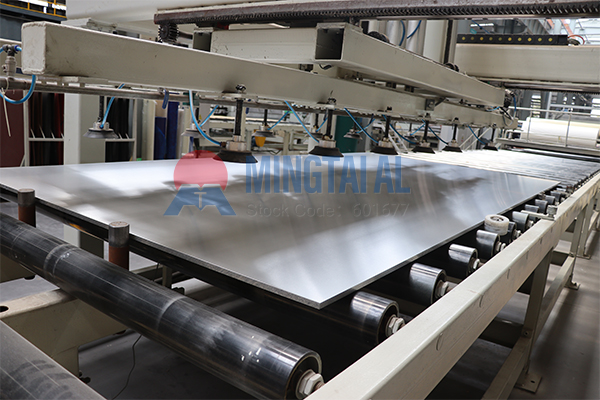
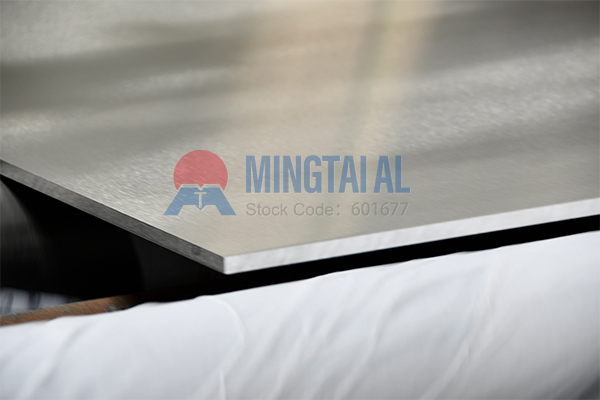
5. Pay attention to flatness and thickness tolerance on wide plate. Ultra-wide material demands stable rolling practices. Plate with good flatness and consistent thickness rolls more predictably and helps avoid distortion during shell forming.
Q: Can 5182 aluminum plate be used for tank heads as well as shells?
A: Yes, its H111 temper offers the ductility needed for dished heads while maintaining consistent corrosion and welding performance.
Q: Does ultra-wide 5182 plate eliminate all longitudinal welds?
A: It reduces their number significantly by allowing wider sections to be rolled from a single plate, though the exact count depends on tank diameter and plate width.
Q: Is 5182 suitable for transporting all chemical liquids?
A: It is well matched to gasoline, diesel, and light petroleum products, while aggressive chemicals require verifying cargo compatibility against corrosion data first.
Mingtai Aluminum produces 5182 aluminum plate for tanker truck bodies, with ultra-wide options that help reduce weld seams and improve tank integrity. For specifications or a quotation on Aluminum Plate for Tanker Truck Bodies, contact our team.