Stock code: 601677
Stock code: 601677
Transformers and capacitors generate leakage flux and electromagnetic interference during operation. Without shielding, this can increase stray losses and affect nearby equipment. Aluminum foil, with its high conductivity and flexibility, is a common material for electromagnetic shielding. The effectiveness of that shielding depends first on foil purity and consistency. This is where transformer shielding aluminum foil selection deserves the closest attention.
Aluminum foil’s shielding ability comes from its conductivity. When electromagnetic waves meet a highly conductive material, eddy currents form on the surface. These eddy currents create a magnetic field opposite to the incoming field, canceling part of it.
The higher the purity, the fewer the impurities, the more stable the conductivity, and the more predictable the shielding performance.
1235 aluminum foil is a 1xxx series pure aluminum foil with low impurity content and stable conductivity. If impurities are not properly controlled, they can become weak points in the shielding layer, reducing local conductivity and creating paths for electromagnetic leakage.
High purity also offers another benefit: better corrosion resistance. In transformer oil or capacitor packaging environments, it resists oxidation and degradation over long periods.
Some may ask: Is 1060 aluminum foil better because it has higher purity?
1060 does have higher aluminum content and theoretically better conductivity. But 1235 offers a more balanced combination of purity, cost, and processing performance. Its flexibility and winding adaptability are often better suited to actual production.
The goal of aluminum foil shielding on transformer tank walls is clear: reduce stray losses caused by leakage flux in the steel tank wall. Once the foil is applied, the eddy current cancellation effect confines the electromagnetic field within the shielding layer, lowering losses.
– Shielding continuity determines performance. Pinholes in the foil are the biggest risk. Even a tiny pinhole can become a point of electromagnetic leakage. 1235 aluminum foil is produced with strict pinhole control, a clean surface, and no oil contamination to ensure a continuous, complete shielding layer.
– Flexibility affects conformity. Transformer tank walls have complex shapes, and the foil must fit tightly against curved surfaces without gaps. In the annealed state, 1235 aluminum foil is soft and resists breaking or wrinkling during winding and application.
– Thickness choice directly affects shielding effectiveness. Thicker foil reflects and absorbs electromagnetic waves more effectively. However, too much thickness can reduce flexibility and processing adaptability. 1235 aluminum foil thickness can be customized for specific applications.
If the project environment has high humidity or corrosive media, 5005 aluminum-magnesium alloy offers better corrosion resistance than 1235 and is worth considering as an alternative. But for pure electromagnetic shielding, 1235 remains the more economical and effective choice.
Aluminum foil in capacitors plays two roles:
– Electrode
– Electromagnetic shielding layer
In electromagnetic shielding capacitor designs, the foil shielding layer is placed on the inner wall of the capacitor housing. It prevents the capacitor from radiating electromagnetic interference to nearby circuits and blocks external interference from entering.
When selecting foil, the two roles require different focus:
– Electrode applications: Focus on surface condition and thickness uniformity, which directly affect capacitance stability.
– Shielding applications: Focus more on conductivity and shielding continuity, requiring a surface free of oil and oxides.
1235 aluminum foil has a proven track record in both applications. Its high purity and uniform internal structure support stable electrical performance.
When evaluating aluminum foil for transformer or capacitor shielding, the following dimensions are worth including in the technical review process:
1. Alloy and purity: Confirm that aluminum content meets shielding performance requirements and that impurity elements are controlled within reasonable limits.
2. Thickness and tolerance: Thickness consistency matters more than the nominal value itself. Variation can cause uneven shielding performance and may lead to breakage during high-speed winding.
3. Pinhole control: Pinholes are a critical defect in shielding layers. Confirm the supplier’s pinhole inspection standards and actual control level.
4. Surface condition: The surface should be clean and free of oil, which is essential for continuous conductivity in the shielding layer.
5. Mechanical properties: Elongation and tensile strength must match downstream processing, especially high-speed winding and lamination.
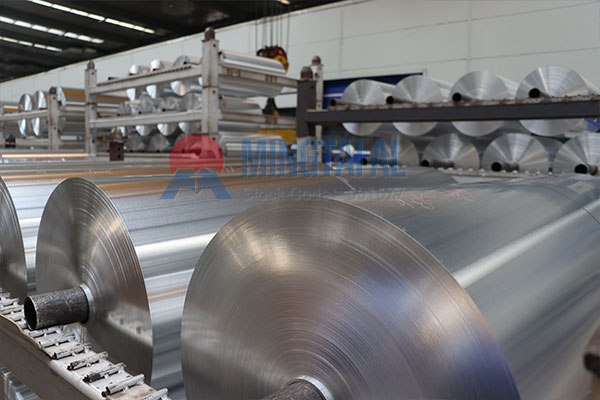
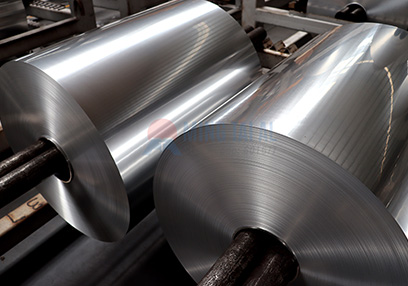
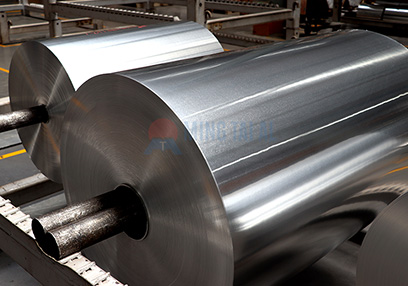
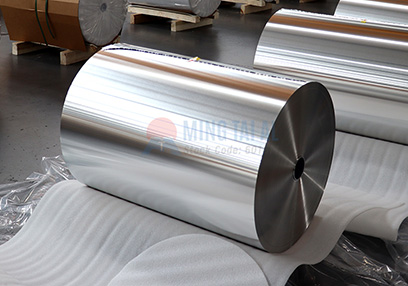
Mingtai Aluminum supplies 1235 aluminum foil base material with stable composition and traceable batches, suitable for transformer shielding aluminum foil applications and capacitor shielding. Products are delivered in rolled condition, with no surface treatment or further processing.
Q: Which alloy is recommended for transformer shielding foil?
A: 1235 aluminum foil is a common choice for transformer electromagnetic shielding due to its high purity, good conductivity, and low pinhole count.
Q: Do pinholes significantly affect shielding performance?
A: Yes, pinholes become electromagnetic leakage points and reduce overall shielding effectiveness, so pinhole control matters when selecting foil.
Q: Can 1235 aluminum foil thickness be customized?
A: Yes, common thicknesses for shielding and electrode applications can be customized to specific needs.
Q: Does oil on the foil surface affect shielding?
A: Yes, oil reduces surface conductivity and creates weak shielding areas, so surface cleanliness is a basic selection requirement.