Stock code: 601677
Stock code: 601677
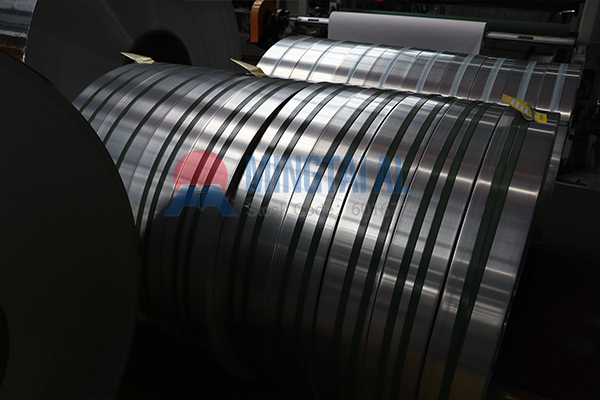
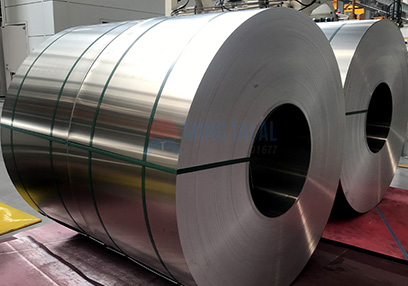
The material chosen for transformer windings has a direct impact on efficiency, cost, and service life. With copper prices remaining high, aluminum strip for transformer windings has shifted from an alternative to a mainstream choice. Among the many aluminum alloys, 1060 stands out for its balanced performance, making it the most versatile material for dry‑type and distribution transformer windings.
1060 aluminum alloy contains no less than 99.60% aluminum. Higher purity means fewer impurities – iron, silicon, copper, and others may increase strength but significantly reduce conductivity. In the O‑temper (fully annealed soft state), 1060 aluminum strip consistently delivers conductivity above 61.5% IACS. This level meets the current‑carrying requirements of most transformer windings, while maintaining good elongation (≥20%) and moderate tensile strength (60‑95 MPa).
Compared with copper strip, the value of 1060 aluminum strip lies in three aspects:
– Cost – Aluminum material costs are significantly lower than copper. Meeting the same electrical standards, the total cost advantage of aluminum windings is clear.
– Weight – Aluminum density is about 2.70 g/cm³, only one‑third of copper (8.89 g/cm³). For the same volume, aluminum weighs about 30% of copper. Lighter windings reduce transport costs and simplify installation.
– Reliability – Aluminum naturally forms a dense Al₂O₃ oxide film on its surface, which resists moisture, dust, and industrial pollutants. This oxide layer provides extra protection for long‑term stable operation in harsh environments.
Common alloy grades for transformer aluminum strip include 1050, 1060, 1070, and 1350. Their core differences lie in purity and conductivity:
|
Alloy |
Minimum Al Purity |
Conductivity (O‑temper) |
Positioning |
|
1050 |
≥99.50% |
≥60.0% IACS |
Economical general‑purpose |
|
1060 |
≥99.60% |
≥61.5% IACS |
Best overall value |
|
1070 |
≥99.70% |
≥62.7% IACS |
Ultra‑high purity, low loss |
|
1350 |
≥99.50% |
≥62.0% IACS |
Electrical‑grade standard |
1050 offers the lowest cost but with looser impurity control; 1070 provides the highest purity and lowest loss but at higher cost; 1350 is specified by IEC standards for electrical equipment, offering better performance consistency than standard pure aluminum. 1060 sits right in the middle – high enough conductivity, good workability, reasonable cost – covering the vast majority of oil‑immersed and dry‑type distribution transformer winding needs.
For anyone involved in transformer manufacturing, these technical parameters directly determine winding quality and final product performance. Here are the five essential indicators:
1. Conductivity – 1060‑O temper strip should deliver ≥61.5% IACS – the foundation of transformer energy efficiency.
2. Burr height – Burrs can pierce interlayer insulation, causing turn‑to‑turn short circuits or partial discharge. Industry standards typically require burr height ≤0.03‑0.05 mm. Edge chamfering (rounded edges) can keep burrs below 0.01 mm, greatly reducing insulation damage risk.
3. Thickness and width tolerances – Typical thickness ranges from 0.08 to 3.00 mm, width from 10 to 1500 mm. Thickness tolerance directly affects winding ampere‑turn balance.
4. Surface quality – Surfaces should be smooth, free of scratches, oil stains, and oxidation spots. Surface defects compromise insulation adhesion and withstand voltage.
5. Elongation and tensile strength – O‑temper 1060 strip has elongation ≥20% and tensile strength 60‑95 MPa. Good elongation ensures no cracking during automatic winding.
*(These specifications apply to mill‑finish products without any subsequent surface treatment or reprocessing.)*
1060 aluminum strip is primarily used for high‑ and low‑voltage windings in dry‑type transformers, and is also widely applied in oil‑immersed transformers, distribution transformers, and reactors. In dry‑type or oil‑immersed transformers rated up to 4 MVA, aluminum windings have proven mature and reliable.
For transformer winding applications, aluminum strip for transformer offers a well‑established, cost‑effective solution. The reasons are clear: high purity (≥99.6%) ensures excellent conductivity (≥61.5% IACS); the fully annealed O‑temper provides good forming plasticity; and mature production processes guarantee consistent quality and supply. For transformer manufacturers, 1060 is a market‑verified choice – meeting performance requirements, keeping costs under control, and ensuring stable availability.
For detailed technical specifications and custom dimensions of 1060 transformer strip, feel free to reach out to the Mingtai Aluminum team – we are dedicated to providing high‑purity aluminum solutions for the transformer industry.
Q1: What conductivity can 1060 aluminum strip achieve?
A: 1060‑O temper strip delivers ≥61.5% IACS.
Q2: Is 1060 aluminum strip significantly more cost‑effective than copper?
A: Aluminum material costs are substantially lower, and aluminum windings offer clear overall cost advantages when meeting the same electrical standards.
Q3: What are the differences among 1050, 1060, and 1070, and how to choose?
A: The main differences are purity (1050≥99.50%, 1060≥99.60%, 1070≥99.70%) and conductivity; 1060 is the most versatile choice for distribution and dry‑type transformers.
Q4: Which quality indicators matter most for transformer aluminum strip?
A: Conductivity (≥61.5% IACS), burr height (≤0.03‑0.05 mm), thickness tolerance, surface finish, and elongation (≥20%).
Q5: What transformer types use 1060 aluminum strip?
A: Primarily high‑ and low‑voltage windings of dry‑type transformers, as well as distribution transformers, oil‑immersed transformers, and reactors.