Stock code: 601677
Stock code: 601677
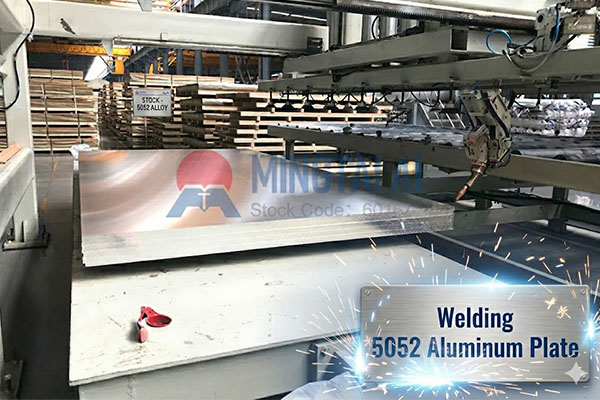
Welding 5052 Aluminum Plate is a common choice in applications that require a balance of corrosion resistance, formability, and reliable joining performance. From marine components and fuel tanks to truck bodies and industrial enclosures, this alloy is valued for its ability to maintain good mechanical properties while offering stable weldability.
Compared with some high-strength aluminum alloys, 5052 is easier to weld and less prone to cracking during fabrication. It also performs well in humid or salt-rich environments, making it suitable for structures exposed to moisture and outdoor conditions.
Another reason this alloy remains popular is its compatibility with several mainstream welding methods, especially MIG and TIG processes.
Selecting the right filler wire directly affects weld appearance, strength, and corrosion behavior.
Common Choices Include:
ER5356
Frequently used for structural applications
Good strength and corrosion resistance
Suitable for marine and transportation equipment
ER5654
Often selected for applications involving long-term service stability
Performs well in certain pressure-related environments
ER4043
Sometimes used when smoother weld appearance is preferred
Less common for this alloy compared with 5xxx series fillers
In many fabrication environments, ER5356 is considered the preferred option because it provides a strong combination of mechanical performance and color match after finishing.
Both methods are widely used, but the ideal choice depends on thickness, production speed, and appearance requirements.
TIG Welding Advantages
1. Cleaner and more precise welds
2. Better control on thin gauges
3. Suitable for detailed fabrication work
MIG Welding Advantages
Faster deposition speed
Higher efficiency for larger structures
Better suited for thicker plates and continuous production
For thinner material, TIG welding usually offers better control. For larger industrial fabrication, MIG welding is often more practical due to productivity advantages.
Aluminum naturally forms an oxide layer that melts at a much higher temperature than the base metal itself. If the surface is not cleaned properly before welding, defects such as porosity or lack of fusion can occur.
Before welding, it is helpful to:
Remove oil and moisture from the plate surface
Clean oxidation near the joint area
Keep filler wire dry and contamination-free
Avoid prolonged exposure to humid environments
Even a high-quality alloy can produce unstable welds if preparation is ignored.
One of the most common fabrication challenges is distortion caused by excessive heat input. Thin aluminum plate reacts quickly to temperature changes, so heat management becomes especially important.
Practical Tips
|
Welding Factor |
Suggested Approach |
|
Heat Input |
Avoid excessive amperage |
|
Joint Design |
Use proper fit-up and gap control |
|
Travel Speed |
Maintain consistent movement |
|
Clamping |
Secure the plate to reduce movement |
Balanced heat control not only improves weld appearance but also helps maintain dimensional stability after fabrication.
Because 5052 is a non-heat-treatable alloy strengthened mainly through work hardening, the heat-affected zone may experience some reduction in strength after welding.
This does not automatically make the material unsuitable for structural use. In many applications, the alloy still provides sufficient performance after fabrication. However, design considerations should account for the softened area near the weld.
For projects involving load-bearing structures, plate temper and thickness selection should be evaluated together with welding conditions.
This alloy is frequently used in industries where corrosion resistance and fabrication flexibility are both important.
Common Examples
Marine panels and boat structures
Fuel and storage tanks
Truck and trailer components
Industrial cabinets
Pressure-related equipment
Flooring and platform structures
Its combination of lightweight properties and weldability makes it a practical material for both indoor and outdoor use.
Welding performance is influenced not only by filler wire and process selection, but also by the base material itself.
Several factors should be considered:
Temper condition
Plate thickness
Flatness consistency
Surface quality
Mechanical property stability
Stable raw material quality can help reduce fabrication variability and improve welding efficiency during production.
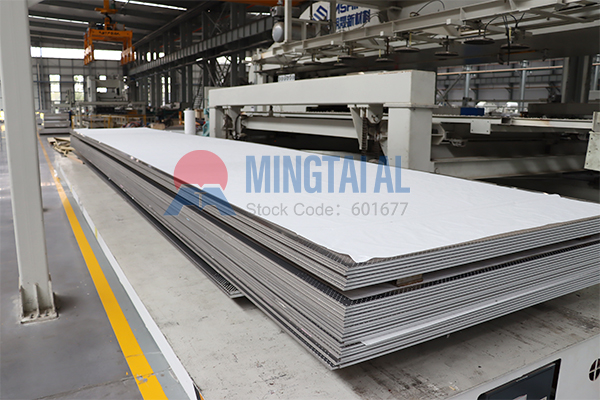
Mingtai Aluminum supplies 5052 aluminum plate in multiple thicknesses and specifications for industrial and structural applications. Consistent quality control and large-scale production capacity support a wide range of fabrication needs.-
What filler wire is commonly used for 5052 aluminum?
ER5356 is one of the most widely used filler materials due to its good strength and corrosion resistance.
Is TIG welding suitable for thin 5052 plate?
Yes. TIG welding offers better control and cleaner weld appearance on thinner gauges.
Does welding reduce the strength of 5052?
The heat-affected zone may experience some softening after welding, especially in strain-hardened tempers.
Can 5052 plate be used outdoors?
Yes. It offers excellent corrosion resistance and is commonly used in marine and outdoor environments.