Stock code: 601677
Stock code: 601677
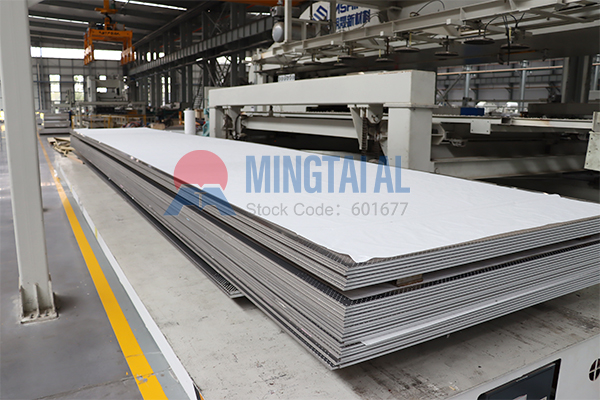
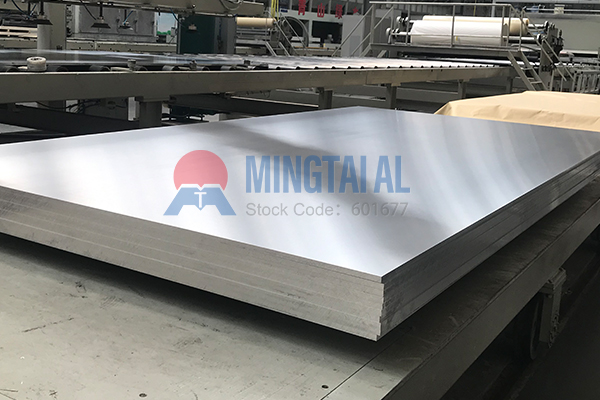
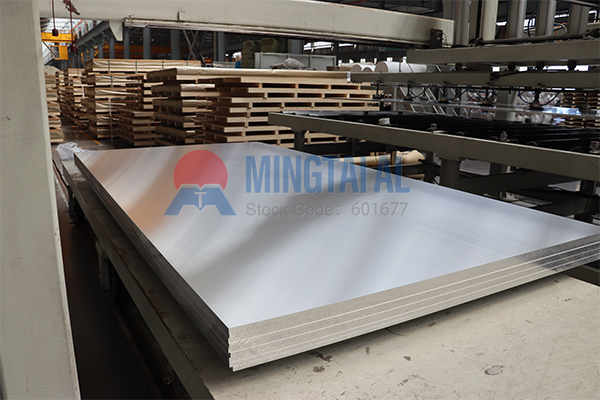
An 8mm thick aluminum plate belongs to the “structural grade” category. It carries more weight than thin sheets and is lighter than thick plates. Truck floors, ship bulkheads, and equipment bases all rely on it.
But when sourcing wholesale aluminum plate 8mm, you can’t just look at thickness. Choosing the wrong alloy or temper will directly cause your finished parts to warp or crack.
Below, we break down four key areas: alloy selection, applications, cost, and inspection.
Four alloys are widely used for 8mm plate: 5052, 5083, 6061, and 6082. Your choice depends on the operating environment and fabrication method.
– 5052: Good toughness, bends well. For fuel tanks or parts requiring 90-degree bends, 5052 H32 is a safe bet. It resists seawater and has high fatigue strength.
– 5083: Stronger and more corrosion-resistant than 5052. It is the standard for ship structures (bulkheads, coamings) and low-temperature environments. If you build LNG tankers or polar equipment, 5083 is the answer.
– 6061: High hardness, resists deformation after turning and drilling. For automation machine bases, rails, and jigs, 6061 T6 is a classic choice. Note: 8mm 6061 T6 cannot be bent at large angles—it will crack.
– 6082: Even stronger than 6061. Used for heavy machinery parts and bridge structures. It is very popular in Europe. Choose it when you need maximum load capacity.
One-sentence takeaway: Need bending? Pick 5052. Need seawater resistance? Pick 5083. Need machinability? Pick 6061. Need extreme strength? Pick 6082.
You will find it in these applications:
– Truck and trailer floors: Lighter weight means fuel savings. 8mm tread plate (5052 or 5083) offers slip resistance and handles forklift traffic.
– Ship structures: Bulkheads and coamings. 5083 is mandatory for seawater exposure. 5052 is borderline; 6061 won’t work.
– Machinery and equipment: Base plates, rotary table panels. Flatness and no internal voids are key. 6061 T6 and 6082 T6 are the workhorses.
– Construction and bridges: Temporary walkways, stair treads, bridge expansion joints. 6082’s high strength is well suited.
Whenever you need something both light and strong, 8mm aluminum plate is a cost-effective choice.
The wholesale price of 8mm plate depends on three factors:
1. Aluminum ingot price: The base, fluctuating daily.
2. Processing fee: Wider sheets and special alloys cost more. For regular 2000mm width, 5052 offers the best processing fee. 5083 and 6082 cost a bit higher.
3. Tolerance: Under ASTM B209, 8mm plate allows about ±0.3mm deviation. If your drawing doesn’t require tight tolerance, choosing negative-tolerance plate saves material cost.
One more tip: If you only make structural parts, buy Mill Finish plate directly. Factory coating raises cost and gets scratched easily during shipping. Do surface treatment locally after arrival.
8mm plate is heavy. If you order the wrong product, return shipping costs more than the plate itself. Check two things before payment:
– Flatness: Poorly stress-relieved plates will “open up” (corners lift) after laser cutting. Ask your supplier if they have done stress relieving.
– Diagonal tolerance: For large assemblies, the plate must be truly square. Measure both diagonals with a tape. Reject if the difference exceeds 2mm.
Also, one ton of 8mm plate covers only about 13–15 square meters (depending on alloy). Freight cost per ton is high. Look for a wholesaler with full inventory that allows order consolidation.
Mingtai Aluminum supplies consistent 8mm plates across 5052, 5083, 6061 & 6082—with tight flatness control for bulk orders of wholesale aluminum plate 8mm.
Q1: How much does 8mm aluminum plate weigh per square meter?
A: About 21.7 kg. Calculation: 8 × 2.71 = 21.68 kg/m².
Q2: Which alloy for a truck floor?
A: 5052 or 5083 tread plate. Slip-resistant, corrosion-resistant, and 8mm thickness handles repeated forklift traffic.
Q3: Can 8mm 6061 T6 be bent?
A: No. It will crack. For bending, switch to 5052 H32 or use 6061 O (annealed) then heat treat after bending.
Q4: Do I need 5083 for a boat?
A: For hull plating and high-corrosion areas, yes. For interior non-structural bulkheads, 5052 can work, but using 5083 everywhere is safer.
Q5: What is the typical MOQ for wholesale?
A: Usually 5–10 tons. Some suppliers accept 1‑ton trial orders—ask around.
Q6: Is oily surface normal?
A: Yes. That is rolling oil from hot rolling. Wipe it off with a cleaner before welding or painting.