Stock code: 601677
Stock code: 601677
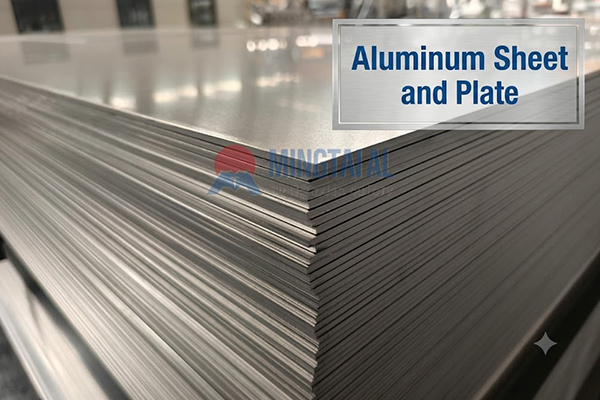
Many professionals use the terms Aluminum Sheet and Plate interchangeably, assuming they mean the same thing. In the aluminum industry, however, they refer to distinct product categories—and picking the wrong one can mean either a panel too thin for the job or unnecessary cost from over‑specifying thickness. Here’s a clear breakdown from four angles: thickness, properties, production, and applications.
The industry distinguishes sheet from plate primarily by thickness.
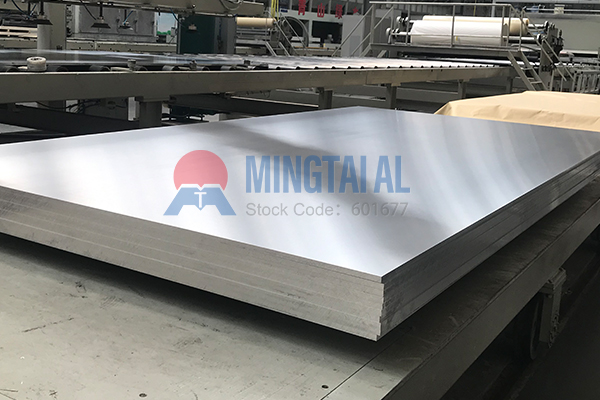
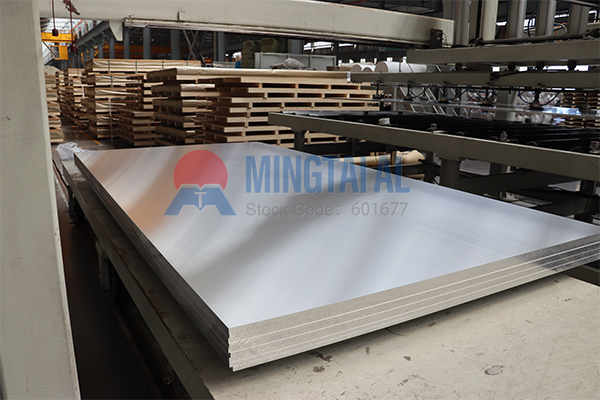
– Aluminum Sheet – typically ranges from 0.2 mm up to 6 mm.
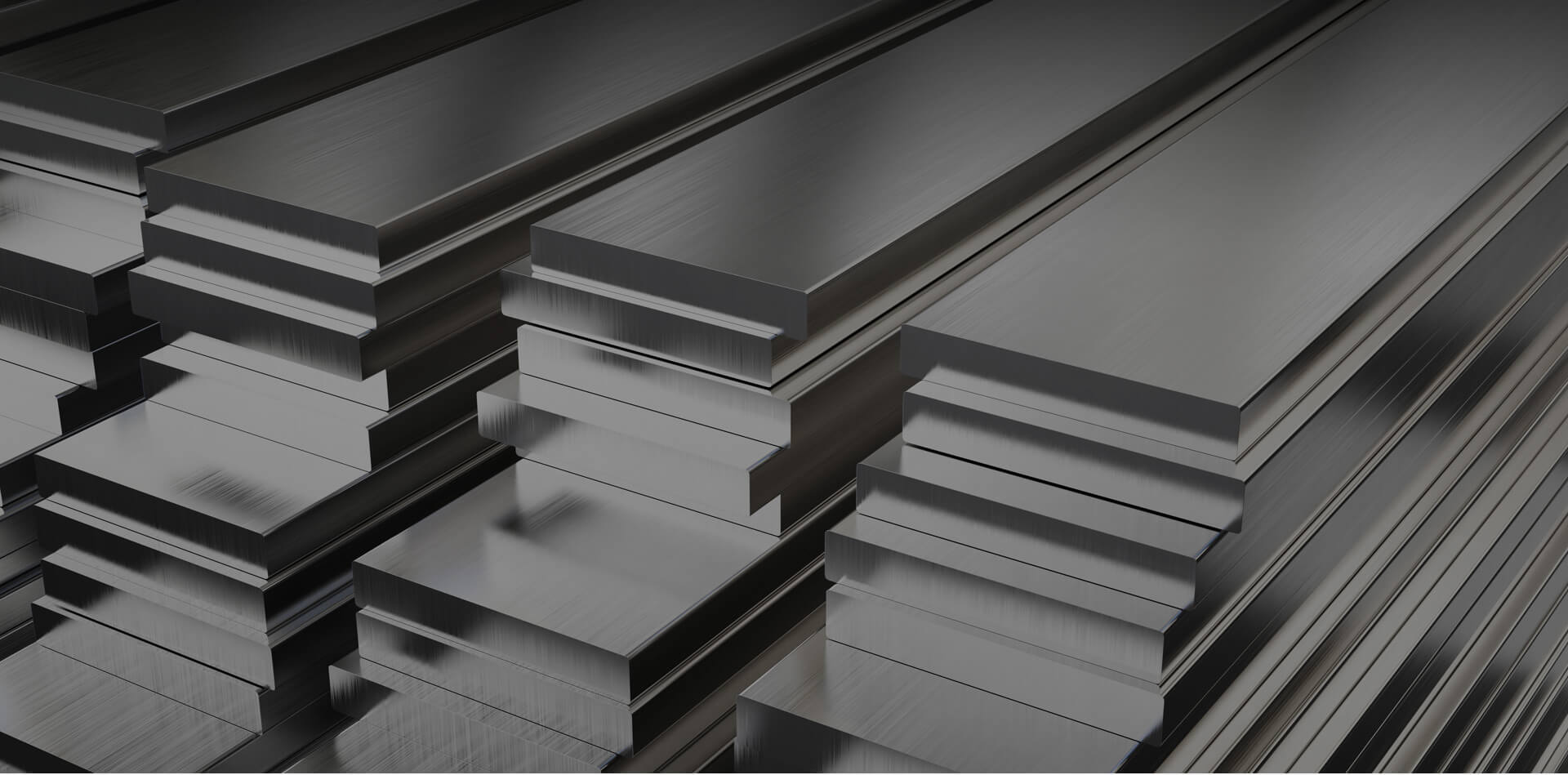
– Aluminum Plate – anything thicker than 6 mm.
In North America, the dividing line is often 0.25 inch (about 6.35 mm), while most other regions adopt 6 mm as the standard. ASTM B209, one of the most widely referenced specifications, clearly defines thickness tolerances and dimensions for both categories. Anything below 0.2 mm falls into the foil category.
One practical note: different suppliers may use slightly different cut‑offs—some use 4 mm or 5 mm as the boundary. Always confirm your supplier’s standard before ordering to avoid surprises.
Thickness is not just a number—it fundamentally changes how the material behaves in engineering.
For Sheet:
– Lighter, more flexible, ideal for bending, stamping, and roll forming.
– Cold‑rolled surface gives better flatness and tighter thickness tolerances.
– Easier to produce in coil form.
For Plate:
– Heavier, stiffer, and stronger—suited for load‑bearing and high‑strength applications.
– Typically hot‑rolled only (or forged for premium uses like aerospace).
– Thickness tolerances are wider compared to sheet.
A simple comparison: for the same area, a 3‑mm sheet weighs exactly half of a 6‑mm plate. For a truck side panel, that difference can mean saving dozens of kilograms per piece.
Both sheet and plate begin as aluminum ingots (or slabs) that are cast and then rolled.
For sheet, the process involves two stages: hot rolling first to reduce thickness, followed by cold rolling at room temperature. Cold rolling improves surface finish, dimensional accuracy, and flatness, but it also hardens the metal (work hardening), so intermediate annealing is often needed to restore formability.
For plate, thickness is achieved mainly through hot rolling alone. For extremely demanding applications—such as aircraft structural parts—forging may be used to eliminate internal porosity and refine the grain structure, delivering superior mechanical properties.
Sheet can be delivered as either flat sheets or coils; plate is almost always supplied as flat pieces only.
Where sheet is preferred:
– Transportation – car body panels, truck trailers, railcar shells
– Architecture – curtain walls, ceilings, roofing, signage
– Packaging – beverage cans, food containers
– Electronics & appliances – refrigerator shells, laptop casings, smartphone frames
– Lighting & solar – reflector panels, photovoltaic brackets
Where plate is the right choice:
– Aerospace – wing beams, fuselage frames, landing‑gear structures
– Marine – hull structures, decks, offshore platforms
– Energy & heavy industry – transformer housings, pressure vessels, heavy machinery frames
– Defense – armor plates, missile structural components
In short: sheet does the “surface” work, while plate does the “skeleton” work.
Step 1 – Define your required thickness.
If your design calls for ≤6 mm, go with sheet. If >6 mm, plate is your only option.
Step 2 – Evaluate your forming method.
Need bending, stamping, or complex shaping? Sheet is more forgiving. Requiring drilling, milling, or heavy load‑bearing? Plate is the stronger candidate.
Step 3 – Select the right alloy series.
Both sheet and plate can be produced in 1xxx to 8xxx series alloys.
– 1xxx and 3xxx offer excellent formability – good for decoration and architectural use.
– 5xxx and 6xxx balance strength, corrosion resistance, and weldability – ideal for industrial structures.
– 7xxx delivers the highest strength – reserved for aerospace and other critical applications.
Step 4 – Verify tolerance standards.
Different projects demand different precision levels. Sheet has tighter thickness tolerances; plate allows more variation. Always ask your supplier which standard they follow (e.g., ASTM B209) and request the mill certificate to confirm actual values.
– “Sheet and plate are just different names for the same thing.” – Not true. The thickness difference drives real changes in performance, workability, and application scope.
– “Thicker is always better.” – Not necessarily. Oversized thickness adds cost and weight without delivering benefits for many applications.
– “Any alloy can be made in any thickness.” – Each alloy has its own hot‑working limits, so the achievable thickness range varies by grade.
Henan Mingtai Aluminum, with 28 years of manufacturing experience, offers a full portfolio of Aluminum Sheet and Plate in 1‑8 series alloys, with custom dimensions to match your project specifications.
Q: What is the main difference between aluminum sheet and aluminum plate?
A: Thickness – sheet is up to 6mm, while plate is thicker than 6mm.
Q: Which one should I choose for my project?
A: Choose sheet for lightweight or formed parts, and plate for structural or heavily machined components.
Q: Can both sheet and plate be made from the same alloys?
A: Yes, both are available in 1xxx through 8xxx series alloys.
Q: Is the 6mm dividing line used everywhere?
A: Most countries use 6mm, but North America typically uses 6.35mm (0.25 inch) – always check with your supplier.